
I was a teenager during the Viet Nam Era. One night the evening news decided the American public needed to see the horrors of the war. There on our livingroom television a Viet Cong fighter was forced to kneel. An American soldier walked up to the man and shot him in the head. it was that stark. The image is still etched in my mind. It was one execution more than I ever needed to see.
— Read on bishopjimarends.com/2020/05/28/i-never-thought-id-see-a-lynching/
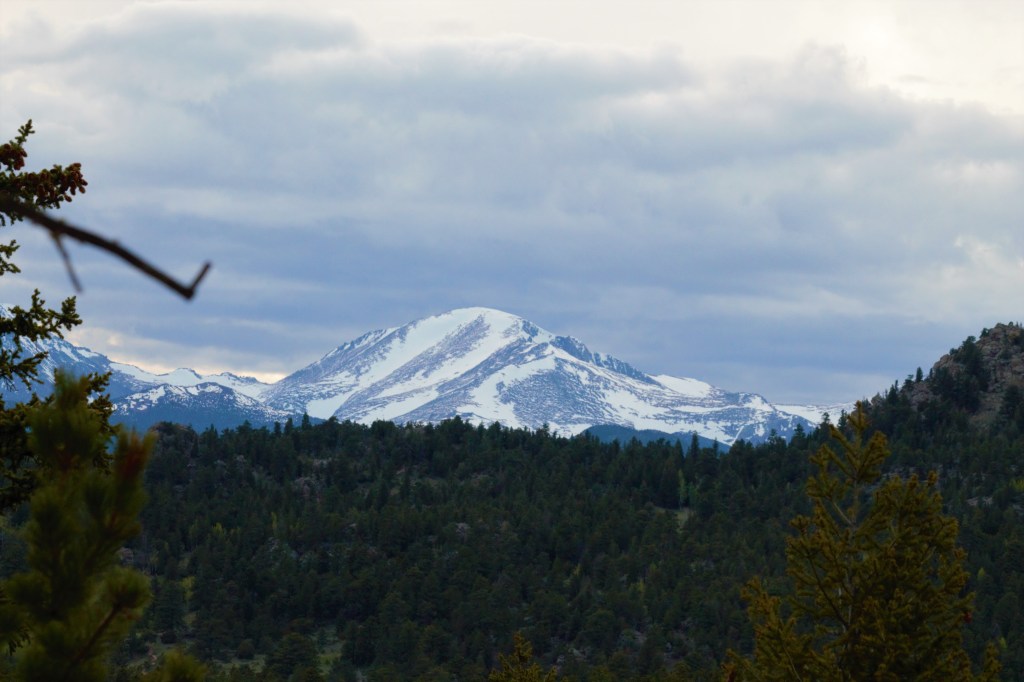
Today we were able to head to Hermit Park Open Space for a hike that took us into the Roosevelt National Forest. It was a beautiful late afternoon and evening for that hike. Today was a day of worship, meetings, and reading for my seminary class. It was so good to get out and breathe deeply in the beautiful wilderness area.
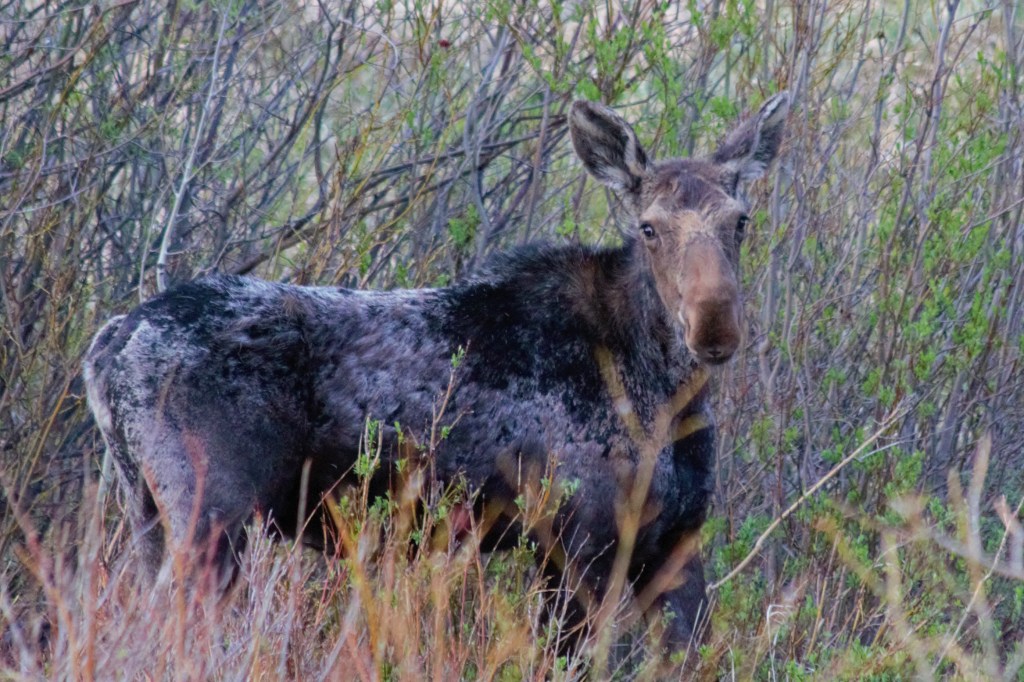
Each time we have hiked in Hermit Park we have truly encountered the wonder of God’s creation and felt the Spirit move as the wind blows through the aspens and pines. From the birds chanting their Vesper prayers to the sweet moose spending time with us, we have been in worship with our neighbors.
As we have hiked and enjoyed what the Rockies have to offer us, I have often thought about Thomas Merton and the blessings he experienced in his Hermitage, surrounded by nature. These encounters with God in nature were so important to him and provided him with so many insights which he shared through his journals, writings, and talks which he gave to the new novices coming into the Abbey of Our Lady of Gethsemani.
On the Feast of St. Benedict (March 21st, 1950) he wrote the following about the blessing of being in the midst of the wonder of God’s creation. But now I am under the sky. The birds are all silent now except for some quiet bluebirds. But the frogs have begun singing their pleasure in all the waters and in the warm, green places where the sunshine is wonderful. Praise Christ, all you living creatures. For Him you and I were created. With every breath we love Him. My psalms fulfill your dim, unconscious song, O brothers in these woods. (Entering the Silence, p. 423)
May we all experience the wonder and awe in God’s creation. May we also worship the Lord in such beauty and holiness.
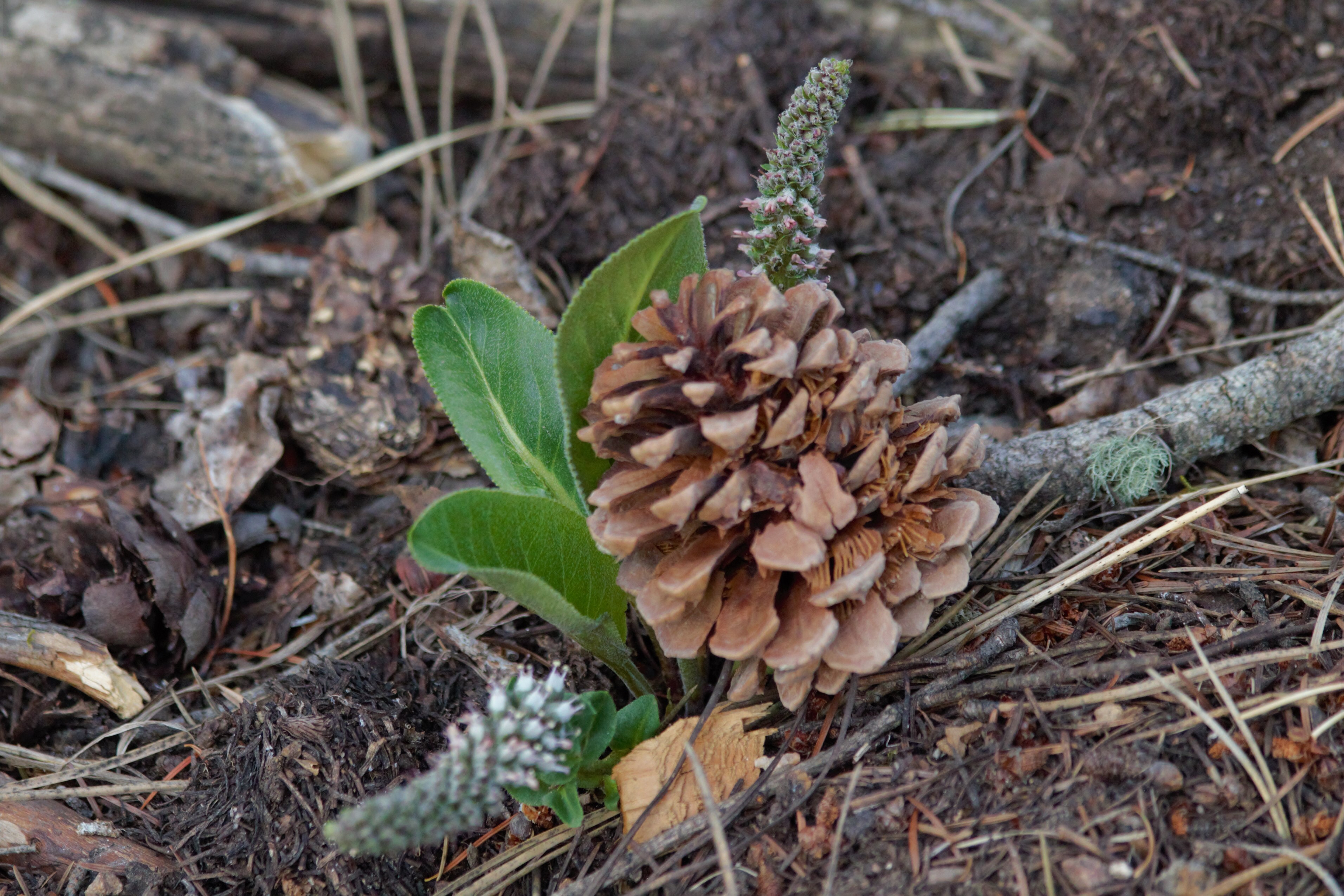
Christian life has been challenged in years, decades, and centuries past. From the early church’s persecution to the East/West schism and from the Reformation to the splintering of denominations over a variety of issues she has still managed to remain and be relevant. Not only has the church remained relevant, she has continued to nurture faith, fellowship, and service.
Despite the politicization of religion in this nation and around the world, the Spirit is still at work challenging us to live and love and spread the love, peace, and justice of God for ALL. We are facing another challenge which seems to be shaking the organized church to its core. With social isolation for the good of all, especially the most vulnerable, we have had to figure out how to be “the church” in new ways.
As I watch the growing impatience to “get back to normal” my heart aches. Christianity and the church is so much more than a building. In my heart I know that it isn’t about “getting back to normal,” but rather it is about being Christ-followers in new circumstances. Jesus didn’t start a movement from a building. The early Christians worshipped in catacombs or in secret at believers homes. John Wesley preached in fields and even on his own father’s grave in the beginning of the Wesleyan movement. It’s not about a building, it is about living a life of faith and witness.
Being a Christ-follower is truly about living the command to love God and love one another as Jesus taught. Yes, that even meant loving your enemies and praying for those who persecute you. It is the call of the prophet Micah to Do Justice, Love Mercy/Kindness, and Walk Humbly with God. The funny thing is that we don’t need a building to do that. We don’t need the “good old days” to return so we can be Christ-followers. Instead we are called to, in the words of a Franciscan Chaplain friend of mine, bloom where we are planted.
We are called to move inwardly where we can be taught and transformed by the Spirit. Then we are called to move outwardly to share the message of Love and Peace with others. Thomas Merton struggled with the call to silence and contemplation while at the same time feeling called to speak out and be a part of the process of challenging the world with God’s radical message of peace. He said the following in the collection of his essays that was published after his death.
All Christian life is meant to be at the same time profoundly contemplative and rich in active work. — Love and Living, p. 159
I believe that we are being called to that inward contemplation in order to be active in the rich work that he calls us to do. In that mixture of contemplation and action, we will find our purpose and our calling as the Spirit leads us forward.
“Consider allowing some time each day to listen to how the world is whispering beneath the rushed and goal-directed surface. To cultivate this kind of attention is to be a poet. We need far fewer how-to manuals and self-help books, and much more poetry.”
— Christine Valters Paintner, PhD Dreaming of Stones: Poems
Cultivate the time to read and write poetry as a spiritual practice.
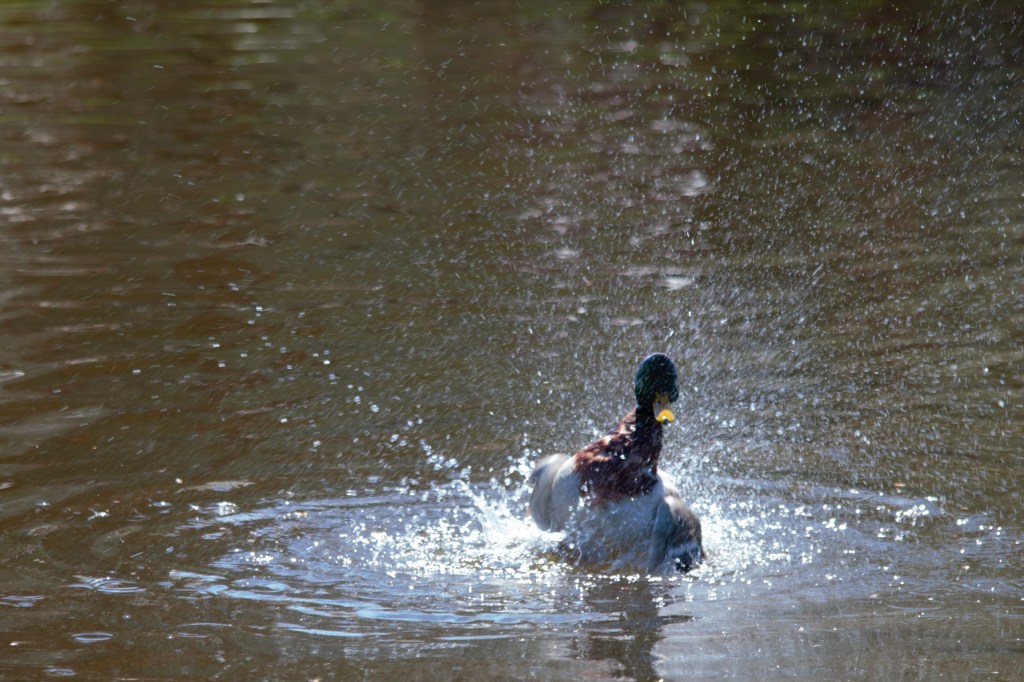
On one of our recent walks we walked (as we always do) by the pond at Coffee on the Rocks. I have been keeping my eye and heart open for whatever gift God has in store for me. Watching this Mallard “take a bath” made me smile and I was pleased with this photo I received during this encounter. This is just another example of being still and connecting with our wild neighbors here in the Rockies. During this Pandemic, I have enjoyed the time with all of our wild neighbors like this duck. He reminds me that we are all in this together and that God wants us to draw together as a community of faith during these challenging times.
In today’s Gospel reading we encounter a part of Jesus’ High Priestly prayer which he offers on behalf of the disciples prior to being betrayed, arrested, convicted, and executed. Jesus must have been considering what would happen to this very human group of Ragamuffins (to use Brennan Manning’s words) who were about to find themselves at the mercy of the wolves. I can only imagine how heavy his heart must have been as he looked at his disciples, knowing that the already rough road was about to get a whole lot rougher for Jesus and then for the disciples.
As we navigate the COVID-19 pandemic, I have seen and experienced many Christ-followers coming together in unity despite their theological differences. Sadly I have also seen many christians condemn others for thinking differently from them or having the nerve to trust science as well as God. I want to focus right now on the variety of Christ-followers who are laying aside differences in doctrine, dogma, and history to work and pray together in these days.
In Romans 12, Paul talks about the Body of Christ. A body is not uniform but rather is made up of many parts. These many parts have different functions but these different parts work together for the common good of the body. Paul was using this physical analogy to describe the church. We are different… but aren’t we also called to be united as Christ-followers? We can celebrate our unity in our diversity as the body of Christ. Our diversity doesn’t drive us apart, it brings us together as one body.
During times like these one of two things usually happen. There is either a unity or coming together of people for the common good which we are seeing happen all over the world or there is division which we are also seeing. One of the discussions that seems to pop up a lot is that the church is closed. We need the church open and we need to worship inside the building. My reply is always that the building may be closed but the church is alive and well and open.
Jesus in John 17:11b said the following: Holy Father, protect them in your name that you have given me, so that they may be one, as we are one. That they may be one as we are one, can be one in the Spirit and one in the Lord as the old camp song says. We can be one even in our diversity.
Thomas Merton talked about such unity as he taught the new novices who were entering the Cistercian Order at Our Lady of Gethsemani. Listen closely to his words… embrace them… let them soak in…
To be alone by being a part of the universe—fitting in completely into an environment of woods and silence and peace. Everything you do becomes a unity and a prayer. Unity within and without. Unity with all living things—without effort or contention. (A Search for Solitude: Pursuing the Monk’s True Life, The Journals of Thomas Merton, Volume 3: 1952-1960”, p.47)
Perhaps we need to take a lesson from Merton and consider how we can be united as individuals and as God’s creation. The wild animals we have encountered lately seem to be saying that to me. Live in unity… and in that time we will begin to understand what the psalmist said in Psalm 46:10. Be still, and know that I am God. May we enter into that space and truly learn and grow together, bringing hope and healing to this broken world.

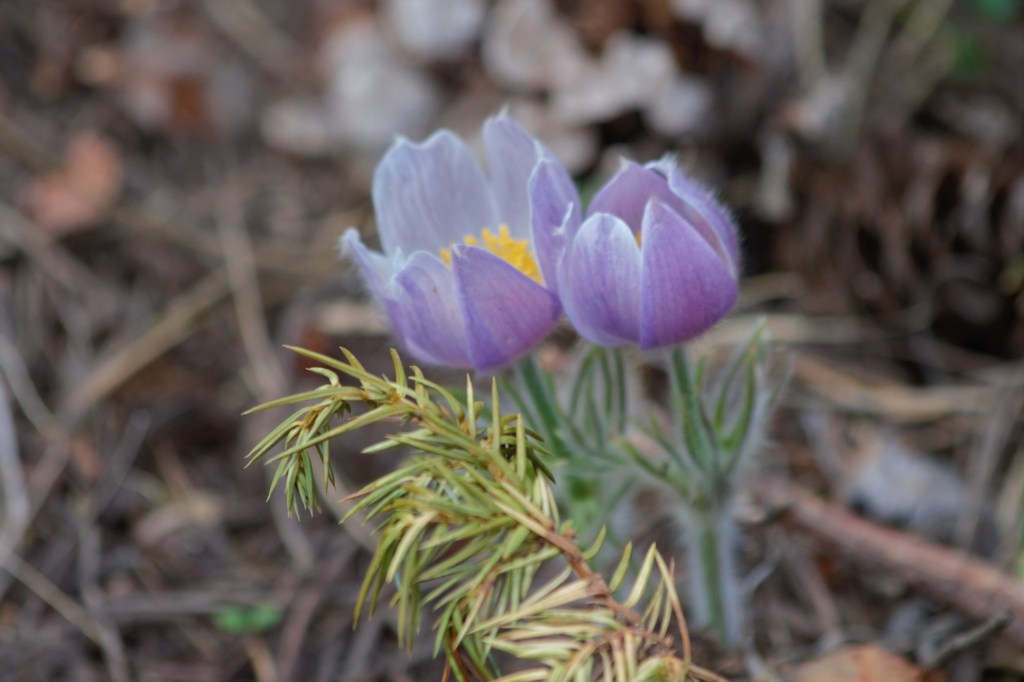
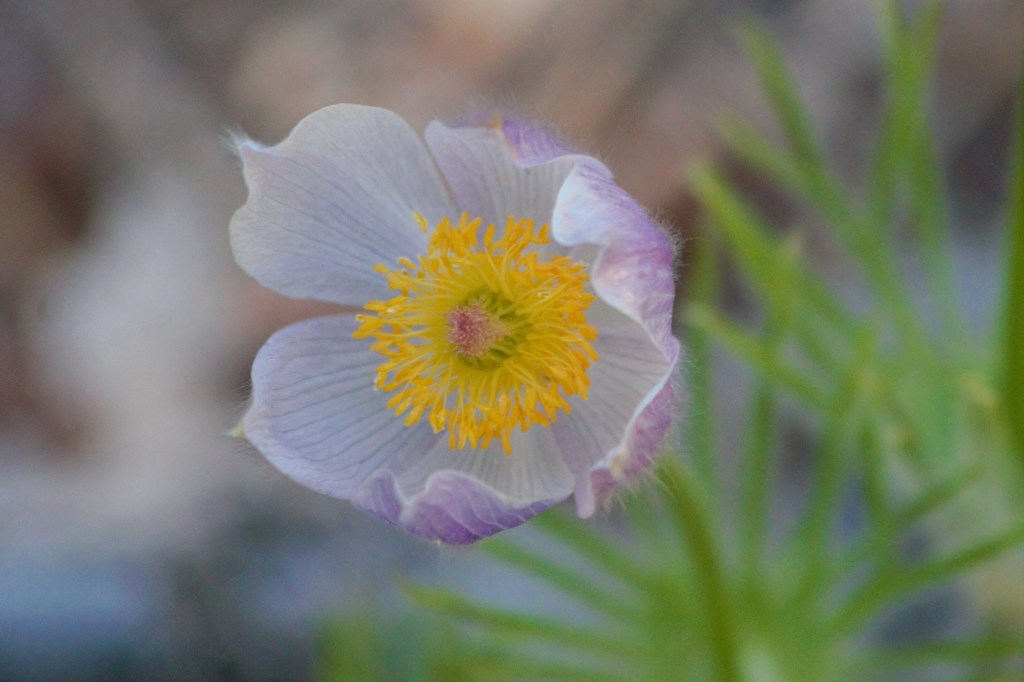
As Denise and I hiked in Hermit Park Open Space late this afternoon we truly sensed the Spirit’s presence in the midst of the glory of God’s creation. Butterflies were flying around us and the flowers were in brilliant bloom, especially the pasque flowers pictured below.
As we walked along the Moose Meadow Trail we were both intrigued by the call and response of the birds (I believe they were robins by the sound of their call) as the sun was beginning to lower in the western sky. Their almost antiphonal singing took me back to the experience of antiphonal readings and prayers which I had experienced at St Bernard’s Abbey in Cullman, Alabama.
Instead of human voices chanting the prayers and the psalms, it was the birds singing their hymn of praise to their Creator. One would sing and then stop. The other would immediately pick up the note and sing. A monastic call and response being shared in the cathedral of God’s creation by these lovely musicians.
I then remembered the times when Thomas Merton wrote about praying the Benedictine Liturgy of the
Hours
in his hermitage along with simply observing and hearing the worship of God’s creation. The more time that Merton spent in his hermitage, the more he sensed a holy kinship with his wild neighbors. In his poem, The Trappist Abbey: Matins (Our Lady of Gethsemani, Kentucky) he shares the following observation about the prayers of nature.
When the full fields begin to smell of sunrise
And the valleys sing in their sleep,
The pilgrim moon pours over the solemn darkness
Her waterfalls of silence,
And then departs, up the long avenue of trees.
The stars hide, in the glade, their light, like tears
And tremble where some train runs, lost,
Baying in eastward mysteries of distance,
Where fire flares, somewhere, over a sink of cities. (In the Dark Before Dawn: New Selected Poems of Thomas Merton (p. 26))
Besides the two of us enjoying this sacred Vesper Service we had another friend enjoying it with us.
“In the Hebrew Scriptures the promise of God’s abundance is often conceived of as blossoming in the desert. In that harsh landscape, a flower bursting forth from the dry land is a symbol of divine generosity, fruitfulness, and hope. Hope is a stance of radical openness to the God of newness and possibility. When we hope, we acknowledge that God has an imagination far more expansive than ours.”
— Christine Valters Paintner, PhD Sacred Seasons: A Yearlong Journey through the Celtic Wheel of the Year – A Self-Study Online Retreat
In what way is hope as “radical openness to God” worlds apart from anticipatory hope? How can living from a stance of acknowledging God’s infinite imagination free us from the shackles of our own limited projections into the future?
Today Denise and I were able to take a couple of hours between worship and meetings to enjoy the vast outdoors. Thanks to dear friends who gave us the gift of an annual pass to the Larimer County Parks we were able to go to Hermit Park Open Space near Estes Park for a few hours of hiking.
It was so wonderful to get outside and away from the crowds we too often face in Estes Park. The few people we met on the trail were so polite as we kept our social distance passing each other on the trail. It was as if we recognized our mutual appreciation for God’s creation and each other. The wonder and beauty of it all brought tears to my eyes as we rambled along the trail.
Such peace we felt in the midst of the beauty of God’s wondrous creation! In his book Darkness Before the Dawn, Thomas Merton explored the wonder of God’s creation as he arose each morning in his hermitage. Such a wondrous and beautiful thing to awake to.
One lovely dawn after another. Such peace! Meditation with fireflies, mists in the valley, last quarter of the moon, distant owls—gradual inner awakening and centering in peace and harmony of love and gratitude. (p. 250)
Such a wonder to behold dear and precious Creator. May your Spirit continue to challenge and encourage us as we seek to serve you. In these unusual times with COVID-19 may we serve you with energy, intelligence, imagination, and love.
“St. Columbanus said, ‘Understand, if you want to know the Creator, know created things.’ If we want to come to know God, we must grow intimate with God’s artistry.”
— Christine Valters Paintner, PhD, The Soul’s Slow Ripening: 12 Celtic Practices for Seeking the SacredHow do you grow intimate with God’s artistry?

When I began blogging in 2014 it was more of an outlet for sharing words and pictures which meant something to me. Six years and 4,304 posts later I have been both thankful and overwhelmed by the response to these simple words and photos from this Padre.
It has become far more than an outlet for me. Reflections, Prayers, Meditations, and Sermon preparation are all a part of this world of words for me. I have also met some amazing people through the blogging world and I treasure their friendship!
Over the course of time this has become a spiritual disciple for me. Combining Visio Divina and Lectio Divina I have found an incredible practice for myself and for those who read and respond to my writing.
When I began to blog, I hadn’t had the chance to really get to know my spiritual mentor Thomas Merton. As I began to get to know him through coursework and reading his journals and books I found a kindred spirit. It is no surprise then to realize that his love of photography and writing would speak to my soul.
In his book, New Seeds of Contemplation, he wrote the following about the spiritual life: Learn how to meditate on paper. Drawing and writing are forms of meditation. Learn how to contemplate works of art. Learn how to pray in the streets or in the country. Know how to meditate not only when you have a book in your hand but when you are waiting for a bus or riding in a train. Above all, enter into the Church’s liturgy and make the liturgical cycle part of your life—let its rhythm work its way into your body and soul. (p. 216)
The opportunity to explore this way of meditation and prayer along with the opportunity to share with others has been a blessing to me. I pray dear reader that it has been as much of a blessing for you. For it is in these moments that we truly do feel Spirit’s presence and guidance in our lives.

