

On the night he was betrayed, He took the bread, blessed it, broke it, and gave it to them… saying, do this in remembrance of me. With these words from 1 Corinthians 11, the liturgy for the Sacrament of the Lord’s Supper invites us to join Jesus at the table with his disciples. For me, this invitation to join the Lord at the table is a blessing and an honor. As a pastor and chaplain, it has been my sacred honor to celebrate the Lord’s Supper with people around the world for thirty-four years. What continues to amaze me is the fact that Jesus gave this gift to his disciples on the night he was betrayed! Instead of focusing on himself, he was focusing on his disciples and giving them the gift of this sacrament. He was preparing them for the road ahead that would come following his resurrection and ascension.
The Gospel of John offers a different perspective on the last night of Jesus’ life. The last night began with Jesus washing the disciples’ feet in chapter 13. Jesus showed the disciples what love was supposed to look like. He even washed the feet of his betrayer, Judas. In chapters 14-16 Jesus offered the eleven remaining disciples some final words of guidance and instruction. After the lessons, Jesus began to pray what is often called Jesus’ “High Priestly Prayer” in chapter 17. In it, he prays for himself (verses 1-7), his disciples (verses 6-19), and for those who will believe in him through the words of the disciples (verses 20-26).
This Sunday’s focus is on the prayer Jesus offered for his disciples. The rhythmic language of this prayer can be mesmerizing. The language is rich in symbolism and metaphors. Two focal points in the prayer strike me. Realizing that he would no longer “be in the world,” Jesus prays that the disciples would be protected as they continue Jesus’ ministry “in the world.” The second point for me is the fact that despite the dangers, the disciples were being charged, commissioned if you will, to take Jesus’ message of radical love and forgiveness into the world.
What does that mean for us today? I remember having a good discussion with a friend of mine who was a leader of one of the Campus Christian groups at the University of Wisconsin at Eau Claire. The discussion was about the tension between always hanging out with the “saved” group and not spending any time getting to know the “unsaved” people who were supposed to be evangelized by members of the group. If we spent so much time setting ourselves apart from the “world,” how would we ever be able to share the gospel with them.
Isn’t that the tension that we find in this prayer in Chapter 17 and in the life of Jesus itself? Jesus was always getting in trouble with the religious elite because he hung out with the “sinners” instead of the religious “insiders.” While the religious elite worked so hard to preserve the established way of being religious, Jesus chose instead to think outside of the box and reach out to the very people whom the establishment ignored.
As I consider thinking outside of the box, I find myself being challenged to look at ministry differently. When church buildings closed in March of 2020, the church was forced to examine who it was and what its mission was going to be in the new environment. I challenged my congregation’s leadership in Colorado to look at the church in a new way. People kept saying that the church was closed due to the pandemic. I kept reminding the people (and myself) that despite the physical facility being closed, that the church and its mission was still very much present and alive. This gradually turned into the mantra “The building might be closed but the church is still open.” Doing the work of Christ means that we must venture outside of the comfortable and the familiar. “As you have sent me into the world, so I have sent them into the world.” (John 17:18)
Just as Jesus prayed for his disciples before they ventured out into a life of ministry without his physical presence, he prays for us as we seek to be the church outside of the walls of a building. These words of Thomas Merton remind me that as we continue to work in the world and think outside of the box, we must return again and again to be nourished. Action is the stream, and contemplation is the spring… It is for us to take care that these living waters well up in our own hearts. (No Man Is an Island, p. 70) This is especially crucial as we seek to be the body of Christ in new ways in the world. As we seek to serve in the world, may we return again and again to that source of living water.

A timely and powerful reflection from my friend Jake!
A local news outlet reported that Alexandria—where my wife Joy and I reside—is the second most dangerous place to live in Louisiana.
Shootings have been making headlines pretty often lately. So our violent crime ranking did not come as much of a surprise. Besides, we’ve known for a while that our state as a whole makes the national top ten list for violence: number six according to 2020 statistics.
As I reflected on the violence that surrounds me, some words from Richard Rohr came to mind. “If we do not transform our pain, we will most assuredly transmit it.” …read further on:
Love is the only power that will transform our pain and deliver us from violence.
Transforming Our Pain — Jake Owensby

Thomas Merton enjoyed the wonder and beauty of creation. This wonder and beauty was especially present when he was able to live in his hermitage on the grounds of the Abbey of Our Lady of Gethsemani near Bardstown, Kentucky.
Denise and I took a wee ramble along the Chattahoochee River today. The beauty of the River and God’s creation was certainly evident. Watching this cardinal flit around between bushes, trees and the ground was breathtaking. The fact that he allowed me to take his picture was amazing!
This encounter made me think of Merton and his love and respect for creation. He wrote the following on page 21 of his book New Seeds of Contemplation. There is no evil in anything created by God, nor can anything of His become an obstacle to our union with Him. The obstacle is in our “self,” that is to say in the tenacious need to maintain our separate, external, egotistic will. It is when we refer all things to this outward and false “self” that we alienate ourselves from reality and from God. It is then the false self that is our god, and we love everything for the sake of this self.
As our county, state, and nation move forward in accordance with the newly released Center for Disease Control COVID guideline, my prayer is that we will not consider our “external, egotistical will.” Rather, my prayer is that we will act and do all things for a love that considers others before ourselves.
| Verse of the day Happy are those who do not follow the advice of the wicked, or take the path that sinners tread, or sit in the seat of scoffers; but their delight is in the law of the Lord, and on [God’s] law they meditate day and night. – Psalm 1:1-2 |
| Voice of the day There is no divine grace in the Old Testament (or in the New Testament) that is bestowed on oppressors at the expense of the suffering of the poor. – James H. Cone, God of the Oppressed |
| Prayer of the day God invites us to bring our doubts and fears, our joys and concerns, our petitions and praise, and offer them for the earth and all its creatures. – From Revised Common Lectionary Prayers |

“We cannot have a healed society, we cannot have change, we cannot have justice, if we do not reclaim and repair the human spirit.”—Angel Kyodo Williams
An excellent and timely reflection from our friend, Tom Sine!
Dr. Laurie Santos, a Psychology professor, reflecting on our emergence from this very disruptive pandemic, stated in the New York Times, “’We’ve all just changed our routines so much’, she said. ‘I think many of us have realized during the pandemic that some of the things we were doing before COVID -19 weren’t the kind of things leading to flourishing in our lives.’” — read more at http://www.newchangemakers.com/reimagining-flourishing-in-the-turbulent-2020s/
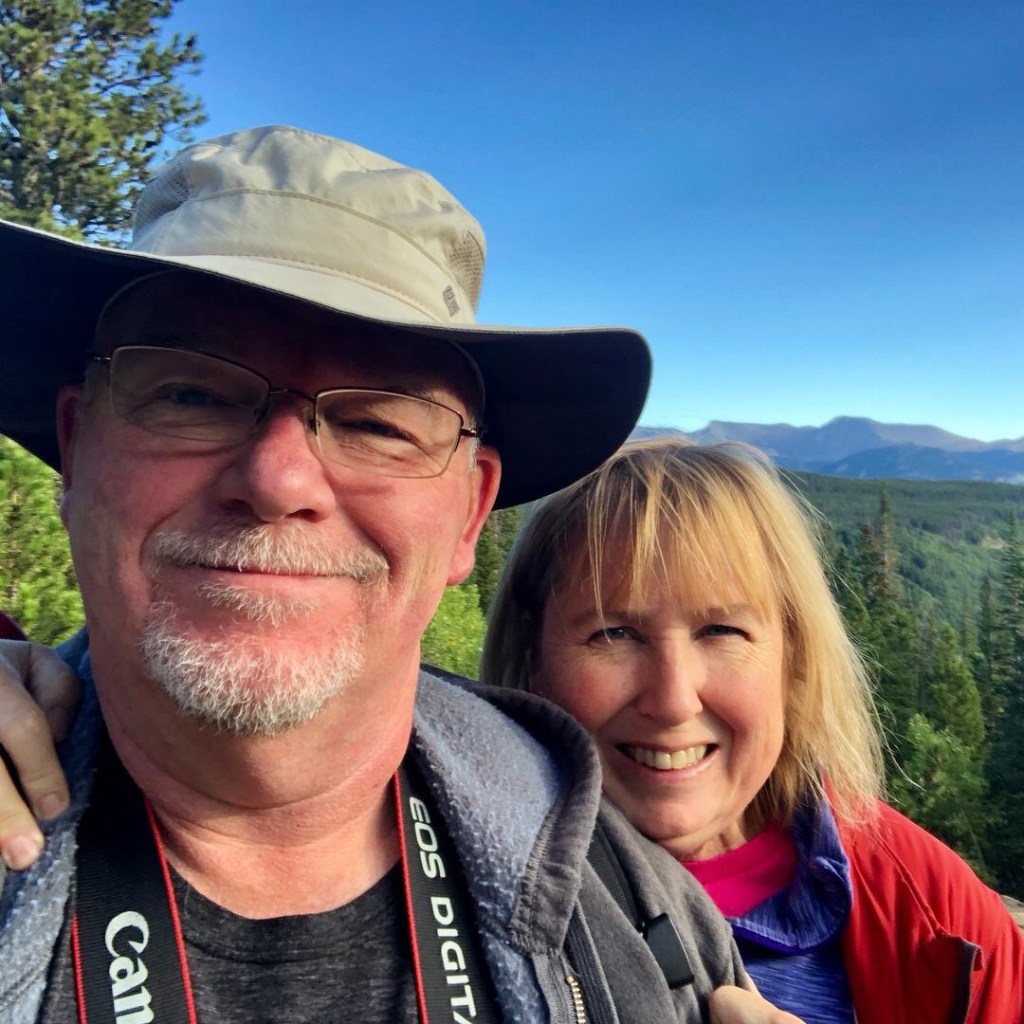
In September it will have been twelve years since I met at Alabama Presbyterian Cursillo. To have been given this chance for happiness by God is an amazing blessing. I often am simply in awe and so thankful for the mysterious way that God works in our lives.
To have a love that is solidly based on our love for God and for each other is overwhelming at times. It is because this love is founded on something or someone bigger than us that it works. How can we love others unless we are loved by God and love God.
Thomas Merton said the following in his book, No Man Is an Island: All desires but one can fail. The only desire that is infallibly fulfilled is the desire to be loved by God. (p. 17)
I would add to that the following: it is through that desire to be loved by God that we are able to love one another. For Denise and for me, the fact that we found each other when we did is because God loves us. Thank you God, for such a precious gift!

“Violence against the Earth and interpersonal violence are two sides of the same coin. We now unite as a planetary community to stand together for the sacred; to midwife a transition to a world in which humanity will no longer dominate but cooperate with all life. Though it is difficult to see, there is an emerging and different vision for humanity. This vision foresees a world without violence as the next chapter of our collective evolution. It shows a future humanity inhabiting this planet as a network of interconnected, autonomous communities of trust.”—LaDonna Brave Bull Allard
| Verse of the day Sing praises to God, sing praises; sing praises to our King, sing praises. – Psalm 47:6 |
| Voice of the day The primary purpose of prayer is not to make requests. The primary purpose is to praise, to sing, to chant. Because the essence of prayer is a song, and [we] cannot live without a song. – Rabbi Abraham Joshua Heschel |
| Prayer of the day Blessed are You – the Lord our God, King of the universe, who creates the fruit of the vine. – Jewish blessing |

We can either love God because we hope for something from Him, or we can hope in Him knowing that He loves us… Better than hoping for anything from the Lord, besides His love, let us place all our Hope in His love itself. This hope is as sure as God Himself. (No Man Is an Island, p. 17)
Thomas Merton’s thoughts about hope and love truly speak to my heart and I hope that they speak to your heart as well, dear reader. In my own life, I have experienced both love and hope as fickle emotions.
When I placed my hope in such things as careers and promotions, I was often hurt, disappointed, or let down. Self-confidence or love of self has often been a struggle for me. Whether it was a failure to live up to my own self-imposed expectations or expectations of others, at the end of the day being hopeful (or hope-filled) with a sense of love for myself just didn’t happen.
One of Denise’s mentors was her pastor. A lesson that he taught and tried to live out is a lesson that I have adopted for myself. As a pastor, I cannot please everyone. For a person who is an enneagram two, being liked by others and doing things to earn people’s love is central to who I am. Obviously, this can be a good thing or a bad thing. The lesson from her pastor is this: I can’t please everyone, so my goal is to please God.
On page fifteen and sixteen, Merton has some more to say about love and hope. Without hope, our faith gives us only an acquaintance with God. Without love and hope, faith only knows Him as a stranger. For hope casts us into the arms of His mercy and of His providence. If we hope in Him, we will not only come to know that He is merciful but we will experience His mercy in our own lives.
I invite you, dear reader, to embrace that love and hope as we seek to serve God, however God is defined in your own faith journey.
**a word about Merton’s non-inclusive language. Thomas Merton was a monk of his times. The language used in the church and in society was patriarchal back then. Based upon his writings about the Sacred Feminine, I believe that his language today would have been inclusive.

