

The heart is in the middle of us. Everything travels through it at a cross roads. And the heart is in the middle that everything can blossom out of it.…
A Poem: Cross-Roads
The sun has set and the Vesper Lights flicker and glow
Thank you for a day of reflection
Thank you for this time with my sweetheart and our puppy
Thank you for the opportunity to Be Still
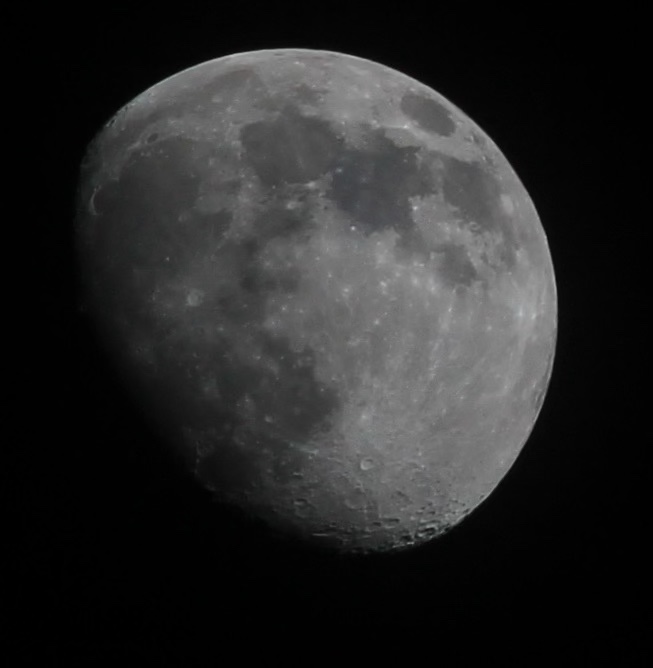
Thank you for the beauty of Sister Moon tonight
Thomas Merton shared these words about darkness and life which bring comfort this night:
And it is in this darkness, when there is nothing left in us that can please or comfort our own minds, when we seem to be useless and worthy of all contempt, when we seem to have failed, when we seem to be destroyed and devoured, it is then that the deep and secret selfishness that is too close to us for us to identify is stripped away from our souls. It is in this darkness that we find liberty. It is in this abandonment that we are made strong. This is the night which empties us and makes us pure. — New Seeds of Contemplation
Now as my eyelids grow heavy
I lift this humble prayer to you
Dona Nobis Pacem
Grant Us Peace
A wee prayer from the heart of your Padre…
When I was leaving my position as the Chaplain to the Thunderbirds (USAF Air Demonstration Squadron) I was given a parting gift. One of the demonstration pilots who was the advance pilot / narrator for their shows took me up on an incentive flight. What was the incentive? Well, I can assure you that it wasn’t so that I could prove that I don’t get sick when pulling high-G maneuvers! Seriously though, part of the flight was over Death Valley. As we flew, Mike commented on how peaceful and almost beautiful it looked from the sky. My family and I had driven through Death Valley National Park a year or so earlier. The view from the ground was different indeed.
As Mike and I talked, we wondered aloud how difficult that journey must have been for the early pioneers with their wagons and horses. We were flying at Mach-1 in an airconditioned cockpit… my family and I had driven through in an airconditioned mini-van… a huge difference from the way the white emigrants experienced the valley. As the white emigrants traversed the valley, they encountered a hostile terrain and legend has it that as one of the early groups left the valley, they said “Goodbye, Death Valley!” Thus, the place name and the “white” legend was born.
The original Indigenous residents of the land, the Timbisha Shoshone people, had traversed that land for thousands of years. They found everything that they needed to survive, and the land held many sacred places for them. One group saw death and desolation while another group saw a land that provided for their needs.
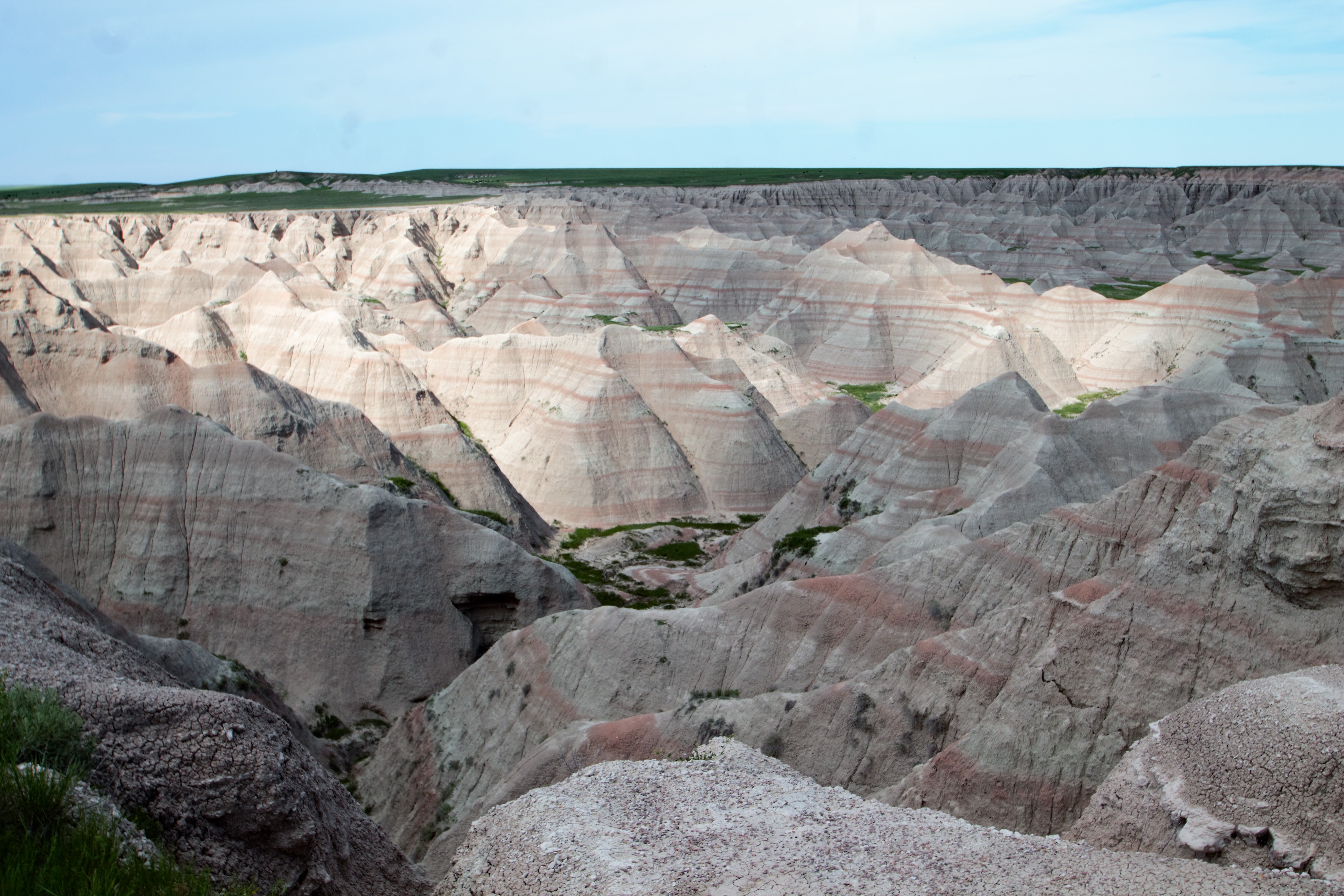
The picture at the top of the blog is from a trip that Denise and I took to the Badlands National Monument in South Dakota a few years ago. We visited the Badlands twice, once in winter and once in the spring. The Indigenous people (Lakota) who first traversed the area called it mako sica (literally bad land) because of the rough and unforgiving terrain. The French fur trappers who were the first white people to traverse these lands called it (bad lands to travel across). With few water sources, inhospitable terrain, and extreme conditions, the Lakota didn’t live there but they did hunt there. Unlike in Death Valley, both the Indigenous people and the whites had the same opinion of the Badlands. It was a good place to hunt/visit but not a good place to live permanently. Yet there was plenty of wildlife that made the place their home so there must have been something good about the land.
How does this apply to the story of the Valley of the Dry Bones from Ezekiel 37:1-14? It is all about impressions and looking beyond the surface. When Ezekiel was taken by the spirit of the Lord to the site of an ancient battle, all he saw was a scene of death a bunch of dried-up bones. “He said to me, ‘Mortal, can these bones live?’ I answered, ‘O Lord God, you know.’’ (verse 3) As the story goes on, God tells the prophet to prophesy to the dry bones and between the words of the prophet and the breath (ru-ah in Hebrew) the bones were revived. The central point though is the fact that it wasn’t until the divine breath blew over the bodies that life was given to them. This was the same divine breath that gave life to Adam in Genesis, and this would be the same divine breath that would blow on the disciples at Pentecost. What had been a place of death and destruction, the horrors of warfare, became a place of renewal and new life. I can almost hear God saying to Ezekiel, if you are inspired by my bringing life to this valley of destruction and desolation through the revival of these dead bones, just think what it would look like if my Breath was allowed to flow through my troublesome people!
The same Spirit blew through the house and transformed twelve scared and insecure followers of Jesus into Apostles with a message that they would take to the far corners of the known world. The crowds were amazed that day how a group of Galileans could possibly be sharing a message that each heard in their own language! The cynical amongst the crowds said, “Hey they’re drunk on new wine!” Instead of a momentary incident involving cynics, skeptics, and surprised Apostles; this was the beginning of a new movement, a new reformation so to speak. Did the Apostles understand what they were on the cusp of? We don’t know the answer to that question, but we do know that Peter and the others realized that something big was happening.
For our church community, Pentecost Sunday 2021 heralds a new day in the life of the church. After a long COVID exile, the congregation will be returning to the sanctuary for worship. While we will be masked and there won’t be congregational singing, something wonderful is going to happen. As the doors of the sanctuary are blessed and the worship service begins the Spirit will indeed blow throughout the sanctuary and in our individual spirits. Pentecost signified the beginning of a movement initially called The Way (the way of Jesus) that would challenge and transform the faith community and world.
My prayer for the church at large this Pentecost Sunday is that it will be open once more to the transformative power of the Holy Spirit in individual lives and in the church community. What will that transformation look like? Perhaps the dry bones of division, gossip, and mistrust will be replaced with the living body of unity in the midst of diversity, talk that uplifts and builds up individuals and the community, and a body that walks with and trusts the Spirit to guide it through the ministry it has been called to live out. Come Holy Spirit, may you challenge us, renew us, and energize us as we seek to be the hands and feet of Christ in this community and beyond as we serve in the name of our risen Lord.
How often do we hear the phrase “It’s my right” or “It’s my freedom” chanted by people? I truly wonder how many understand just what freedom and individual rights really mean. Instead of going in-depth with this reflection right now, I want to share these words of wisdom from Thomas Merton from No Man Is an Island.
Conscience is the soul of freedom, its eyes, its energy, its life. Without conscience, freedom never knows what to do with itself… Just as love does not find its fulfillment merely in loving blindly, so freedom wastes away when it merely “acts freely” without any purpose. (p. 27)

“The true democrat is he who with purely nonviolent means defends his liberty and, therefore, his country’s and ultimately that of the whole of mankind.”—Mohandas K. Gandhi, The Wisdom of Gandhi
This quote is about far more than partisan politics…
The sun has set and the Vesper Lights flicker and glow
Thank you for a wonderful day, Lord
A time of reflection and study
A time to simply Be Still
A time to put up artwork in our house
A time to put together a raised garden bed
An evening to snuggle with my sweetheart and our puppy
Now as my eyelids grow heavy
I lift this humble prayer to you
Dona Nobis Pacem
Grant Us Peace
A wee prayer from the heart of your Padre…

Among American adults about 4% self-identify as atheists. I don’t like saying this, but if you look at behavioral patterns, the percentage is much higher. There’s a lot of what Richard Rohr calls “practical atheism” among us church-going Christians. (The Wisdom Pattern, p. 74)… read more on
Love and Wonder

This is something that has been on my mind for a number of years now. The more that I study scripture and the teachings of Jesus; the more I see a disconnect between his teachings and Christianity today. In the book of Acts the story of the early Christian community is told. One of the key ingredients in this early gathering of believers was concern for others.
All who believed were together and had all things in common; they would sell their possessions and goods and distribute the proceeds to all, as any had need. Day by day, as they spent much time together in the temple, they broke bread at home and ate their food with glad and generous hearts, praising God and having the goodwill of all the people. And day by day the Lord added to their number those who were being saved.
(Acts 2:44-47)
At what point did the concern of the individual believer turn from concern for others to their concern primarily about their own individual salvation? The concern for me is this—when did the individual salvation of a believer became more important than loving your neighbor? Of course, I ask this question as much to myself as I do anyone else. When did the ego, and in its worst case, narcissism become more important than the other?
As I continue to get to know Thomas Merton through his writings, I sense some of the same struggle that he had in his own heart. How could this monk and contemplative balance concern for the world that he left while at the same time continue to follow his calling to withdraw from the world?
In No Man Is an Island, Merton had the following to say about selfishness — To consider persons and events and situations only in the light of their effect upon myself is to live on the doorstep of hell. Selfishness is doomed to frustration, centered as it is upon a lie. To live exclusively for myself, I must make all things bend themselves to my will as if I were a god. But this is impossible. (p. 24)
The first step in restoring my (our) relationship with God is to look beyond myself (ourselves). In the words of 1 John 4:7-8 — Beloved, let us love one another, because love is from God; everyone who loves is born of God and knows God. Whoever does not love does not know God, for God is love. Only then can we begin to repair the damage that centuries of selfishness have inflicted on the community of faith that was formed at Pentecost and became the church.
Verse of the day All of them were filled with the Holy Spirit and began to speak in other languages, as the Spirit gave them ability. – Acts 2:4
Voice of the day
[The] way that racism so deeply shapes American society, it really is impossible to imagine building a genuine multiracial movement without taking up the specific grievances of Black people, which cannot just simply be reduced to questions of class. – Keeanga-Yamahtta Taylor
Prayer of the day
Holy God, you spoke the world into being. Pour your Spirit to the ends of the earth, that your children may return from exile as citizens of your commonwealth, and our divisions may be healed by your word of love and righteousness.
– From Revised Common Lectionary Prayers
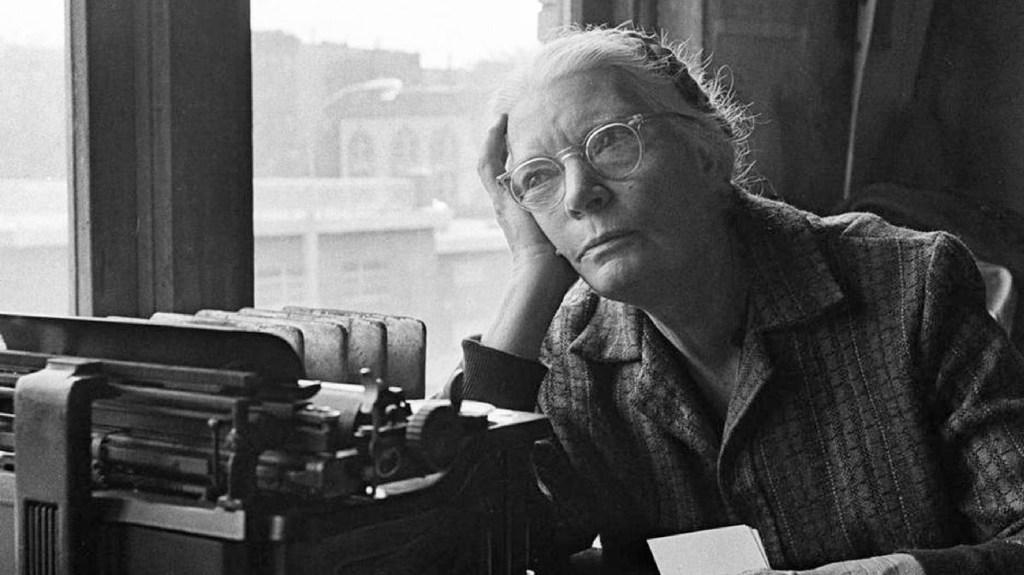
“When I think of Jesus I think of someone who was constantly passionate; I think of all his experiences as part of His Passion: the stories He told, the miracles He performed, the sermons He delivered, the suffering He endured, the death He experienced. His whole life was a Passion—the energy, the love, the attention He gave to so many people, friends and enemies alike.”—Dorothy Day

