

“I just think that if one is going to preach nonviolence and one is going to advocate for nonviolence, one’s standard should be consistent.”—Ta-Nehisi Coates

So often I hear the phrase it is God’s will being thrown around by people who have food, shelter, security, and stability. The words are all too often condescending towards those who struggle day-by-day. What if God’s will means we share what we have with those who struggle. Thomas Merton’s words make sense to me and they should challenge each one of us to do a better job of loving our neighbors.
It is easy enough to tell the poor to accept their poverty as God’s will when you yourself have warm clothes and plenty of food and medical care and a roof over your head and no worry about the rent. But if you want them to believe you–try to share some of their poverty and see if you can accept it as God’s will yourself! — Seeds of Contemplation
“Being deeply loved by someone gives you strength, while loving someone deeply gives you courage.”—Lao Tze
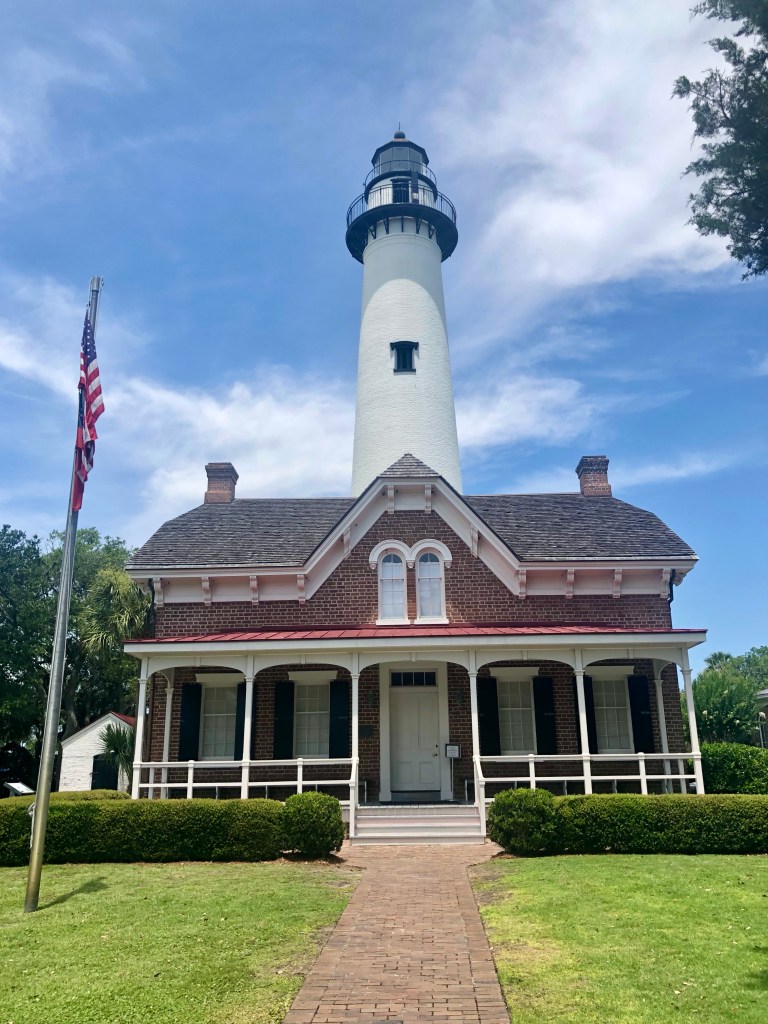
Some food for thought as we relax and unwind on a much needed vacation. Thank you, Thomas Merton… we are enjoying the present moment ❤️❤️
You do not need to know precisely what is happening, or exactly where it is all going. What you need is to recognize the possibilities and challenges offered by the present moment, and to embrace them with courage, faith and hope. (Conjectures of a Guilty Bystander)
Verse of the day
Speak out, judge righteously, defend the rights of the poor and needy. – Proverbs 31:9
Voice of the day
You know, it’s funny, when it rains it pours / They got money for wars, but can’t feed the poor. – 2Pac, “Keep Ya Head Up”
Prayer of the day
God of justice, open our eyes to see you in the face of the poor. Open our ears to hear you in the cries of the exploited. Open our mouths to defend you in the public squares as well as in private deeds. – Adapted from Being Neighbor, the Catechism and Social Justice
“The first thing to be disrupted by our commitment to nonviolence will be not the system but our own lives.”—James Douglass

While this week and next may not fit exactly into the mold of deep contemplation, these two weeks will indeed be a blessing to both of us. As we come to the end of the first day which includes travel, these words from Merton’s Seven Story Mountain resonate with me.
Contemplation means rest, suspension of activity, withdrawal into the mysterious interior solitude in which the soul is absorbed in the immense and fruitful silence of God and learns something of the secret of His perfections less by seeing than by fruitive love.
May this time indeed be a time of rest, restoration, and blessing.
The sun has set and the Vesper Lights flicker and glow
It has been a day for travel and exploring
It has also been a time with very dear friends
Now as my sweetheart and our puppy snuggle on the couch
I lift this humble prayer to you
Dona Nobis Pacem
Grant Us Peace
A wee prayer from the heart of your Padre…
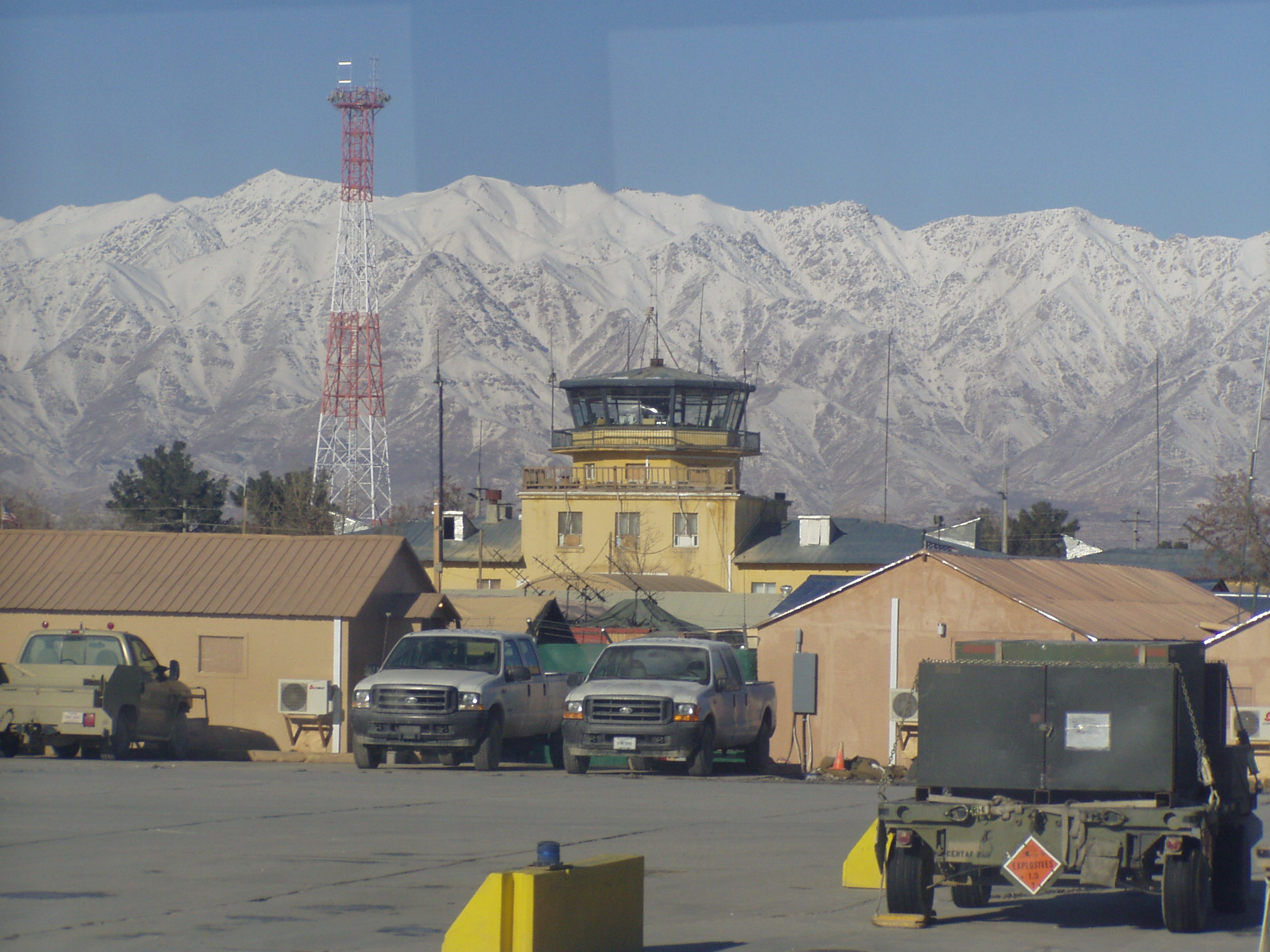
In 2005 I was deployed to Afghanistan and Uzbekistan for just over four months. The picture above is the control tower at Bagram Air Base.
I left Grand Forks Air Force Base in North Dakota on January 1st, 2005 and arrived at Bagram in the very early morning hours (3am) of January 3rd. At that point, US and Coalition forces had been there just over four years. We were called out of an in-processing briefing at 7am to form up along the “main street” of Bagram that led to the flightline. The bodies of three Special Forces members were beginning their last journey home. As I held my salute a lot went through my mind as I thought about the families on the other side of the world and about their fellow forces members. That deployment offered many insights to a young Chaplain, Major. Insights about war, politics, the military-industrial complex, and the innocent victims of war.
Just over twenty years later, forces are still at Bagram and there is still a state of war, even as talks about leaving Afghanistan go on at the higher political levels. At the end of June, I will have been retired from the Air Force for ten years. My views on war, the military-industrial complex, and corporate/political corruption have continued to develop and deepen. Part of my own inner struggle and journey has been guided by Thomas Merton. He wrote during a time in our country’s history when division and hatred were very prevalent. Sixty years later, his writings are eerily relevant and prophetic as this nation and world continue to be dominated by division and hatred.
These words of his from a posthumous collection of his writings (Love and Living) struck me today. In our modern world the fascination of violence has become, through TV, magazines, movies, radio, etc., almost irresistible. There is. now so much free-floating terror and hatred in the moral climate of the world that the slightest and most ridiculous of actions can be interpreted symbolically and instantly unleash mass hysteria on a global scale… the crude symbolism of violence has gained its power precisely from the fact that the symbolism of love has been so terribly debased, cheapened, and dehumanized.
In today’s sermon, I explored the call to extravagant love which Jesus calls us to. The Kingdom of God that Jesus spoke about in the parable of the mustard seed is a kin-dom where love, justice, grace, forgiveness, and mercy are more than simply buzzwords on a t-shirt. The mustard seed of Jesus’ day can easily be compared to kudzu today. It is invasive and takes over quickly. Justice, kindness/mercy, and humbly walking with God are just some of the products of such a way of living. Don’t we need that sort of response today? Our response to hatred, greed, fear-mongering, fear, etc., must be different from what we are seeing far too often today.

As the church emerges from over a year of challenges, this Padre is emerging as well. To say that the last fifteen months have been a challenge would be a massive understatement. Unfortunately, as the US and other nations appear to be emerging, there is still much of the world without access to vaccines where deaths are skyrocketing.
In the midst of all of this, I firmly believe that the church is at a crossroads. Will the church return to “situation normal” 2019 or will something new emerge? With the present state of religious and political division… with hatred, racism, sexism, grotesque nationalism, and the rejection of life which we all hold in common… where are we and how we will move forward is at the core of who we are.
Thomas Merton asked the following in his book, My Argument with the Gestapo: If you want to identify me, ask me not where I live, or what I like to eat, or how I comb my hair, but ask me what I am living for, in detail, ask me what I think is keeping me from living fully for the thing I want to live for.
So what are we living for? Are we living for love and life? Are we living for fear and hatred? In his 1967 address to the Southern Christian Leadership Conference, Dr King had the following to say: Returning hate for hate multiplies hate… Darkness cannot drive out darkness; only love can do that. Hate cannot drive out hate; only love can do that. I have decided to stick with love… hate is too great a burden to bear.
Sitting with these reflections from Dr King and Thomas Merton offers a challenge to me, and I hope to you as well dear reader. Who am I? Who are we? How will we choose to live? There is much to consider as we choose how to live day by day.

“Transcending violence is forged by the capacity to generate, mobilize and build the moral imagination. Stated simply, the moral imagination requires the capacity to imagine ourselves in:
a) a web of relationships that includes our enemies;
b) the ability to sustain a paradoxical curiosity that embraces complexity without reliance on dualistic polarity;
c) the fundamental belief in and pursuit of the creative act;
d) and the acceptance of the inherent risk of stepping into the mystery of the unknown that lies beyond the far too familiar landscape of violence.”
—John Paul Lederach

