Skip to content

The Chosenness of the Other – Henri Nouwen

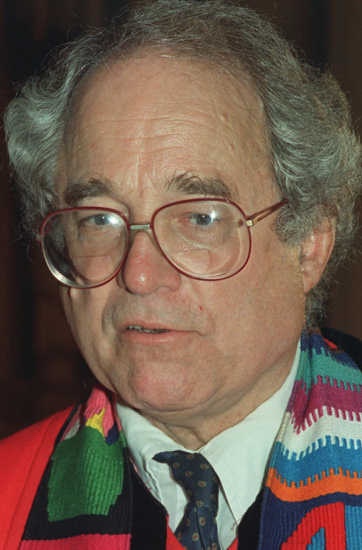
When we claim and constantly reclaim the truth of being the chosen ones, we soon discover within ourselves a deep desire to reveal to others their own chosenness. Instead of making us feel that we are better, more precious or valuable than others, our awareness of being chosen opens our eyes to the chosenness of others. That is the great joy of being chosen: the discovery that others are chosen as well. In the house of God there are many mansions. There is a place for everyone—a unique, special place. Once we deeply trust that we ourselves are precious in God’s eyes, we are able to recognize the preciousness of others and their unique place in God’s heart.

Pace e Bene – 12 August 2024

image and quote courtesy of Pace e Bene

“Differences of race, nationality, or religion should not be used to deny any human being citizenship rights or privileges. Life is to be lived to its fullest so that death is just another chapter. Memories of our lives, of our works, and our deeds will continue in others.”—Rosa Parks

We Are Seen by God’s Loving Eyes – Henri Nouwen

The greatest spiritual battle begins—and never ends—with the reclaiming of our chosenness. Long before any human being saw us, we are seen by God’s loving eyes. Long before anyone heard us cry or laugh, we are heard by our God who is all ears for us. Long before any person spoke to us in this world, we are spoken to by the voice of eternal love.

Pace e Bene – 11 August 2024

image and quote courtesy of Pace e Bene

“Gandhi knew anger but controlled it. He knew fear but smiled at it and continued to oppose injustice. He knew hate but rejected it. He knew love and embraced it. He found nonviolence and nonviolent resistance and offered it to the world.”—Rajmohan Gandhi, Grandson of Mahatma Gandhi

Nothing Human Is Alien – Henri Nouwen

Through compassion it is possible to recognize that the craving for love that people feel resides also in our own hearts, that the cruelty that the world knows all too well is also rooted in our own impulses. Through compassion we also sense our hope for forgiveness in our friends’ eyes and our hatred in their bitter mouths. When they kill, we know that we could have done it; when they give life, we know that we can do the same. For a compassionate man nothing human is alien; no joy and no sorrow, no way of living and no way of dying.

Pace e Bene – 10 August 2025

image and quote courtesy of Pace e Bene

“The war economy—with its coercive system of racism, capitalism and neoliberalism—has each one of us entangled in a grip. We’ve been indoctrinated into war economy habits—but we can begin to practice our way out of the war economy into the local peace economy. This requires pivoting away from ways of being that serve the war economy—like alienation, apathy, scarcity, and control—into ways of being that cultivate conditions for peace—like connection, engagement, abundance, and rootedness. We call these the Pivots to Peace.”—The Peace Economy Workbook, CODEPINK

Compassion – Henri Nouwen

Compassion asks us to go where it hurts, to enter into the places of pain, to share in brokenness, fear, confusion, and anguish. Compassion challenges us to cry out with those in misery, to mourn with those who are lonely, to weep with those in tears. Compassion requires us to be weak with the weak, vulnerable with the vulnerable, and powerless with the powerless. Compassion means full immersion in the condition of being human.

Pace e Bene – 9 August 2024

image and quote courtesy of Pace e Bene

“The true environmental impact of war is impossible to quantify because it affects a staggering array of sectors and every aspect of human wellbeing. Wars kill people, extinguish biodiversity, and destroy the infrastructure that could otherwise provide safeguards in the face of extreme weather events. Warfare is an act of climate denial.”—Nigerian writer Nnimmo Bassey, Right Livelihood Award Laureate

Violence Does Not Redress Injustice — Philip Berrigan

We Christians forget (if we ever learned) that attempts to redress real or imagined injustice by violent means are merely another exercise in denial – denial of God and her nonviolence towards us, denial of love of neighbor, denial of laws essential to our being. I do not know the man takes many forms, suffers many translations. But all end the same—a denial of our humanity, our daughtership or sonship in God. — Philip Berrigan (Fighting the Lamb’s War: Skirmishes with the American Empire, p. 204)

Community and Nonviolence – Philip Berrigan

Photo taken at Thomas Merton’s hermitage by Mike Brennan

This group of emerging young scholars (Daggy Scholars) along with Brother Paul Quenon (who was a novice when Merton was the novice master), board members, and friends from the International Thomas Merton Society are an inspiration to me as we seek to build a better community and world founded on love, peace, justice, and compassion. I’ve been thinking a lot about our wonderful and inspiring gathering where new friendships were made and current friendships deepened as we gathered for our retreat this past June.

Currently I am reading Fighting the Lamb’s War: Skirmishes with the American Empire, the autobiography of priest and nonviolent activist Philip Berigan. As I continue to read and consider our ITMS community and the emerging scholars this quote seems to encompass what I believe we are all about as a society.

In community we are responsible for one another, which means that we are responsible for the human family. We are all responsible when others are abused, crushed, bombed, or starved. In community, we are responsible for our life together, for nourishing one another, for setting good examples, and for inspiring others. (p. 170)

The emerging scholars are more than simply “fresh blood” in the society. I believe that they will continue to challenge those of us who have more years behind us than ahead of us to consider how to live and be such a community in this fractured world. I am truly thankful for their (to borrow a phrase from the ordination vows I took nearly 37 years ago) energy, intelligence, imagination, and love.

This sense of community is sadly lacking in so many places in this country and around the world. My prayer is that we can indeed be the change agents in the transformation of our communities, this nation, and the world.