
Here we are… five weeks into the closing of the church building, but NOT the closing of the Church as a Community of Faith! We are exhausted… we are tired… we are called! In such a time as this we are called to be the Body of Christ in new and unusual ways.
Just as Eleven original disciples plus one chosen from their number to continue the call of Jesus to the Twelve… the call to continue the ministry which Jesus has begun, the new age had begun.
To be honest, five weeks in I am seeking the Lord’s guidance, Grace, and strength. I am seeing so many examples of self-protection and self- idolization in the halls of Government in so many states and in DC. It disturbs me… it saddens me… it repulses me.
Thomas Merton speaks to me of such things in his book No Man is an Island. To love myself more than others is to be untrue to myself as well as to them. The more I seek to take advantage of others the less of a person will I myself will be, for the anxiety to possess what I should not have narrows and diminishes my own soul. Therefore the [individual] who loves [herself/himself] too much is incapable of loving anyone effectively, including [himself/herself]. How then can [she/he] to love another?… Charity must teach us that friendship is a holy thing, and that it is neither charitable nor holy to base our friendship on falsehood. (p. 11)
Our citizens and elected leaders all the way to the top must consider everyone in this nation and world. To quote James— Religion that is pure and undefiled before God, the Father, is this: to care for orphans and widows in their distress, and to keep oneself unstained by the world. — James 1:27
During these difficult times, may we think beyond ourselves and truly pursue the path of love and justice which God calls us to follow.
Wise and thoughtful words from Jake Owensby!
Stay-home fatigue is a thing. Without intending to do so, most of us have discovered over the past weeks that much of our former lives ran on automatic pilot… read further on https://jakeowensby.com/2020/04/17/looking-for-a-new-normal/
Silence and noise… as we enter week five of our Shelter in Place here in the Rockies there has been a stark contrast between what had been and what is the new reality. Silence and noise… heaven and hell… different feelings expressed by so many people. In his book No Man is an Island Thomas Merton said the following about silence. The rain ceases, and a bird’s clear song suddenly announces the difference between Heaven and hell. (p. 254) This is indeed an interesting concept to explore as we navigate the new reality created by the COVID-19 Novel Coronavirus pandemic.
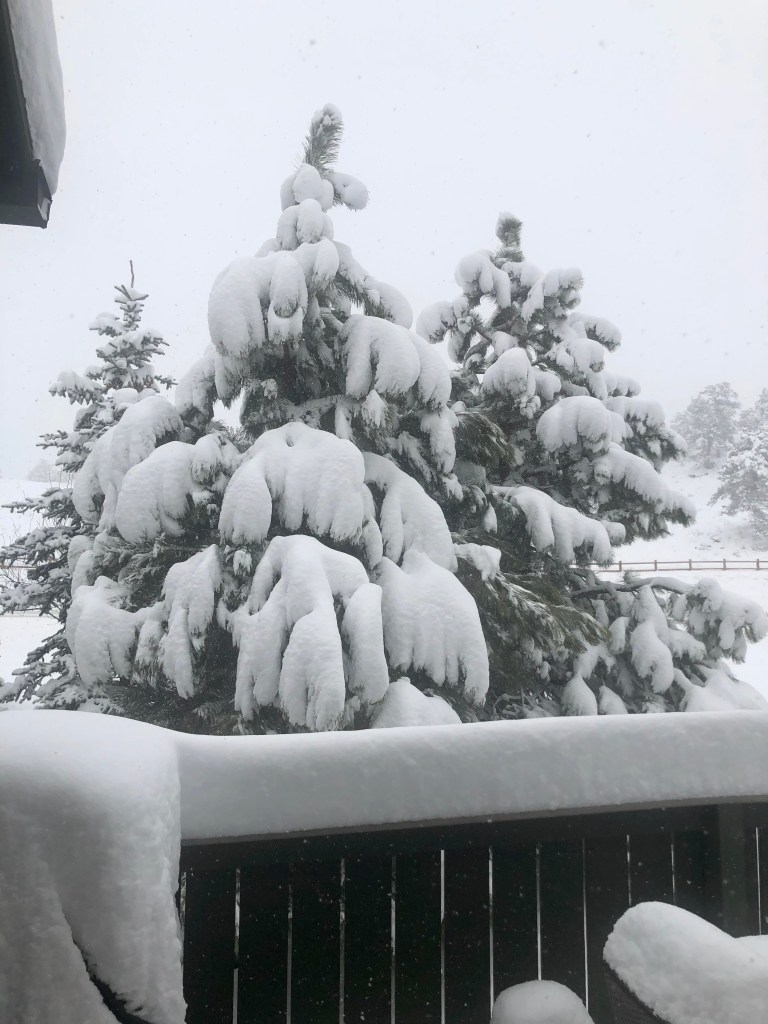
Typically when we would go out on our deck there would be lots of traffic noise with cars, trucks, and motorcycles heading into the National Park. Today (well not today since the deck is covered with 14+ inches of snow) when we step out onto the deck there are tremendous moments of silence. Without the road noise, we hear the wind blowing through the trees and the birds singing. Our shyer wild neighbors are coming out and exploring the town since the streets and parks aren’t crowded. It is indeed beautiful and you could also say it is heavenly.
However, for some the experience could be described as hell. I think about our small businesses who are struggling to stay afloat without the tourists in town. I think of musicians who are watching live gigs dry up and worrying about how to make a living. I consider those who live alone and are cut off from their friends only to find themselves in spiritual darkness. Those who suffer from Depression especially feel the darkness close in on them as the isolation continues.
In other parts of the nation I watch people who are in the hospital dying alone because their family and spiritual leaders aren’t allowed to be with them at the end. I have read about hospital folks who watch the constant parade of people coming into the hospital only to leave in body bags. They are indeed living in a hellish reality.
So how do we navigate this difficult time? It’s not easy and there aren’t quick answers. However there are examples of communities becoming creative in being a caring community in these times. A non-profit collaborates with the town and other non-profits to provide meals for the weekend free of charge. Neighbors are shopping for their at-risk neighbors to ensure that they aren’t running out of essentials. Groups are sewing masks for health care workers and first responders. Strangers are supporting strangers bringing light into the darkness. These random acts of kindness are transforming hell into a community of light. In these moments, as Merton suggests, the difference between heaven and hell.
This pandemic isn’t going to end quickly. As a nation and world we are running a marathon who’s end is nowhere in sight. This isn’t a sprint or an easy race. It is a marathon. Just as there are stations along the marathon course where runners can get water and first aid care, there are stations where we can receive sustenance and care.
That sustenance and care come from a variety of sources. Many musicians are offering virtual gigs for people (and their audience generously tips them using apps). Local restaurants, breweries, and our winery offer takeout and delivery options for people at a good price. Restaurants are preparing and distributing meals to those in need. A local grocery store is offering credit to the National Park employees who are out of work. There are so many examples of care, compassion, and community being offered in new ways.
My prayer is that we will continue to show the difference between heaven and hell by our actions, our words, and our attitude. Then we will hear the bird’s clear song as we walk this journey together.
“’My God, why have you abandoned me?’ is a strange way to begin a prayer if one truly feels God isn’t there. How can a prayer of desolation be a sign and signal of both God’s absence and presence? To pray Psalm 22.1 is to pray with Jesus Christ in solidarity with the suffering of the world.”
— Richard Bruxvoort Colligan,Watershed Moments in the Hebrew & Christian Scriptures: An Online, Self-Study Retreat
How do you pray in solidarity with the suffering of the world? How are your prayers signs and signals of God’s absence and presence?
The sun has set and the Vesper Lights flicker and glow
This is not an invitation to thank me for my service
If you want to thank a Veteran for their service, work for Peace
On the 15th of April I raised my right hand
I swore to protect the Constitution of the United States against all enemies, foreign and domestic
Tonight I weep for our nation and world
Partisan fighting and money buying votes
Lord, forgive us and direct us towards the cause
To protect the widows and orphans
To feed the hungry and stand up for the oppressed
All I can do this night is lift this humble prayer to you
Dona Nobis Pacem et in Terra
Grant us Peace on Earth
Lord, make us instruments of that peace
A wee prayer from the heart of your Padre…
The sun has set and the Vesper Lights flicker and glow
It has been another long day of prepatation
It has also been a sacred time to walk with dear friends who are family
As we reflect
As we pray
As we study
As we grow
Lord, guide us through the Valley of the Shadows
Keep us safe and secure
Surround us with your love
Protect our dear ones and all of your children
Now as my eyelids grow heavy
I lift this humble prayer to you
Dona Nobis Pacem
Grant Us Peace
A wee prayer from the heart of your Padre…
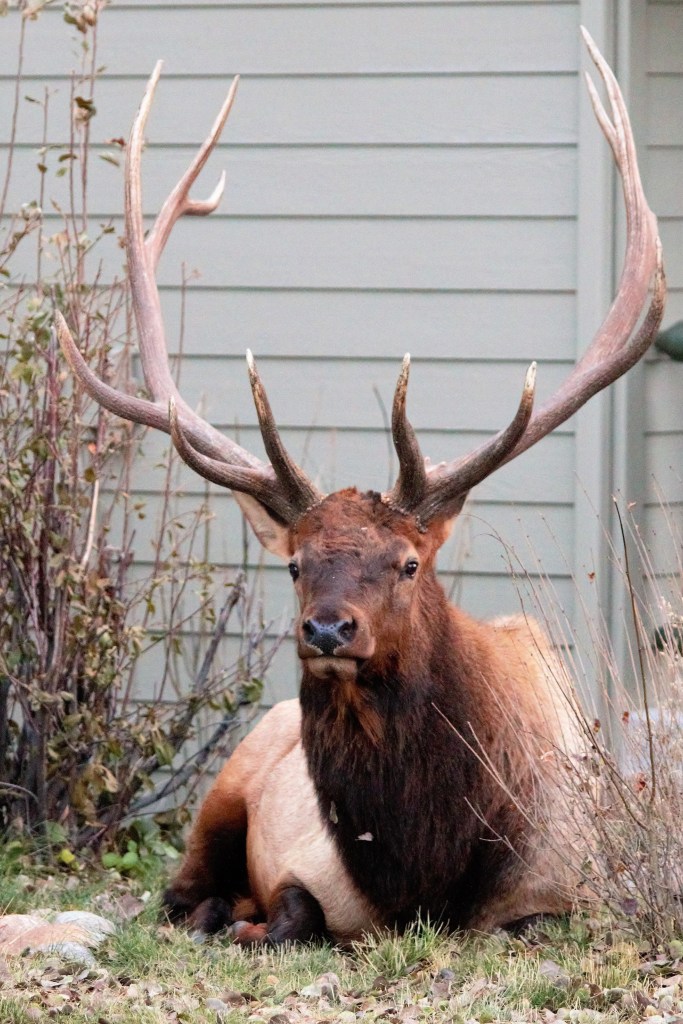
Who is your neighbor? That question has taken on a whole new meaning as we self-isolate in the wake of the COVID-19 Novel Coronavirus pandemic. Much of what we took for granted prior to the pandemic is all of a sudden bubbling up in terms of what is important.
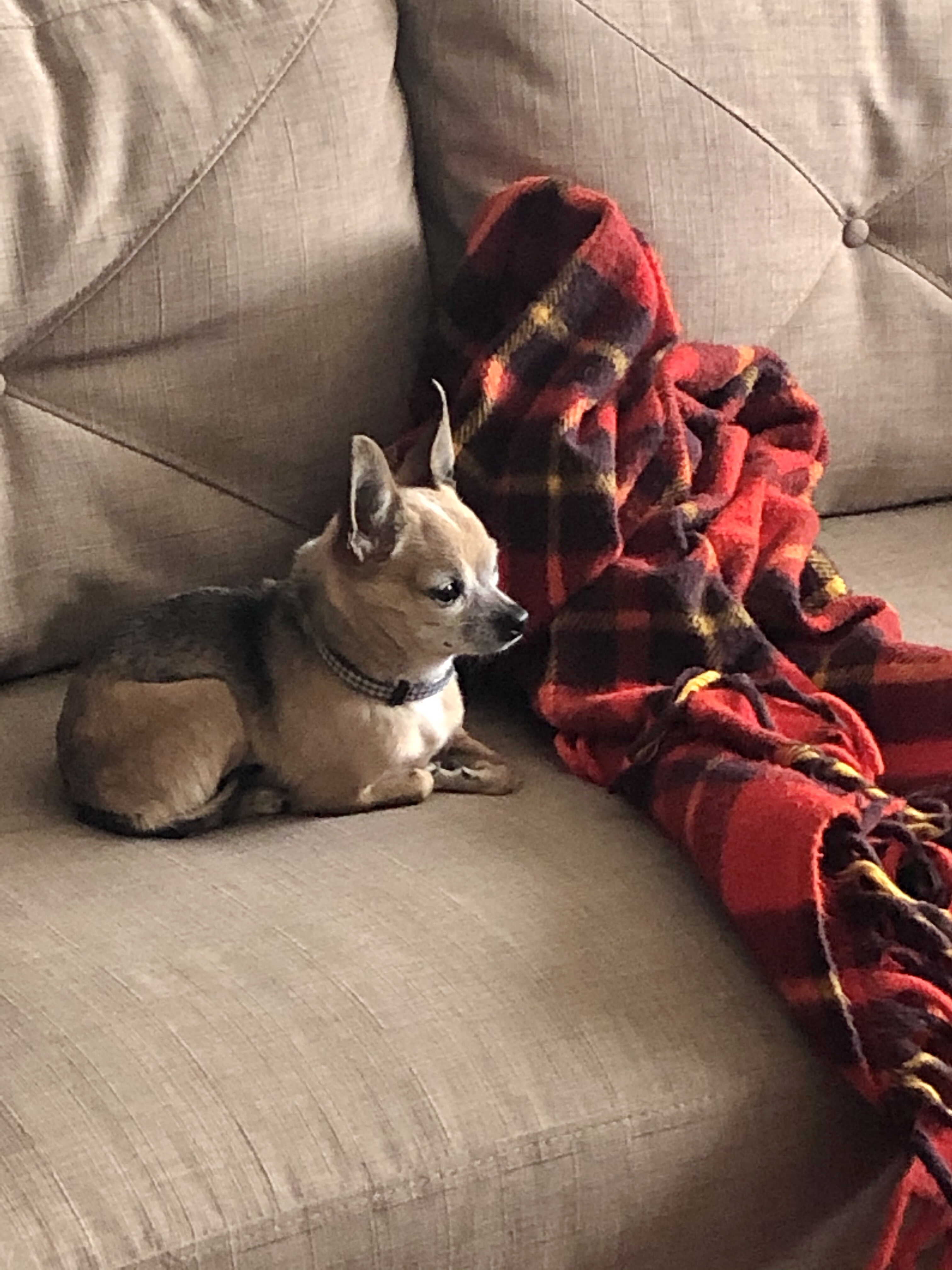
A very dear friend of ours spoke the other day about watching her neighbor’s child bouncing on a trampoline across the street. She was sitting on her front deck after doing some yard work and was watching this young child. I don’t know about her, but I do know that I am noticing the typically small details in a new way. My friend in the picture above has been hanging out in our neighborhood off and on for the past several years. It is always a joy to see him and he seems to be okay with me hanging out with him. Way before Social Distancing became the norm, our Elk and Moose neighbors taught us well!
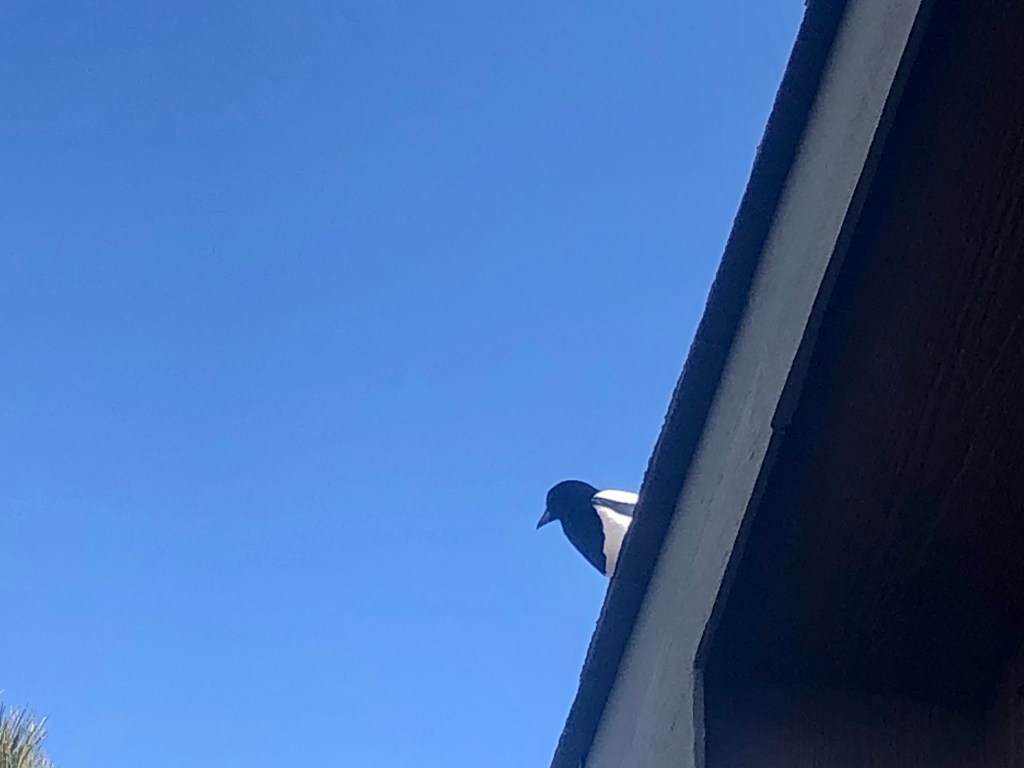
Before the most recent snowfall, Denise and I were relaxing on our back patio soaking up the sun. This neighbor (pictured below) was hanging out with us as well. In the quietness of the afternoon the magpie was quite entertaining.
So, who is your neighbor? David M Bailey wrote an adaptation of the parable of the Good Samaritan. It takes place in the inner city and the neighbor was a young girl from the neighborhood named Keisha. Here is her story in song: Chico
So, who is your neighbor? In the book Seasons of Celebration: Meditations on the Cycle of Liturgical Feasts, Thomas Merton speaks of the parable of the Good Samaritan had a wonderful take on this parable along with the question “who is your neighbor?”
Christ does not tell the scribe how to judge and classify, but teaches him that classifications are without significance in this matter of love. For we do not and cannot love according to classifications. Or if we do, then we do not love in the full sense of the word. Love is free, and does not need a good object: it can confer goodness that is hidden… For the nature of love is to give as well as to receive… Therefore if love demands first of all to receive a good from its object, before beginning to love, then it can never begin to love. (p. 143)
During these times of stress and isolation so many of us are wondering how we will make it through. So many miss the love and connection with family and friends. Isolation is incredibly difficult. Yet I believe in the midst of it all, we can discover new ways to connect, support, encourage, and love our neighbor. That is our hope… that is our prayer… that is our challenge dear reader. After all, we are still family, neighbors, and friends despite the social distancing. My prayer is that when we get through this difficult time we will have a whole new appreciation for just who is our neighbor.
“Stability calls us to stay with our emotions, to let them have room to move through us. When we block the flow of our emotional life, we also block the flow of greening in ourselves. Opening on one level creates opening on other levels as well.”
— Christine Valters Paintner, PhD,The Wisdom of the Body: A Contemplative Journey to Wholeness for Women
In what ways do you block the flow of your emotional life? Can you practice stability and stay with your emotions today, giving them room to move?

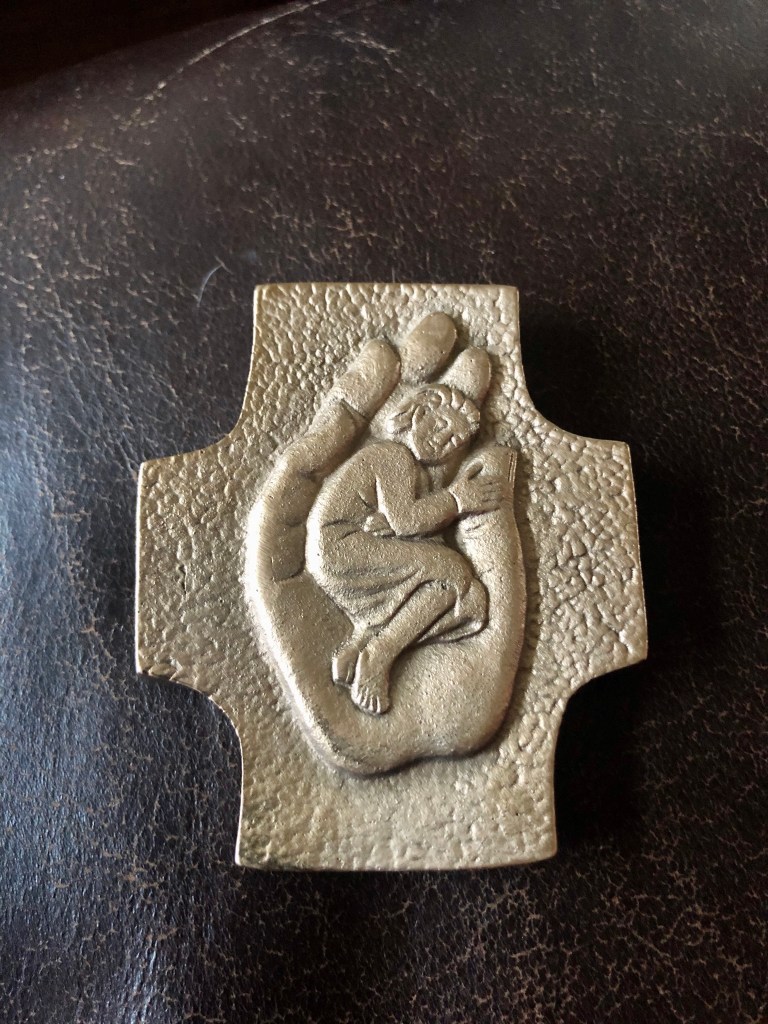
It is the Monday after Easter. While we are still working on worship for the coming week, we have also had an opportunity to rest. As this new reality continues to unfold the one thing that I have been comforted by the concept represented by the cross pictured above. It also blends in quite well with the words of assurance that David M. Bailey shared in the lyrics to his song, “Lord, You Promised.”
The song can be summarized by these two lines: Lord you promised you would keep us living
In the hollow of your holy holy hand
These words are a comfort to us in these difficult times. The pandemic overwhelms… politics overwhelm… the misinformation overwhelms… to whom can we turn? In the words of the man with the son who was possessed to Jesus: I believe; help my unbelief! (Mark 9:24) In these times we often struggle to not be overwhelmed by the tsunami that is COVID-19 as it blasts its way across the nation and globe.
That is why this Lent has been such a challenge for many of us theologically and spiritually. As we waited with the women and the disciples on Holy Saturday we felt their fear and the mystery of the unknown. Life had changed for them in a most unusual and horrifying way.
For such a time as this, I have found myself going deeper into the silence to seek God’s guidance, comfort, wisdom, and strength. One of my sources for reflection and inspiration has been Thomas Merton. In the book Seasons of Celebration: Meditations on the Cycle of Liturgical Feasts Merton shares the following about the gift of Easter:
But now the power of Easter has burst upon us with the resurrection of Christ. Now we find ourselves a strength which is not our own, and which is freely given to us whenever we need it, raising us above the Law, giving us a new law which is hidden in Christ: the law of His merciful love for us. Now we no longer strive to be good because we have to, because it is a duty, but because our joy is to please Him who has given all His love to us! Now our life is full of meaning! (p. 118)
This is what I believe is the biggest gift of Easter. From the selfless sacrifice of Jesus on the cross to the self-giving love shown on the night he was betrayed as he washed Judas’ feet and broke bread with him; Jesus redefined discipleship and service in God’s name. We are called to love and to serve… we are called to reach out beyond barriers and borders put up by humankind… we are called to invite others to be sheltered in the hollow of God’s holy, holy hand.

Gifts are so very important in our daily lives. Now I am not talking about “things” but rather what God reveals to us and gives to us. One of the gifts in the Rule of St Benedict is hospitality and welcome. Thomas Merton Wrote the following about God’s everlasting love: “God is love” and the true self is a self “in love.” God loves us with an everlasting love and it is [God’s] that first creates us. It is [God’s] love that leads [God] to seek us out, to consummate the wedding in which we become who we are. – (Merton’s Palace of Nowhere, p. 64)
I actually put this quote together with the picture on March 2nd. Do you remember March 2nd? I have to admit that I have a hard time remembering it. Bulletin planning was going on for worship services during Lent. Worship services that would be happening in the sanctuary as they always were. Twelve days later on March 14th the Session of Presbyterian Community Church of the Rockies would make the decision to close the facility to all meetings, worship, and fellowship gatherings. The next day we had our first virtual worship service. Lent would continue on in a new way.
I have talked to many of my ministry colleagues, friends, and parishioners in the time since this change. It has indeed been one of the most unusual Lents and now Easter that we have ever experienced. Yet in the midst of the weirdness, we have also experienced some amazing gifts as well. The support and encouragement Denise and I have experienced from so many is heartwarming. The church leadership reaching out to our membership through phone calls and check-ins has been heartwarming. In Estes Park we are seeing some heartwarming acts of kindness and generosity as our town seeks to weather this storm and care for the most vulnerable of its citizens.
The Hebrew Scripture reading for Easter Sunday is from the prophet Jeremiah. Jeremiah is speaking God’s words of hope to a nation in exile. The days in exile were dark yet the prophet reminded them that God would guide them through the wilderness and into a new day.
At that time, says the LORD, I will be the God of all the families of Israel, and they shall be my people. Thus says the LORD: The people who survived the sword found grace in the wilderness; when Israel sought for rest, the LORD appeared to him from far away. I have loved you with an everlasting love; therefore I have continued my faithfulness to you. Again I will build you, and you shall be built, O virgin Israel! Again you shall take your tambourines, and go forth in the dance of the merrymakers. Again you shall plant vineyards on the mountains of Samaria; the planters shall plant, and shall enjoy the fruit. For there shall be a day when sentinels will call in the hill country of Ephraim: “Come, let us go up to Zion, to the LORD our God.” (Jeremiah 31:1-6)
Right now I am watching the snow gently falling outside. The snow always brings a feeling of freshness and peace (even when it is blowing sideways!) to me. On Easter as Mary Magdalene went to the tomb where Jesus had been placed after the crucifixion something miraculous happened. While the Easter story is quite familiar after nearly 2,000 years of retelling, it speaks to me of a new hope as we navigate the COVID-19 pandemic as a community, state, nation, and world.
The church is empty this Easter. The choir and congregation isn’t singing and Larry isn’t playing the organ. Some would look at the empty sanctuary and feel sadness. I look at it in another way.
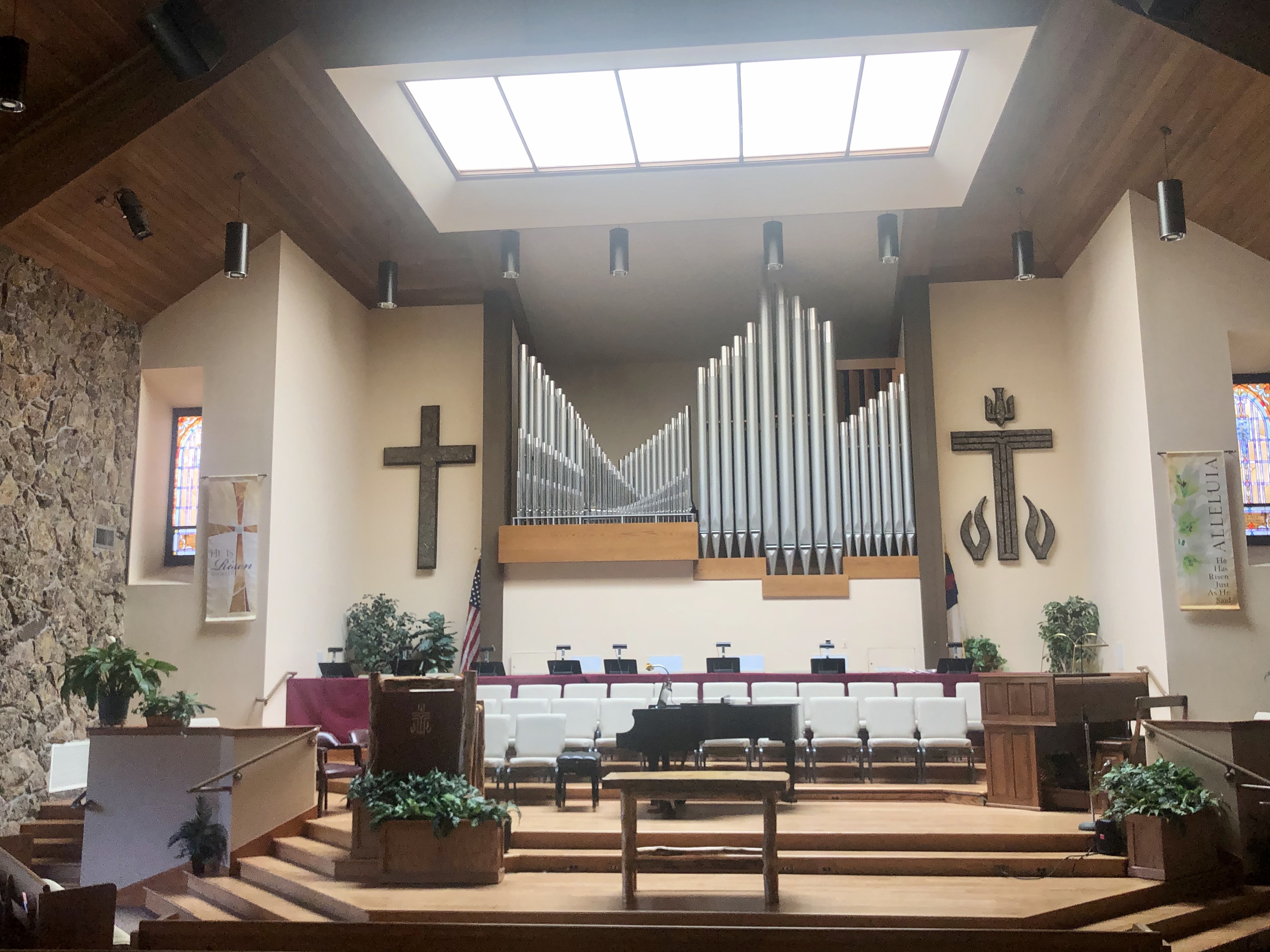
The Easter banners remind us that Christ has risen, he has risen indeed! The sanctuary is empty. The tomb was empty. He has risen! This season has taught us many things. Fellowship and caring go on in different ways. But they are still happening. Worship is going on in a new way but it is still the community of faith gathering together.
The biggest lesson for us is this: Church isn’t a building. Church is the community of faith reaching out into the life of the world. Mary didn’t find a body in the tomb. She instead found her risen Lord calling her to take the Good News first to the Disciples and then to the world. May we find the risen Lord today in the world around us. May we find the risen Lord in relationships of caring and sharing. Christ is risen! He has risen indeed! Hallelujah! Amen!

