
“The element of water invites us to be organic which means to allow your own process to unfold. It means to hold plans and expectations lightly and notice where your energy and prayer are taking you and being fluid like the element of water. It means being open to the subtle ways that God shapes and transforms us moment by moment, listening deeply for the call of the Spirit leading us forward into our lives. In our prayer, being organic means trusting what is emerging. Trusting that what comes next will be revealed in its own time.”
— Christine Valters Paintner, PhD, The Self-Study Online Retreat ~ Water, Wind, Earth and Fire: Praying with the Elements
Where in your life do you feel the invitation to embrace the sacred flow of things? Where are you invited to surrender to the organic flow of the river in your life?

The Apostle Paul reminds us of the place in our lives for faith, hope, and love in 1 Corinthians 13:13 — And now faith, hope, and love abide, these three; and the greatest of these is love.
You know, as I ponder this, you really can’t parse out the individual components of our spiritual life. They are all mixed together in a delightful recipe. As I watch Denise cook, she busily and thoughtfully mixes together all of the ingredients. There is a time and a method for creating the meal. It is a fascinating to me and it is a spiritual experience for her as she cooks. It is also spiritual experience for me as I watch and then enjoy the fruits of her labors.
Faith, Hope, and Love are all necessary ingredients of a spiritual life. While the greatest of these is love as Paul said, you can’t have love without Faith and Hope. And you can’t have Faith without Love and Hope any more than you can have Hope without Faith and Love. During these days of isolation and fear which surround the COVID-19 Pandemic, we can become scared, confused, and fearful. Those emotions and feelings can quickly turn us against one another. Sadly I am seeing this happen far too often. All of God’s children, created in the Image of God (Imago Dei) aren’t coming together. Instead there is so much division in this world.
While I was reading Thomas Merton’s book No Man Is an Island, the following passage spoke to me: Without hope, our faith gives us only an acquaintance with God. Without hope and love, faith only knows [God] as a stranger. For hope casts us into the arms of [God’s] mercy and of [God’s] providence. If we hope in [God], we will not only come to know that [God] is merciful but we will experience [God’s] mercy in our own lives. (pp. 15-16)
My prayer for all of God’s creation is that we can both experience God’s mercy on our own lives; but that we will also share God’s love and mercy in our lives of faith which we share with others.
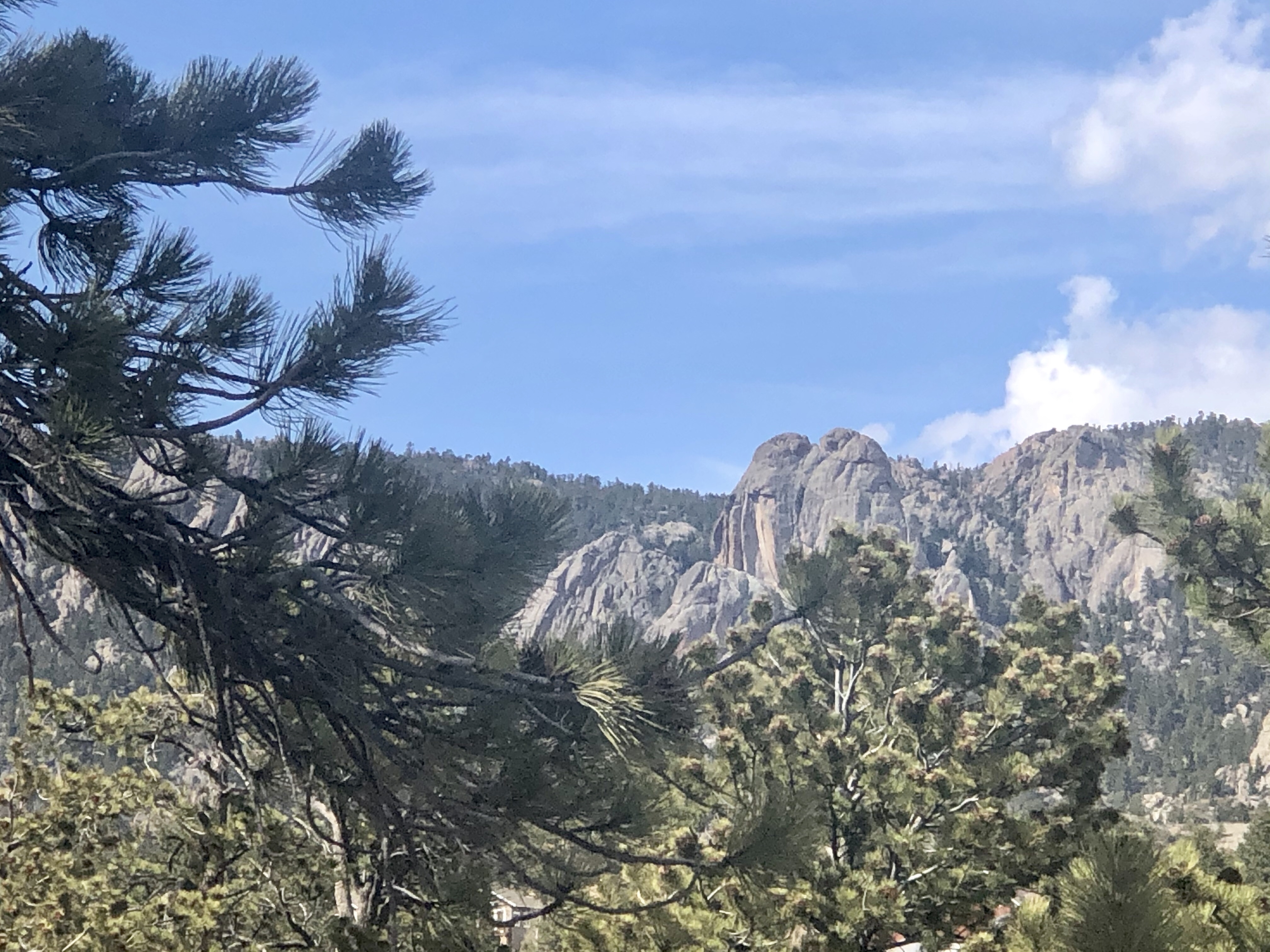
The sun has set and the Vesper Lights flicker and glow
It has been a good day of ministry
It has also been a good day spent with friends 💜🎶
It has been a good day of worship preparation
It has been a good day to be with my sweetheart
Now as my eyelids grow heavy
I lift this humble prayer to you
Dona Nobis Pacem
Grant Us Peace
A wee prayer from the heart of your Padre…
“All of creation is the intentional handiwork of the Creator. Not just humans but all of creation mirrors the beauty of the Creator. Nature is experienced as a vast and sacred landscape shimmering with goodness because of its divine creation. Nature is the original sacred space and sanctuary where humans are invited to dwell.”
— John Valters Paintner, MTS, Earth, Our Original Monastery: Cultivating Wonder and Gratitude through Intimacy with Nature
How does your perspective on nature change when you interpret the creation story in Genesis to mean that we humans are part of creation, not better than it, that we are connected to all life through our common Creator?
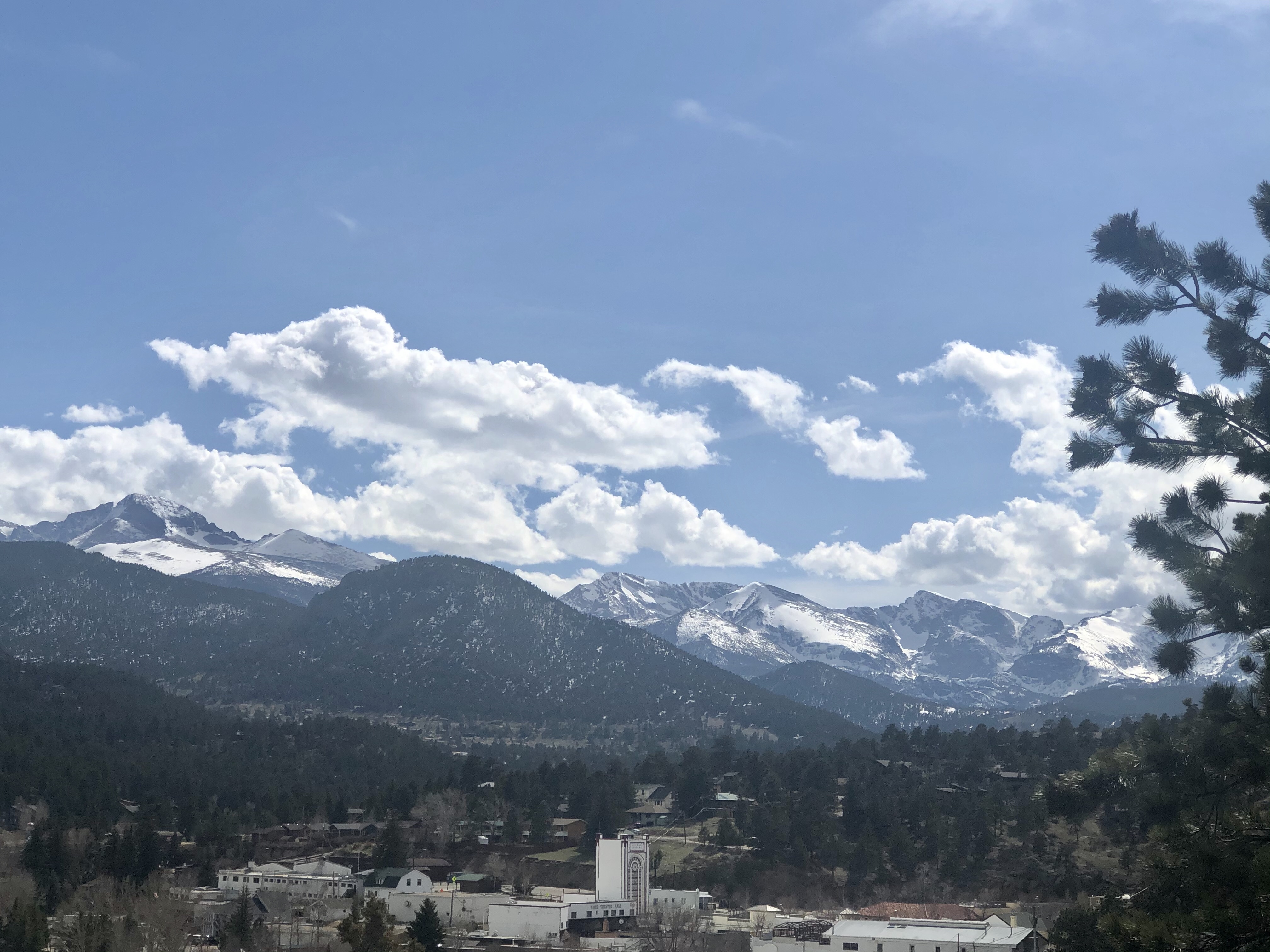
And what is hope exactly? That dear reader is a question to ponder in this new reality that the COVID-19 Pandemic has presented to us. Today in this new reality Denise and I took a walk. It was a walk where we wore masks / face coverings. When I think about how difficult it is to breathe with these coverings I think of our front-line medical responders who are wearing masks for too many hours and too many days. All of a sudden my discomfort pales in comparison.
In these trying times I keep looking for signs of hope which the Spirit gives us. On our walk the hope was found in the songs of the birds and in the Elk we spent some time with.
In his book No Man Is an Island, Thomas Merton had the following to say about hope: We are not perfectly free until we live in pure hope. For when our hope is pure, it no longer trusts exclusively in human and visible means, nor rests in any visible end. [The one] who hopes in God trusts God, Whom [he/she] never sees, to bring [him/her] to the possession of things that are beyond imagination. (p.14)
My hope and my prayer for this world and for each of you dear reader is that we will always be able to find that hope surrounding us. And in that hope, may the words of Julian of Norwich hold fast in our hearts and in our lives: All shall be well, and all manner of thing shall be well.
“Artistic knowing is different from intellectual knowing, engaging us symbolically and in embodied ways, stretching us beyond the limits of the rational, linear thinking upon which we tend to rely.”
— Christine Valters Paintner, PhD,and Betsey Beckman, MM Awakening the Creative Spirit: Bringing the Arts to Spiritual Direction
What is something you’ve learned ‘artistically’ that you hadn’t learned in a more ‘traditional’ way?
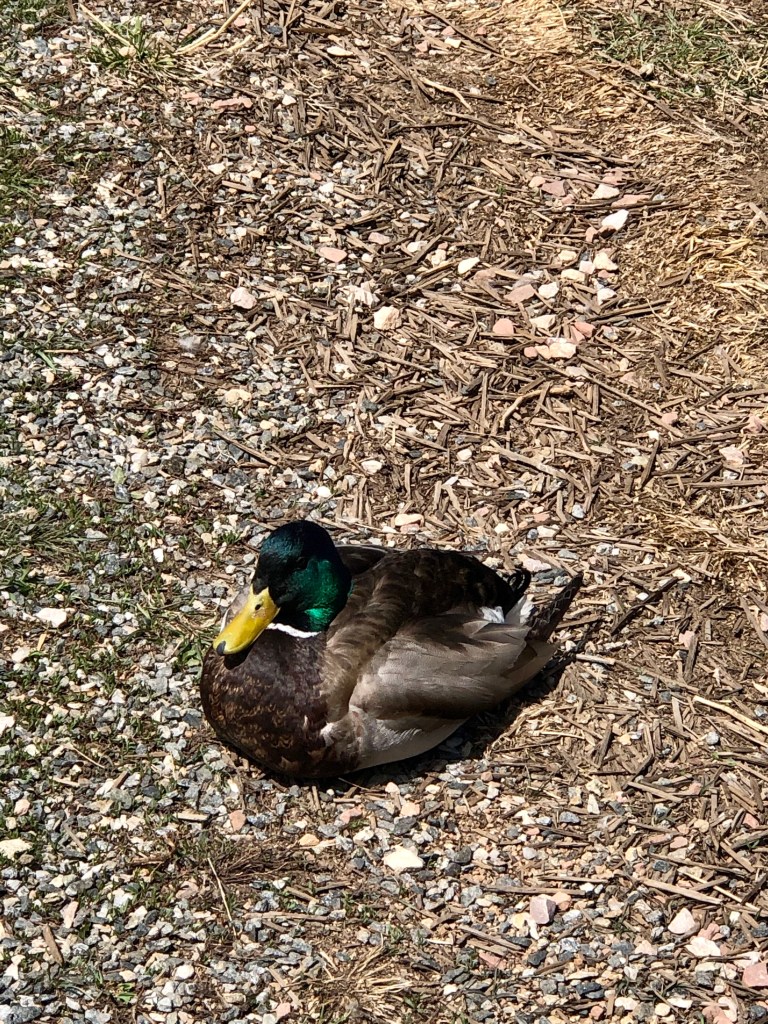
Today we were actually able to take a walk between fellowship and worship. Did I have my iPhone or camera with me? Nope! As we walked along the path to our church’s outdoor chapel, we listened to a variety of birds singing. We also watched multiple House Finches (male and female) fly and sing. This was where my telephoto lens would have come in handy!

It was a beautiful walk until we came across far too many people ignoring the directive of the Governor to social distance and wear masks. It truly turned my stomach. Despite feeling frustrated, my heart returned to the song of the House Finches next to our outdoor chapel and columbarium.
As I reflect upon the afternoon walk and the beauty of our natural surroundings my thoughts turned to the poetry of Thomas Merton. In the book Emblems of a Season of Fury, I read the following poem:
O Sweet Irrational Worship
Wind and a bobwhite
And the afternoon sun.
By ceasing to question the sun
I have become light,
Bird and wind.
My leaves sing.
I am earth, earth
All these lighted things
Grow from my heart.
A tall, spare pine
Stands like the initial of my first
Name when I had one.
When I had a spirit,
When I was on fire
When this valley was
Made out of fresh air
You spoke my name
In naming Your silence:
O sweet, irrational worship!
I am earth, earth
My heart’s love
Bursts with hay and flowers.
I am a lake of blue air
In which my own appointed place
Field and valley
Stand reflected.
I am earth, earth
Out of my grass heart
Rises the bobwhite.
Out of my nameless weeds
His foolish worship. (p. 42)
During these days of isolation and COVID-19 we look for signs of hope and beauty. We look for signs of the Spirit’s presence.
Perhaps we can pause and consider the beauty of such Irrational Worship. Perhaps in that worship we can find hope. Will you join me, dear reader, in this endeavor? May we indeed find hope together.

Nearly six years ago I attended a Men’s Contemplative Retreat at St Bernard’s Abbey in Cullman, Alabama. It was a beautiful setting and a wonderful time of silence with the exception of our course gatherings. This was also the beginning of the transition for me from Silence being scary to Silence being welcomed. One blessing of the time at St Bernard’s was time spent wandering the Abbey grounds. This particular path reminds me that we can find Jesus in the midst of life. Especially in these extraordinary times we are called to look for Jesus in our midst.
Finding the quiet places is so important for me and for Denise too. It is in the quiet places and spaces where we recharge our spiritual batteries. Places like St Bernard’s Abbey… The Benedictine Sister’s Sacred Heart Monastery (also in Cullman)… the campus of Spring Hill College in Mobile, Alabama where we went for an Ignatian Silent Retreat… The Monastery of the Holy Spirit in Conyers, Georgia… and most recently The Abbey of our Lady of Gethsemane outside of Louisville, Kentucky speak to my own heart.
I have also gone to places of quiet where the only sounds were the sounds of nature… the birds… the ocean waves… the river flowing… the wind blowing in the trees…. In these places I have often sought God’s guidance in the midst of life’s challenges.
In a similar sort of way, the two disciples were walking along the road from Jerusalem to Emmaus. As they walked together they were discussing everything that had happened in Jerusalem. Even though we are two weeks removed from Easter, these disciples were walking to Emmaus on the day of Jesus’s resurrection. The last person they thought they would encounter on the road that day was Jesus. They had heard the story that the women brought back from the empty tomb. They had also seen Jesus stripped, beaten, scourged, and then crucified. They had heard him breathe his last breath and die. The image burned into their brains was of a bloody, beaten, disfigured man hanging on the cross.
So as they walked along the road a stranger came along side of them. They talked with him discussing Scripture and what had happened, yet they didn’t recognize him. It was only when he blessed the bread, broke it and gave it to them that they recognized him. They then realized that their hearts were burning within them as he shared Scripture and the journey with them.
In these unusual times of pandemic and COVID-19 we are finding ourselves isolated and often in silence. For some people the silence and the isolation are tremendously difficult. For some friends of mine, this is the time to reflect and to write music. For others photography has taken on a whole new meaning as they share the beauty of God’s creation with each other. Even those of us who are working frantically to offer Zoom opportunities for worship, fellowship, study, and meetings do get some time when it is quiet and we can simply absorb the wonder of God’s creation.
For me I embrace those moments of stillness and reflect on the writings of Thomas Merton as we contemplate the changes in the world and these periods of silence. This time has been a time of reflection and study. It has also been a time to simply stop, breathe, and be open to the Spirit’s call. In his book No Man is an Island, Merton said the following about art, life, and reflection:
Art enables us to find ourselves and lose ourselves at the same time. The mind that responds to the intellectual and spiritual values that lie hidden in a poem, a painting, or a piece of music, discovers a spiritual vitality that lifts it above itself, takes it out of itself, and makes it present to itself on a level of being that it did not know it could ever achieve. (p. 35)
Perhaps if we are able to make good use of these periods of silence we will be inspired. Perhaps our hearts may indeed burn as the Spirit calls us and guides us through these challenging times.

I have spent a lot of today reading Superabundantly Alive: Thomas Merton’s Dance with the Sacred Feminine. Merton’s words and thoughts have taken me back to my seminary days (1983-1986) when Liberation Theology and Feminist Theology were shaking the world of seminary students like me. I was challenged to the core of my own beliefs. One of my professors at United Theological Seminary of the Twin Cities in St Paul, Minnesota taught a class which was called “Constructive Theology” or as we referred to it, “Destructive Theology.” The course broke down the theologies we brought with us to seminary and began rebuilding our theologies from the foundation.
Following graduation and three years in the two yoked-parishes I served in West Central Minnesota, I entered the US Air Force. To be honest, the military is one of the most male-oriented institutions in the US. Yet in the midst of it, I found opportunities to see and to support the sacred feminine as I supported women who were being “raped” by the very system they had sworn to serve.
As I reflect upon those years, I see how my own theology of liberation and social justice was influenced. My sisters showed me how to be Christ to others in the midst of oppression and misogyny.
Now we are living in unusual times thanks to COVID-19, hatred, fear mongering, and the state of division in our country. The misogynistic and fear-mongering state of so much of this country worries me (to say the least!). I think back at this time to the ideals of my call to ministry. I also think of so many people who seek to serve God along with us. Are they saints in the traditional sense? Not really. However, what is a saint? It a saint a pious, faultless, pure individual? I don’t believe that is the definition of a saint. Aren’t the saints who have been called to make a difference you and me? St Francis of Assisi never saw himself as a saint. He saw him as a simple fool trying to follow Christ. Isn’t that who we are dear reader? I know that describes me to a T!
Thomas Merton had something to say about “sainthood” and the life of a believer. I believe we can learn a lot from his contemplation and vision. He is almost Reformed in his understanding. In our tradition, all of us are Saints… called by God and commissioned to serve all of God’s children.
For me to be a saint means to be myself. Therefore, the problem of sanctity and salvation is in fact the problem of finding out who I am and of discovering my true self…Trees and animals have no problem. — New Seeds of Contemplation (p. 31)
May we seek to be such saints doing the will of God. What is that will? To Do Justice… To Love Kindness/Mercy… To Walk Humbly With God… to Love God and to Love EVERY neighbor. That is our calling… that is our charge. We can do no less as we seek to serve God.
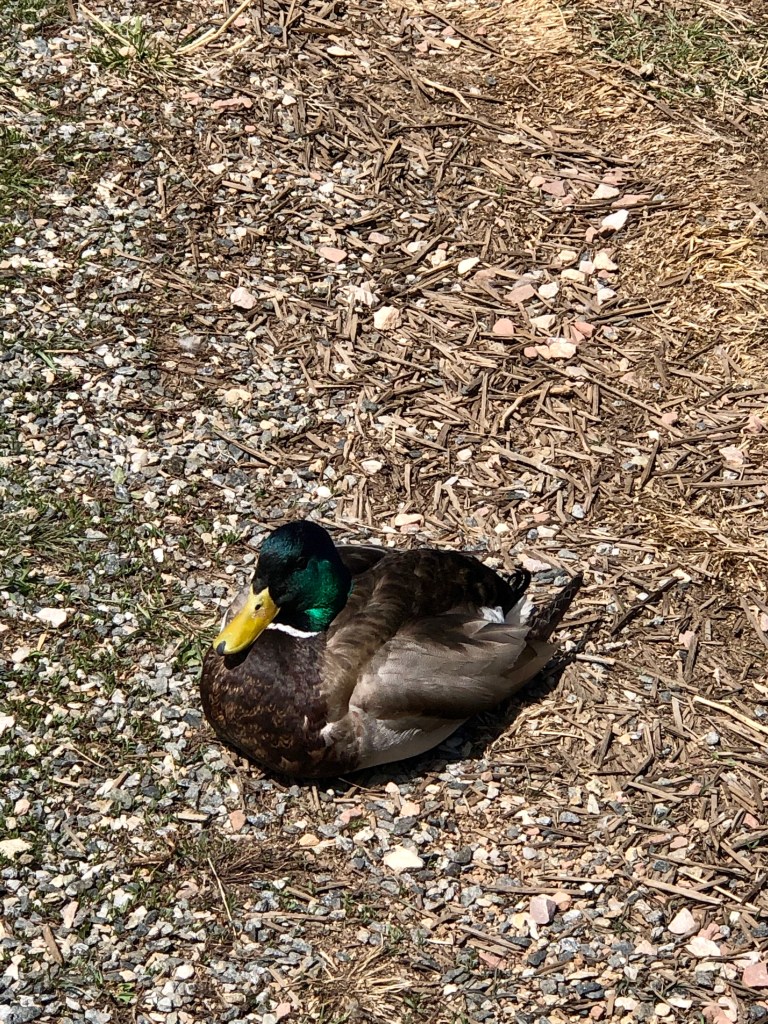
To be honest, despite a wonderful walk this afternoon with my sweetheart, I am exhausted. It is overwhelming at times as Denise and I offer ministry in this new environment. A couple of weeks ago (Holy Week? I can’t remember) I wrote about hitting a wall. This new reality and the tension between not panicking and being realistic as you lead is rough.
Now as we prepare for sleep, I wonder… God, where are you in the midst of this mess? Perhaps I am looking in the wrong places for God? In the quote below from No Man is an Island, Thomas Merton gives me a bit of an insight into this issue.
In order to find God in ourselves, we must stop looking at ourselves, stop checking and verifying ourselves in the mirror of our own futility, and be content to be in [God] and to do whatever [God] wills, according to our limitations, judging our acts not in the light of our own illusions, but in the light of [God’s] reality which is all around us in the things and people we live with. (p.126)
Perhaps instead of looking within myself I need to look deeper. Perhaps I need to look beyond myself and find the Divine Spark, the Spirit within. Perhaps that is something to ponder as I drift off to sleep.

