

Transfiguration Sunday is always the last Sunday before Lent begins on Ash Wednesday. This year the reading is from the gospel of Mark along with the reading from 2 Kings. In the reading from 2 Kings, we read about the transition of the prophetic mantle from Elijah to Elisha. Instead of dying, Elijah ascended into heaven on a chariot of fire. It was Elijah, along with Moses who appeared in the cloud with Jesus during his transfiguration. Moses represented the Law of the Lord and Elijah represented the prophets.
What exactly is transfiguration? In the original Greek the word is metemorphōthē. This Greek word is the root of the English term metamorphosis and metamorphize which mean “to be transformed.” Jesus brought Peter, James, and John to the mountain with him. Jesus also took them with him when he removed himself from the group of disciples so that he could pray on the night of his arrest.
I believe two major gifts were given during that time on the mountain. The first was that the “inner circle” or leadership amongst the disciples experienced the transformation of Jesus both in appearance and more importantly, in their understanding of who he was. At various times throughout his ministry Jesus was called a prophet and comparisons were often made with Elijah whom Jewish tradition and the prophet Malachi said would return to inaugurate the coming new reign of God. This was a visible reminder to them that Jesus wasn’t just their friend and rabbi with special healing abilities. Jesus was being recognized by Elijah and Moses as the fulfilment of the Law and the Prophets. Additionally, they actually heard the voice of God saying: This is my Son, the Beloved; listen to him! (Mark 9:7b)
I have also come to believe over the years that the second gift from the transfiguration was for Jesus himself. In Mark’s telling of the story, this happened right before Jesus turned his face towards Jerusalem where he would be arrested, tortured, and executed by the Empire and its supporters. Jesus had first heard these words at his baptism by John in the River Jordan three years before. This was a gift of encouragement from God for Jesus before he entered the final weeks of his life and earthly ministry.
Looking at this today, what can we learn or apply to our own faith and spiritual journey? While we may not see chariots of fire (yes, the song is now running through my head!) or the transformation (metamorphosis) in Jesus’ appearance, it does invite us to look around ourselves with new eyes and a new understanding. The question this poses for me is where do I find the glory of God. It also invites me to contemplate how I see God at work in my own life or in the lives of others. How is God “transforming” me or “changing” my life. It may not be in the dramatic fashion that Jesus, Peter, James, and John experienced on the mountaintop, but the transformation is very real.
Contemplative Photography (or Visio Divina—Sacred Seeing) asks me to slow down and instead of “taking” pictures to be still and receive images as they shimmer. These images are indeed gifts and in those sacred moments the ordinary is transformed into the extraordinary. They become God winks or God moments where I can see so much more than what is before me physically. This practice over the past decade has transformed the way that I see and experience life and God’s creation. This also leads me to consider the epiphany/transformation that another photographer and mentor, Thomas Merton wrote about over 70 years ago.
Thomas Merton shared his personal moment of transformation/epiphany that happened at the corner of Fourth and Walnut in Louisville on March 18th, 1958 in his book, Conjectures of a Guilty Bystander. It was on that street corner that he experienced a profound awakening and connection with humankind. He wrote the following in Conjectures nearly a decade after his experience:
In Louisville, at the corner of Fourth and Walnut, in the center of the shopping district, I was suddenly overwhelmed with the realization that I loved all those people, that they were mine and I theirs, that we could not be alien to one another even though we were total strangers. It is a glorious destiny to be a member of the human race … there is no way of telling people that they are all walking around shining like the sun.
I suddenly saw the secret beauty of their hearts, the depths of their hearts where neither sin nor desire nor self-knowledge can reach, the core of their reality, the person that each one is in God’s eyes. If only they could all see themselves as they really are. If only we could see each other that way all of the time. There would be no more war, no more hatred, no more cruelty, no more greed… (pp. 153, 155)
Paul Pearson, the director and archivist of Bellarmine University’s Thomas Merton Center shared this insight into Merton’s epiphany in an interview in 2016 on Public Radio: The epiphany “points to Merton’s movement from being kind of an enclosed monk in the monastery, turning his back on the world, to beginning to turn toward the world,” Pearson says. “He was cutting himself off from the world, but gradually he realizes you can’t do that. That he’s in the monastery for the world. And I think that’s just a moment which clarifies the process that’s been going on. It’s not a Damascus Road conversion. It just is a moment of insight.” (https://wfpl.org/exploring-thomas-merton-epiphany-marker-louisville/)
It was indeed a transformative moment in Merton’s journey from being a cloistered monk into a writer and activist. Standing there in 2019, I could feel that sense of his presence as I read his words on the plaque on the corner of Fourth and Walnut (now known as Merton Plaza). Moments like that are indeed transformative when I slow down and pay attention. My prayer for you, dear reader, is that you too can slow down and be overcome by the love that Merton was so long ago.

“I would say that I am a nonviolent soldier. In place of weapons of violence, you have to use your mind, your heart, your sense of humor, every faculty available to you . . . because no one has the right to take the life of another human being. That’s all nonviolence is—organized love.”—Joan Baez

The sun has set and the Vesper Lights flicker and glow
It was a long but very good day
Excellent insights and conversations in class
Making new friends and colleagues
Sharing our stories together
Learning from and encouraging each other
Ended the evening with my beloved and our sweet puppy Pixie
Movies that truly moved our hearts
Except for Pixie because… see the picture above 🙄🤣❤️🐾
Now as my eyelids grow heavy
I lift this humble prayer to you
Dona Nobis Pacem
Grant Us Peace
A wee prayer from the heart of your Padre…
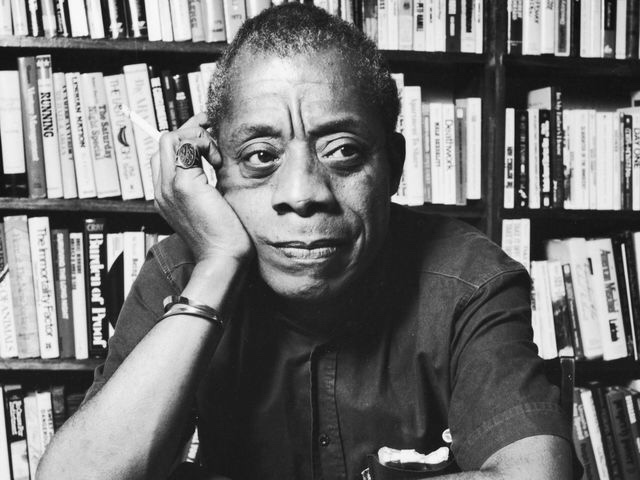
“We can disagree and still love each other unless your disagreement is rooted in my oppression and denial of my humanity and right to exist.”—James Baldwin

The sun has set and the Vesper Lights flicker and glow
It has been another long Zoom day (30 hour class over 5 days)
My eyes may be slightly crossed
I am thankful for some excellent small group conversations
Now as my eyelids grow heavy
I lift this humble prayer to you
Dona Nobis Pacem
Grant Us Peace
A wee prayer from the heart of your Padre…
| Verse of the day Is not this the fast that I choose: to loose the bonds of injustice, to undo the thongs of the yoke, to let the oppressed go free, and to break every yoke? – Isaiah 58:6 |
| Voice of the day There’s not an American in this country free until every one of us is free – Jackie Robinson |
| Prayer of the day Merciful God, we remember before you all the poor and neglected persons whom it would be easy to forget and all who have none to care for them. Help us to heal those who are broken in body or spirit, and to turn their sorrow into joy. – Adapted from the Book of Common Prayer |

The sun has set and the Vesper Lights flicker and glow
It has been another long day of Zoom meetings for class
There has been some good sharing
There is also so much to learn and absorb
One instructor called it drinking from a firehose
Indeed it has been one of those days
Now as my eyelids grow heavy
I lift this humble prayer to you
Dona Nobis Pacem
Grant Us Peace
A wee prayer from the heart of your Padre…

“I am leaving this legacy to all of you . . . to bring peace, justice, equality, love, and a fulfillment of what our lives should be. Without vision, the people will perish, and without courage and inspiration, dreams will die—the dream of freedom and peace.”—Rosa Parks

The sun has set and the Vesper Lights flicker and glow
A long day of Continuing Ed on Zoom
A day for prayer for so many
A busy yet productive time
An evening spent with my sweetheart
For that gift I thank you, Lord
Now as my eyelids grow heavy
I lift this humble prayer to you
Dona Nobis Pacem
Grant Us Peace
A wee prayer from the heart of your Padre…

“The nonviolent approach does not immediately change the heart of the oppressor. It first does something to the hearts and souls of those committed to it. It gives them new self-respect; it calls up resources of strength and courage that they did not know they had. Finally it reaches the opponent and so stirs his conscience that reconciliation becomes a reality.”—Martin Luther King, Jr.

