

“Tell me and I’ll forget. Show me, and I may not remember. Involve me, and I’ll understand.”—Indigenous Wisdom

This past week we had a wonderful opportunity to step away from the world of work and ministry. It was a time for rest, reading, contemplation, hiking, and photography. However, Monday came and it was back to the world of work, ministry, and the world. While I am obviously not a contemplative monk like Thomas Merton, I can definitely relate to what he said about his Epiphany on the corner of Fourth and Walnut in Louisville.

Merton the contemplative monk had his epiphany in the middle of a crowded intersection in downtown Louisville, Kentucky. He realized that despite his isolation as a monk in a monastery, that he was intimately connected with everyone on that street.
This is a portion of what he wrote first in his journal and later expanded in Conjectures of a Guilty Bystander. …though “out of the world” we are in the same world as everybody else, the world of the bomb, the world of race hatred, the world of technology, the world of mass media, big business, revolution, and all the rest. We take a different attitude to all these things, for we belong to God. Yet so does everybody else belong to God. We just happen to be conscious of it, and to make a profession out of this consciousness. But does that entitle us to consider ourselves different, or even “better,” than others? The whole idea is preposterous. (Thomas Merton: Essential Writings, p. 91)
This is a lesson that we need to re-learn today as a church, as individual people of faith, as a community, nation, and world. As Acts 14:28 and the liturgy of Confession reminds us, In him we live and move and have our being. We are all connected to each other and to God. To say otherwise would be, in Merton’s words, preposterous.
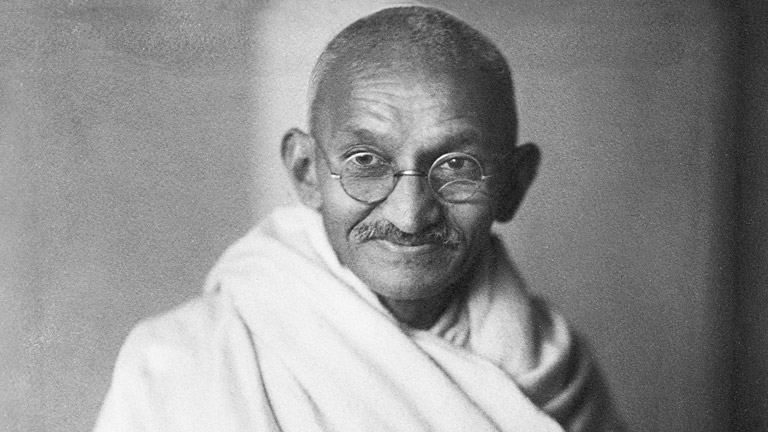
“Happiness when what you think, what you say and what you do are in harmony.”—Mohandas K. Gandhi

Hatred and Love… they are polar opposites; yet both phrases are dangerous when misused or misdirected. Love can quickly become sappy… can you really love chocolate in the same way that we are called to love God and neighbor? It can also become dangerous when what one person calls “love” is actually possessive, demeaning, and narcissistic.
Hatred is often projected onto a caricature of a person or group of people. In the days following the September 11th, 2001 attacks on the US, hatred for Muslims grew despite the fact that the majority of those who “hated Muslims” had never met a Muslim or even knew a Muslim who was equally as horrified by the attacks on that day.
In this increasingly polarized world, love is often replaced by “loyalty” or “blind allegiance” while hatred is often directed against anyone who doesn’t look like or think like “us.”
It is in this context that I have been contemplating my sermon (It Isn’t Easy Being a Prophet!) for this coming Sunday based on the story from Mark 6:1-13. Jesus was respected and admired by so many of the “common folks” whom the political and religious operatives ignored or condemned. Yet when Jesus came to his hometown, the reception wasn’t exactly welcoming. He said that Prophets are not without honor, except in their hometown, and among their own kin, and in their own house. (verse 4)
As the prophets from the Hebrew Scriptures could attest to, being a prophet or challenging the status quo wasn’t always easy. The prophets often found themselves quickly on the receiving end of hatred from a fearful people.
These words from Thomas Merton have given me much to contemplate as I explore the fear which can lead to hatred in my own heart. They also reveal a way to look at a response in love, even in the most difficult of situations.
Hate is the seed of death in my own heart,
while it seeks the death of the other.
Love is the seed of life in my own heart
when it seeks the good of the other.

from “Honorable Reader”: Reflections on my Work as found in Thomas Merton: Essential Writings (p. 89)
| Verse of the day [T]hose who wait for the Lord shall renew their strength, they shall mount up with wings like eagles, they shall run and not be weary, they shall walk and not faint. – Isaiah 40:31 |
| Voice of the day God is like an eagle, sharp eyed and swift, with wings so wide you can play under their shadows. – Rachel Held Evans and Matthew Paul Turner, What Is God Like?(2021) |
| Prayer of the day Fill us with your strength, O God, so that we don’t grow weary as we push this world toward your perfect justice. |

“Difference is of the essence of humanity. Difference is an accident of birth and it should therefore never be the source of hatred or conflict. The answer to difference is to respect it. Therein lies a most fundamental principle of peace: respect for diversity.”—John Hume

Today was a very good day. We are back from our lovely sojourn in Mentone (thank you, John Carr, for sharing your cabin with us). Today was the first day back to work and it was good.
On a coffee break I was reading Jim Forest’s book, Loving Our Enemies: Reflections on the Hardest Commandment. Jim worked alongside of Dorothy Day at the Catholic Worker in New York City as a young, recently discharged Navy vet during the Vietnam era. Thanks to Dorothy Day he was introduced to Thomas Merton along with a whole bunch of folks involved in the Peace movement of the 1960’s.
As a young activist, Jim was in the center of the anti-war movement (Catholic and Ecumenical) along with such icons as Fr Daniel Berrigan and Fr Philip Berrigan. I realize that both Dan and Phil would not like the descriptor icon. Perhaps a better term would be instigators for change.
Jim was talking about his correspondence with Thomas Merton and shared this comment along with the quote.
He said: Merton stressed the importance of seeing people, including adversaries, simply as fellow human beings.
Merton’s words: One of the most important things to do is keep cutting deliberately through political lines and barriers, and emphasizing that these are largely fabrications and that there is a genuine reality, totally opposed to the fictions of politics: the human dimension. (p. 3 of Loving Our Enemies)
Loving your enemy is perhaps the hardest commandment of Jesus… Well, it certainly is for me! As we sit on our back deck this evening, I am continuing to reflect on his words and how they challenge my own life and ministry. Perhaps they will speak to your own life and ministry, dear reader.

The sun has set and the Vesper Lights flicker and glow
What a wonderful two week respite it has been
Time away from work worries and concerns
Time to simply Be Still and recharge our batteries
The gifts of your wondrous creation were so awe inspiring

Now as I prepare for sleep
As I prepare to return to work
May the gifts of these two weeks continue to encourage us
Now as my eyelids grow heavy
I lift this humble prayer to you
Dona Nobis Pacem
Grant Us Peace
A wee prayer from the heart of your Padre…

“There are no bystanders. In this time of astonishing moral crisis, silence is complicity. Because in the palm of our hand we have the ability to respond – to speak, to post, to organize, to act, online and on the ground, and in the voting booth. Speak, even if your voice trembles.”—Valarie Kaur

This past week on Lookout Mountain has been such a blessing for us. A time of rest, renewal, reflection, regenerating… tomorrow we will drive back to Carrollton and on Monday I will return to my duties at Carrollton Presbyterian Church. The lessons of this week will, by the grace of God, be a source of reflection and continued renewal.


As I reflect on this week and the beauty of God’s creation, these words of Thomas Merton’s speak to my heart.
It is God’s love that speaks to me in the birds and streams; but also in the clamor of the city God speaks to me… (New Seeds of Contemplation)

