
Thank you for this beautiful reminder, Jake!
We forget who we are from time to time. We distort love whenever we offer it as a carrot or threaten to withhold it like a stick. We debase love when we use it like a currency to be earned for right thinking or for right acting.
— Read on jakeowensby.com/2022/09/09/remembering-who-you-really-are/
Joy and sadness are as close to each other as the splendid colored leaves of a New England fall to the soberness of barren trees. When you touch the hand of a returning friend, you already know that he will have to leave again. When you are moved by the quiet vastness of a sun-colored ocean, you miss the friend who cannot see the same. Joy and sadness are born at the same time, both arising from such deep places in your heart that you can’t find words to capture your complex emotions.
But this intimate experience in which every bit of life is touched by a bit of death can point us beyond the limits of our existence. It can do so by making us look forward in expectation to the day when our hearts will be filled with perfect joy, a joy that no one shall take away from us.
Verse of the day
But seek the welfare of the city where I have sent you into exile, and pray to the Lord on its behalf, for in its welfare you will find your welfare
– Jeremiah 29:7
Voice of the day
When a city is wounded, / before it moans, before it kneels, / it draws a breath, and keeps it … / It becomes a windless forest.
– Michael Symmons Roberts, “Last Words”
Prayer of the day
Lord who rebuilds, teach us to labor for the welfare of the spaces and communities we find ourselves in.
Much violence in our society is based on the illusion of immortality, which is the illusion that life is a property to be defended and not a gift to be shared. When the elderly no longer can bring us in contact with our own aging, we quickly start playing dangerous power games to uphold the illusion of being ageless and immortal. Then, not only will the wisdom of the elderly remain hidden from us, but the elderly themselves will lose their own deepest understanding of life. For who can remain a teacher when there are no students willing to learn?
Verse of the day
If we say that we have no sin, we deceive ourselves, and the truth is not in us. If we confess our sins, he who is faithful and just will forgive us our sins and cleanse us from all unrighteousness.
– 1 John 1:8-9
Voice of the day
We have to become better people by fundamentally transforming the conditions of our living together. This will require setting aside our comforting illusions.
– Eddie Glaude Jr., Democracy in Black(2016)
Prayer of the day
Lord, we confess that we have too often lived in comforting illusions. Help us live together; cleanse us from our unrighteousness.
The question of receiving the love of Christ is really very important. I personally feel more and more that sometimes it is harder for us to fully receive love than to give it. I am more and more convinced that we will find the peace and joy of Christ when we let him truly enter into the deepest places of our heart, especially those places where we are afraid, insecure, and self-rejecting.
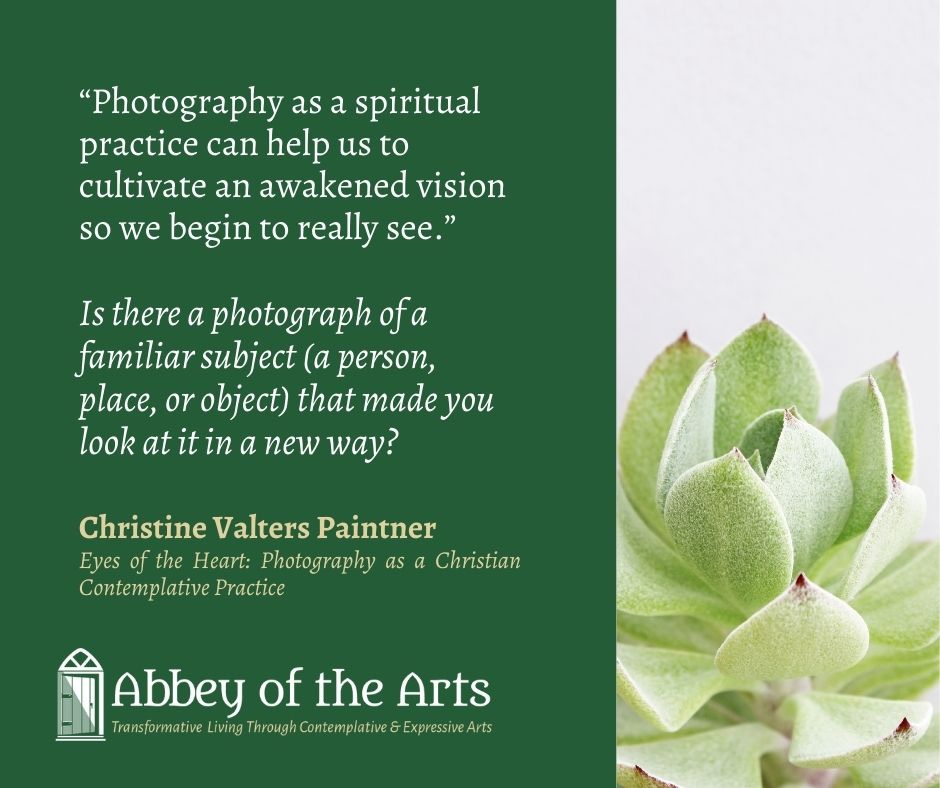
“Photography as a spiritual practice can help us to cultivate an awakened vision so we begin to really see.”
— Christine Valters Paintner, PhD, Eyes of the Heart: Photography as a Christian Contemplative Practice
Is there a photograph of a familiar subject (a person, place, or object) that made you look at it in a new way?
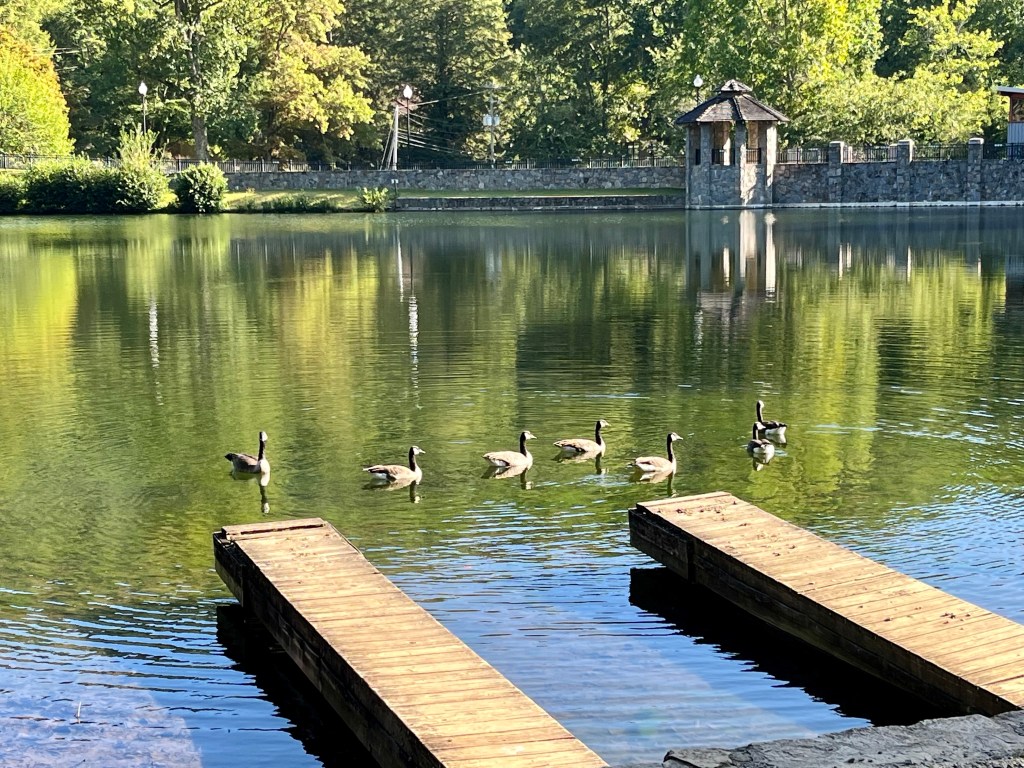
I wrote this blog for Columbia while we were at Montreat attending Transitional/Interim Ministry training this past week.
This month’s topic, “Lessons learned from your favorite piece of theological literature and how you apply the lessons you learned” is the fifth and last blog topic for this year. It has also been the most challenging topic and one that I have spent the year avoiding. But eventually the last topic arrives and so it is time to explore. How does one pick out a favorite piece of theological literature and the lessons learned from it? At first, I reviewed the theologians who spoke to me in seminary (1983-1986). Reinhold Niebuhr, Paul Tillich, H. Richard Niebuhr, Henri Nouwen, Frederick Buechner, and Howard Thurman all played a role in my theological formation back then. Howard Thurman, Henri Nouwen, and Frederick Buechner continue to be a very important presence and influence in my life and ministry.
Yes, there was an important element missing in my reading back then. While Howard Thurman was black, the others were all white males. In the intervening years the list of theologians has broadened to include Diana Butler Bass, Phyllis Tickle, Sue Monk Kidd, and Christine Valters Paintner. However, as I thought about the theologian and writer who has spoken to me the most in the past decade or so, Thomas Merton, the Trappist Monk, author, and activist came to mind.
On July 1st, 2011, I retired from the US Air Force after twenty-one years of active-duty service and five years in the US Air Force Reserve. As I processed my experiences and reflected on the growing discomfort I had with the mission and thinking going on at the higher levels, I began to see the peacemaker-activist being born. In 2015 I took a course through Columbia’s Lifelong Learning Certificate in Christian Spiritual Formation on Thomas Merton and his journals.
As I explored his journals and books, I felt a growing connection with this monk who lived at the Abbey of Our Lady of Gethsemane in rural Kentucky. While he had initially gone to the monastery seeking solitude and a chance to grow closer to God through prayer and the monk’s life, he eventually began to be drawn back to the world of the late 1950s and early 1960s. He realized that he could no longer be silent in the face of the horrors of the nuclear threat, cold war, the war in Vietnam, and the Civil Rights Movement. He once told one of his novices, James Finley, that a monk cannot come to simply breathe the rarified air of the monastery. The monk comes (as Merton experienced personally) to take the suffering of the entire world into his heart and into his prayers.
Merton’s book, Peace in the Post-Christian Era was the book that profoundly impacted my own processing of the 26 years in the Air Force Chaplain Corps. Merton spoke candidly about the conflict within the Catholic church and the larger Christian community around nuclear weapons. His opinions and this specific book got Merton into hot water with his abbot and the censors. While the book wasn’t able to be published in his lifetime, mimeographed copies were circulated by Merton and his friends to supporters like Ethel Kennedy who shared it with her brother Robert F. Kennedy and his brother, President John F. Kennedy. A copy also found its way into the hands of Pope John XXIII and played a role in the work of the Second Vatican Council and the pope’s encyclical, Pacem in Terra: Peace on Earth.
Decades later, his book found its way into my hands and its message touched me to my very core. From the early days of Operation Enduring Freedom and the Global War on Terrorism I was concerned about the lack of a strategy or overall “plan” for what the military was doing. I was also concerned about the rise in anti-Muslim sentiment and action both in the civilian sector and in the military itself. One of the roles of a chaplain is to be an ethical and moral advisor to leadership. I took that role seriously and in the wake of September 11th, I asked serious questions about the lack of strategy and the issues of anti-Muslim sentiment in the ranks as I had throughout my career.
In the final paper for the Merton class at Columbia I wrote the following in a “letter to Thomas Merton” which was my final paper. I never meant to be a rabble rouser. All I wanted to do was be a servant of the Lord in this very unique setting. Did you ever feel like that when you were told that you couldn’t write about certain subjects or that you had to tone down your rhetoric for the good of the order and the church? I am wondering if you might not have felt like that too. As I close this blog, the challenge of the late Congressman John Lewis comes to mind. Speaking on the Edmund Pettus Bridge in Selma, Alabama on March1, 2020 he challenged those gathered to Get in good trouble, necessary trouble, and redeem the soul of America. I believe these words would resonate with Thomas Merton if he were alive today in a similar way to how they resonate with me.
Verse of the day
Two are better than one, because they have a good reward for their toil. For if they fall, one will lift up the other; but woe to one who is alone and falls and does not have another to help.
– Ecclesiastes 4:9-10
Voice of the day
[I]n nature nothing exists alone.
– Rachel Carson, Silent Spring (1962)
Prayer of the day
Remind us that we are never alone in your creation, Lord.
Verse of the day
And whoever does not provide for relatives, and especially for family members, has denied the faith and is worse than an unbeliever.
– 1 Timothy 5:8
Voice of the day
[N]o person is your friend (or kin) who demands your silence, or denies your right to grow and be perceived as fully blossomed as you were intended.
– Alice Walker, In Search of Our Mothers’ Gardens (1983)
Prayer of the day
May we find communities that help us grow.

