
Sitting outside a Starbucks with my wife one day I struck up a conversation with two brothers who, it turns out, were Palestinians from Gaza, one with his 6-year-old son. “I’m so sorry for what’s happening there,” I said. “Do you have family still there? Are they all right?”
“My family is there,” said one of the men. “By now, most are dead.”
— Read on www.americamagazine.org/faith/2024/07/03/war-gaza-drones-peace-veterans-248278
Verse of the day
Your ancient ruins shall be rebuilt; you shall raise up the foundations of many generations; you shall be called the repairer of the breach, the restorer of streets to live in.
– Isaiah 58:12
Voice of the day
Loving your neighbor is not an act of philanthropic charity but is a struggle to rebuild the world so there can be new ways of relating to each other beyond the strictures of racial capitalism.
– Adam Joyce, “You Can’t Relationship Your Way Out of Racial Capitalism”
Prayer of the day
You have called us to be repairers and restorers, God. May we restore the world to your holy image, instead of another unjust system.

“In the name of patriotism and
the flag, how much of our beloved
land are you willing to desecrate?
List in the following spaces
the mountains, rivers, towns, farms
you could most readily do without.
State briefly the ideas, ideals, or hopes,
the energy sources, the kinds of security,
for which you would kill a child.
Name, please, the children whom
you would be willing to kill. “
Verse of the day
That there may be no dissension within the body, but the members may have the same care for one another. If one member suffers, all suffer together with it; if one member is honored, all rejoice together with it.
– 1 Corinthians 12:25-26
Voice of the day
Where common memory is lacking, where people do not share in the same past, there can be no real community. Where community is to be formed, common memory must be created.
– George Erasmus
Prayer of the day
Communal God, we are not afraid of the past. May we be honest with ourselves about the wrongs we have committed in your name and partake with one another in a common memory that moves us toward community.
Verse of the day
How does God’s love abide in anyone who has the world’s goods and sees a brother or sister in need and yet refuses help?
– 1 John 3:17
Voice of the day
If we blindly live where we’ve been living without listening to the voices of those who are downcast, we lose for the sake of the gospel.
– Kaitlin Curtice, “The Curse of Indifference in the American Church”
Prayer of the day
God, rid us of the sin of indifference. Open our ears to hear the voices of the downcast.
Somewhere someone needs help.
Send love.
It matters.
If you can’t get there yourself,
then take a deep breath.
Breathe in the weight of their troubles.
Breathe out and send all those burdens
into the Light
where sorrows can be held
with the most tender and infinite grace.
Breathe in what you can do.
Breathe out what you can’t change.
Spool out a thread of connection,
send courage and calm.
For the nights can be long
and filled with shadows,
and sometimes terrible
unexpected waters will rise.
Somewhere someone needs help.
Send love.
It matters.
—Carrie Newcomer
As I ponder the upcoming 4th of July holiday and the continuing rise of christian nationalism, this quote from Kurt Vonnegut’s book A Man Without a Country comes to mind.
For some reason, the most vocal Christians among us never mention the Beatitudes (Matthew 5). But, often with tears in their eyes, they demand that the Ten Commandments be posted in public buildings. And of course, that’s Moses, not Jesus. I haven’t heard one of them demand that the Sermon on the Mount, the Beatitudes, be posted anywhere. ‘Blessed are the merciful’ in a courtroom? ‘Blessed are the peacemakers’ in the Pentagon? Give me a break! (Kindle, page 71)
When Jesus saw the crowds, he went up the mountain; and after he sat down, his disciples came to him. Then he began to speak, and taught them, saying:
‘Blessed are the poor in spirit, for theirs is the kingdom of heaven.
‘Blessed are those who mourn, for they will be comforted.
‘Blessed are the meek, for they will inherit the earth.
‘Blessed are those who hunger and thirst for righteousness, for they will be filled.
‘Blessed are the merciful, for they will receive mercy.
‘Blessed are the pure in heart, for they will see God.
‘Blessed are the peacemakers, for they will be called children of God.
‘Blessed are those who are persecuted for righteousness’ sake, for theirs is the kingdom of heaven.
‘Blessed are you when people revile you and persecute you and utter all kinds of evil against you falsely on my account. Rejoice and be glad, for your reward is great in heaven, for in the same way they persecuted the prophets who were before you.
Perhaps The Beatitudes and Micah 6:8 (He has told you, O mortal, what is good; and what does the Lord require of you but to do justice, and to love kindness, and to walk humbly with your God?) need to be the core of who we are as Christ-followers along with Jesus’ command to love all of our neighbors, including our enemies. You have heard that it was said, “You shall love your neighbour and hate your enemy.” But I say to you, Love your enemies and pray for those who persecute you, so that you may be children of your Father in heaven; for he makes his sun rise on the evil and on the good, and sends rain on the righteous and on the unrighteous. (Matthew 5:43-45)
Verse of the day
As servants of God, live as free people, yet do not use your freedom as a pretext for evil.
– 1 Peter 2:16
Voice of the day
During times of war hatred becomes quite respectable, even though it has to masquerade often under the guise of patriotism.
– Howard Thurman, “Jesus and the Disinherited” (1949)
Prayer of the day
Righteous God, may we not use our freedom as a defense of hatred and war. Our freedom is found in you, and you call us to preach freedom — freedom from war, hunger, and pain — to all people.
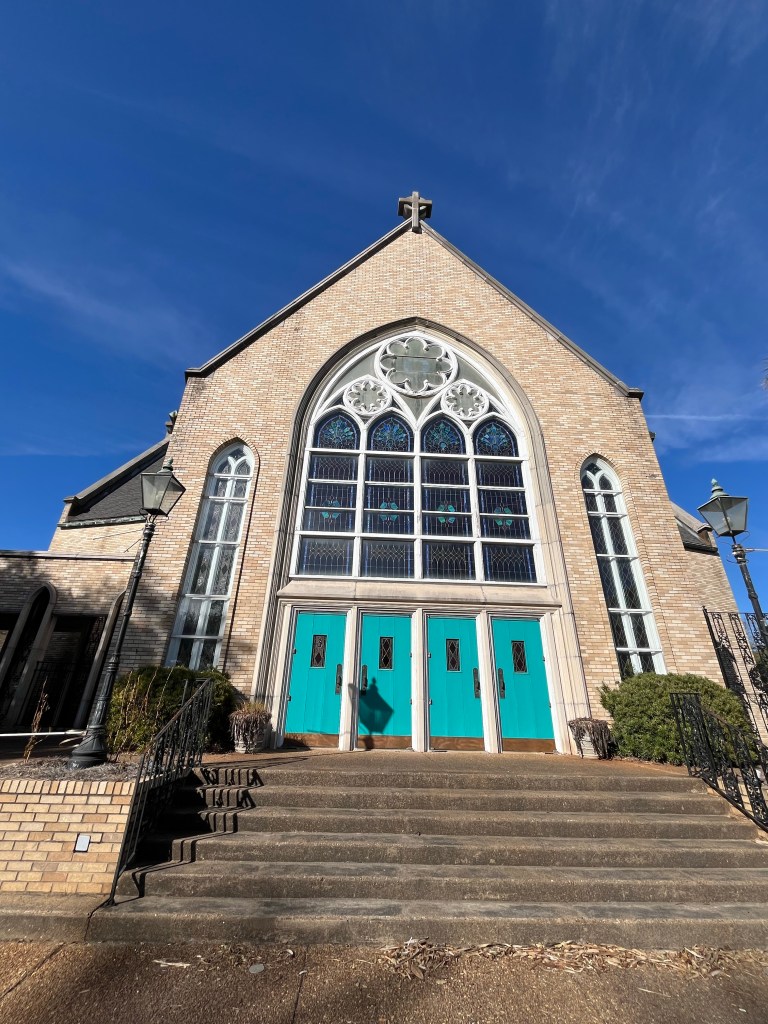
We sang this hymn today at Central Presbyterian Church in Midtown Mobile, Alabama. This particular verse touched my heart and challenged me. It’s been on my mind all day.
Though we build strong walls for prisons,
though we feast while others starve,
though we fill this world with weapons:
comfort, comfort.
Every prisoner will be rescued,
every hungry mouth be filled,
every gun will rust, forgotten:
comfort, comfort.
There is much here to ponder and consider in today’s political landscape.

It is indeed the task of everyone who cares to prevent people—young, middle-aged, and old—from clinging to false expectations and from building their lives on false suppositions. If it is true that people age the way they live, our first task is to help people discover their lifestyles in which “being” is not identified with “having,” self-esteem does not depend on success, and goodness is not the same as popularity. — from You Are the Beloved: 365 Daily Readings and Meditations for Spiritual Living (p. 199)
 Pastor Michael Moore's Blog