

I am doing some research and preparation for my sermon this Sunday. The passage is Mark 10:35-45. The disciples/brothers James and John ask Jesus to essentially promote them above the other disciples by giving them the right and left hand seats in glory. This is the passage that Dr King preached from in his last sermon, “The Drum Major Instinct.”
Here is a brief quote from that sermon: And the other thing is that it [the drum major instinct] causes one to engage ultimately in activities that are merely used to get attention…. They don’t feel that they are getting enough attention through the normal channels of social behavior, and others turn to anti-social behaviors in order to get attention, in order to feel important… And then the final great tragedy of the distorted personality is the fact that when one fails to harness this instinct, he ends up by trying to push others down in order to push himself up.” (I Have A Dream: Writings and Speeches That Changed the World, p. 185)
Some food for thought as I prepare to preach and as I consider the political and social climate I am experiencing today.

“In consensus, the collective does not hold discussions in order to defend a particular position but, rather, to arrive at solutions that everyone can consent to.”—Delfina Vannucci and Richard Singer, Come Hell or High Water: A Handbook on Collective Processes Gone Awry

But I cannot treat other [people as individuals] unless I have compassion for them. I must have at least enough compassion to realize that when they suffer they feel somewhat as I do when I suffer. And if for some reason I do not spontaneously feel this kind of sympathy for others, then it is God’s will that I do what I can to learn how. I must learn to share with others their joys, their sufferings, their ideas, their needs, their desires. I must learn to do this not only in the cases of those who are of the same class, the same profession, the same race, the same nation as myself, but when [individuals] who suffer belong to other groups, even to groups that are regarded as hostile. If I do this, I obey God. If I refuse to do it I disobey [God]. It is not therefore a matter left open to subjective caprice. (From New Seeds of Contemplation, in A Thomas Merton Reader, p. 323)
Once again, the prophetic message of Thomas Merton speaks to a nation and world today that is filled with hatred, fear, isolationism, and division. God knows we could use a lot more compassion and empathy in this world.

It’s been just over a year now since I retired from active ministry in my denomination, the Presbyterian Church (U.S.A.) and just over thirteen years since I retired from the US Air Force Chaplain Corps. Transitioning from full time, active ministry to retirement has been an adjustment and a blessing.
Last week my wife Denise and I were walking along one of our favorite routes where we hear lots of bird song and see various creatures including herons, an alligator, and lots of turtles. I was listening, watching, and enjoying the sights and sounds as we walked in silence. Even though it was past dawn this experience reminded me of a reflection that the Trappist Monk and Mystic, Thomas Merton wrote in his book, Conjectures of a Guilty Bystander. So they wake: first the catbirds and cardinals and some that I do not know. Later the song sparrows and wrens. Last of all the doves and crows… Here is an unspeakable secret: paradise is all around us and we do not understand. It is wide open… we are off “one to his farm and another to his merchandise.” Lights on. Clocks ticking. Thermostats working. Stoves cooking. Electric shavers filling radios with static. “Wisdom,” cries the dawn deacon, but we do not attend. (Conjectures, p. 126) The wisdom found in the birdsong. The wisdom found in the glory of nature. The wisdom that I so often missed in the rush and the hurry of ministry.
In the Chaplaincy it was rush, rush, rush, go, go, go 24/7. We kept statistics to show the higher ups that we were keeping busy. We called it bean counting. Unfortunately, there was one category that was not listed nor tracked. We didn’t identify times of silence & sabbath rest. Yet those rare moments when I did slow down were moments of healing. Going back into the parish after 21 years in uniform I found out that I was able to slow down and simply be still in the midst of God’s creation.
In fact, the church I served in the Rocky Mountains of Colorado expected me to take that time to breathe and soak it all in, especially through the lens of my camera. One parishioner joked that they tried for two years to get the interim minister to dress more casually. Perhaps exchange his penny loafers for hiking shoes? It didn’t work. Yet soon after I arrived parishioners would find me dressed casually in the office, ready to go for a walk or a hike. My pictures appeared on the front cover of the church bulletin each week and people loved the fact that Denise and I had fallen in love with the Rocky Mountain National Park and our community.
Those moments were sabbath gifts to us in the midst of our very busy and sometimes hectic life in the church and the community. These were moments that sustained us in the busyness of ministry which included lots of hospital calls, comforting those who were dying, and walking with so many families and church members through the valley of the shadow of grief. It was during those moments of sabbath rest and silent contemplation that I felt my soul being nourished.
Now that I am retired, Denise and I are trying to be intentional about taking the time to simply be still. When I look back on the years of ministry in and out of uniform, I am humbled that I was able to be a part of so many lives. Sometimes I feel a twinge of sadness for the lost opportunities to truly enjoy the wonders of the world around me. But then I remember the wonderful moments when I did make time to slow down and to be still and silent. Do I wish that I had learned these lessons earlier in my ministry? Of course! Do I celebrate the moments of wonder and awe that I did experience back them? Absolutely! While it can sometimes be a challenge to be still, the journey isn’t about attaining perfection. We are a work in progress, and I believe that one of the big lessons that Spirit teaches is to be gentle with ourselves on this journey. My prayer is that each of you, dear reader, will find and embrace those opportunities to be still and know that you are loved.

All Christian life is meant to be at the same time profoundly contemplative and rich in active work. Thomas Merton in Love and Living, p. 177 (Kindle edition)

In the midst of the divisiveness, fear, and hate-mongering that I see today, these words from the great mystic and theologian Howard Thurman ring true. May we never lose sight of this lesson in faith from Thurman.
The final thing that my faith teaches me is that God is love. Not only that He is; not only that he is near; but that he is love. Fully do I realize how difficult this is. There is so much anguish in life, so much misery unmerited, so much pain, so much downright reflective hell everywhere that it sometimes seems to me that it is an illusion to say that God is love. When one comes into close grips with the perversity of personalities, with studied evil—it might be forgiven one who cries aloud to the Power over Life—human life is stain—blot it out! I know all that. I know that society stretches out like a gaping sore that refuses to be healed. I know that life is often heartless, hard as pig iron. And yet, in the midst of all this I affirm my faith that God is love—whatever else He might be. (Barren or Fruitful?—A sermon from 1932 in the book 40-Day Journey with Howard Thurman, p.40)
Gratitude is the most fruitful way of deepening your consciousness that you are not an “accident,” but a divine choice. It is important to realize how often we have had chances to be grateful and have not used them. When someone is kind to us, when an event turns out well, when a problem is solved, a relationship restored, a wound haealed, there are very concrete reasons to offer thanks: be it with words, with flowers, with a letter, a card, a phone call, or just a gesture of affection. . . . Every time we decide to be grateful it will be easier to see new things to be grateful for. Gratitude begets gratitude, just as love begets love.

But we should be helping one another—let’s put it in simpler words—to love. We help one another to love more, and you help people to love, not by saying “love,” but by loving. That’s the justification of our life: if there is love, it’s justified, and it should not be just a little in-growing love. It should be a love that reaches out to everybody.—Thomas Merton in California: The Redwood Conferences & Letters, (p. 52)
These words of wisdom that Merton offered during his conference talk in California were directed to the members of a Cistercian women’s community in Northern California. However, as with so much of his work, these words must be a part of the life and the work of those who follow Christ in this fractured and fear-filled world where the “church” has too often become the antithesis of the way of Jesus.
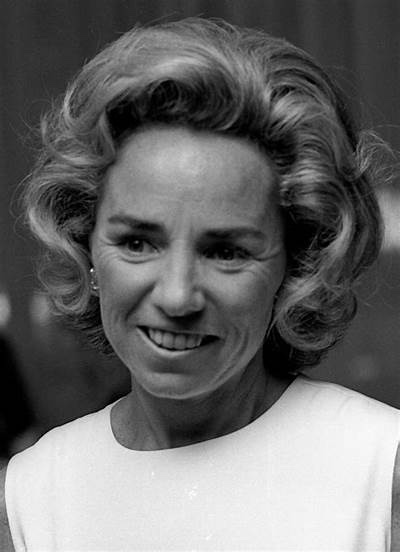
I think it is going to be of great importance, in the next few months and years, if Americans can regain their healthy respect for reason, for the light of intellect, and get rid of this shallow contempt for “eggheads.” They must learn to respect thought and stop idolizing psychopathic goofs. God knows, this is going to take a miracle. There are plenty of wise and sane men in the country, and they are able to be articulate. They can do a tremendous amount. — Thomas Merton in a letter to Ethel Kennedy (The Cold War Letters, p. 28)
Talk about words that we should listen to and learn from today in this world of lies, deception, and deceit…
You have been wounded in many ways. The more you open yourself to being healed, the more you will discover how deep your wounds are…. The great challenge is living your wounds through instead of thinking them through. It is better to cry than to worry, better to feel your wounds deeply than to understand them, better to let them enter into your silence than to talk about them. The choice you face constantly is whether you are taking your hurts to your head or to your heart. In your head you can analyze them, find their causes and consequences, and coin words to speak and write about them. But no final healing is likely to come from that source. You need to let your wounds go down to your heart. Then you can live through them and discover that they will not destroy you. Your heart is greater than your wounds.
 Pastor Michael Moore's Blog