
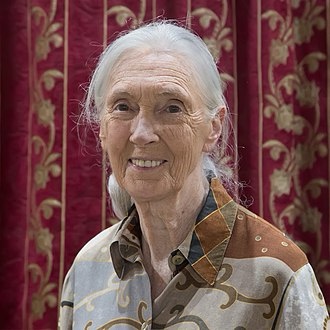
“It’s no good denying that there are problems. It is no shame if you think about the harm we’ve inflicted on the world. But if you concentrate on doing the things you can do and doing them well, it will make all the difference.”—Jane Goodall, The Book of Hope
If you would ask the Desert Fathers why solitude gives birth to compassion, they would say, “Because it makes us die to our neighbor.” At first this answer seems quite disturbing to a modern mind. But when we give it a closer look we can see that in order to be of service to others we have to die to them; that is, we have to give up measuring our meaning and value with the yardstick of others. To die to our neighbors means to stop judging them, to stop evaluating them, and thus to become free to be compassionate. Compassion can never coexist with judgment because judgment creates the distance, the distinction, that prevents us from really being with the other.
Verse of the day
The spirit of the Lord God is upon me because the Lord has anointed me; he has sent me to bring good news to the oppressed, to bind up the brokenhearted, to proclaim liberty to the captives and release to the prisoners.
– Isaiah 61:1
Voice of the day
I’m descended from people who were enslaved in this country, and it would have taken quite a bit of faith in God for them to hold on until they were free. And they obviously did hold on, because I’m here.
– Sharon Batiste Gillins, “Celebrating Juneteenth in Galveston”
Prayer of the day
God of all, thank you for our ancestors who held onto their faith. May we hold on as well, to bring good news to the oppressed, to bind up the brokenhearted, to proclaim liberty to the captives and release to the prisoners.
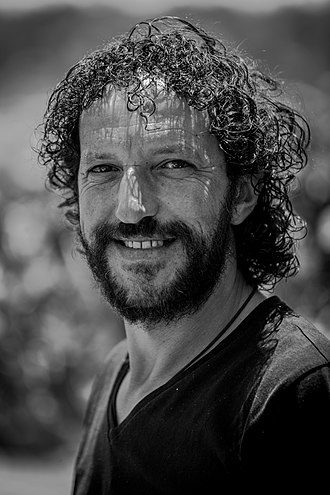
“I gained the best revenge by not victimizing a human being, but rather by rejecting injustices. I’m facing the system, not the people, because I know the system is based on a lot of trauma—and stereotypes that people fall easily into, in that system, with their fear.”—Ali Abu Awwad
When we think about the people who have given us hope and have increased the strength of our soul, we might discover that they were not advice givers, warners, or moralists, but the few who were able to articulate in words and actions the human condition in which we participate and who encouraged us to face the realities of life. . . . Those who do not run away from our pains but touch them with compassion bring healing and new strength. The paradox indeed is that the beginning of healing is in the solidarity with the pain. In our solution-oriented society it is more important than ever to realize that wanting to alleviate pain without sharing it is like wanting to save a child from a burning house without the risk of being hurt. It is in solitude that this compassionate solidarity takes its shape.
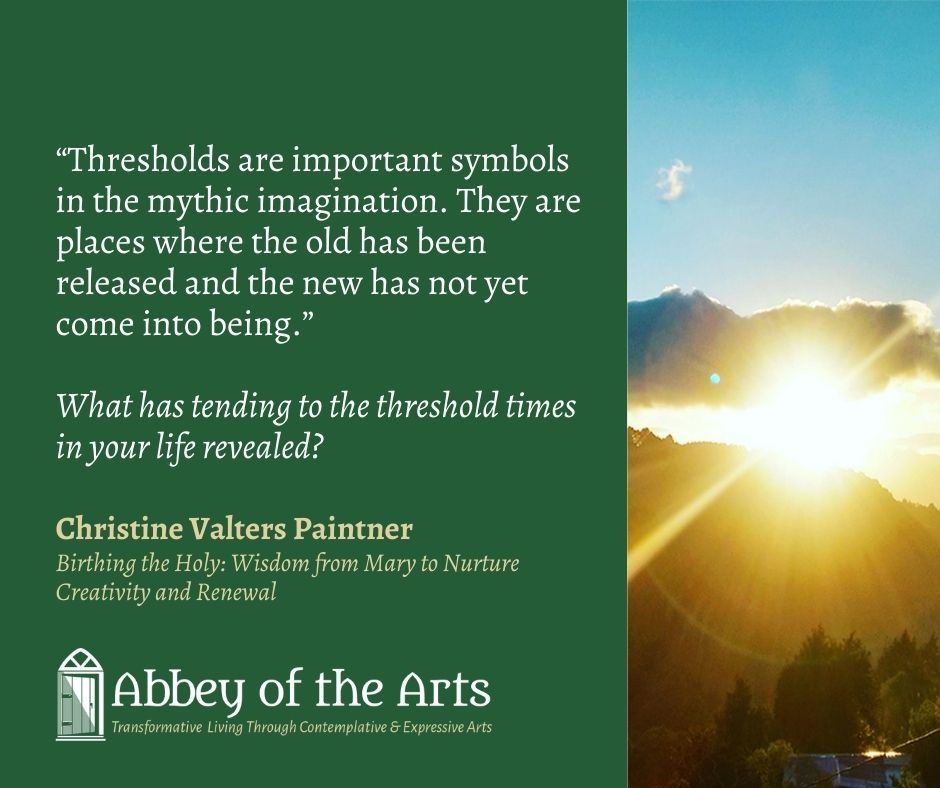
“Thresholds are important symbols in the mythic imagination. They are places where the old has been released and the new has not yet come into being.”
—Christine Valters Paintner, PhD from Birthing the Holy: Wisdom from Mary to Nurture Creativity and Renewal
What has tending to the threshold times in your life revealed?
To register for the self-study companion retreat to the book with extra resources and guidance click here>>
Let us not underestimate how hard it is to be compassionate. Compassion is hard because it requires the inner disposition to go with others to the place where they are weak, vulnerable, lonely, and broken. But this is not our spontaneous response to suffering. What we desire most is to do away with suffering by fleeing from it or finding a quick cure for it. As busy, active, relevant [people], we want to earn our bread by making a real contribution. This means first and foremost doing something to show that our presence makes a difference. And so we ignore our greatest gift, which is our ability to enter into solidarity with those who suffer. . . .
Those who can sit with their fellow man, not knowing what to say but knowing that they should be there, can bring new life into a dying heart. Those who are not afraid to hold a hand in gratitude, to shed tears of grief, and to let a sigh of distress arise straight from the heart can break through paralyzing boundaries and witness the birth of a new fellowship, the fellowship of the broken.

As we watch the rise of nationalism and white supremacy in this country, these words from Howard Thurman gives us much to consider as we work for equality and true freedom.
The opposition to those who work for social change does not come only from those who are the guarantors of the status quo. Again and again it has been demonstrated that the lines are held by those whose hold on security is sure only as long as the status quo remains intact. If a man is convinced that he is safe only as long as he uses his power to give others a sense of insecurity, then the measure of their security is in his hands. If security or insecurity is at the mercy of a single individual or group, then control of behavior becomes routine. All imperialism functions in this way. — Howard Thurman
Jesus and the Disinherited (pp. 24-25)
Verse of the day
Do not be overcome by evil, but overcome evil with good.
– Romans 12:21
Voice of the day
Let us be enraged about injustice, but let us not be destroyed by it.
– Bayard Rustin
Prayer of the day
Lord, let us channel our rage into productive conversations and actions for justice and goodness.
Verse of the day
“Take care that you do not despise one of these little ones, for I tell you, in heaven their angels continually see the face of my Father in heaven.”
– Matthew 18:10
Voice of the day
The children are always ours, every single one of them, all over the globe; and I am beginning to suspect that whoever is incapable of recognizing this may be incapable of morality.
– James Baldwin, “Notes on the House of Bondage”
Prayer of the day
God, we cry out for the children killed by violent hands. We mourn for those children who have been despised, and we long for a world where all will see that children are always ours, every single one of them, all over the globe.
 Pastor Michael Moore's Blog