

One of the many things that Denise and I enjoyed about our time at The Abbey of Our Lady of Gethsemani where Thomas Merton was a monk was the view from the guest dining room at the monastery. The windows looked out onto a beautiful garden that was full of various types of bird feeders which attracted quite a variety of birds. As we ate our meals in silence, we were able to enjoy being with our feathered friends as they ate, sang, bathed in the birdbath, and flew around in the garden. I think that between our walks around the monastery grounds and watching from the dining room we identified by sight or sound, about 23 different varieties of birds and birdsong. Our experience at the monastery encouraged us to get our own bird feeders (three so far) and invite our feathered neighbors to dine a while with us. We haven’t had the variety that we saw at the monastery but we have drawn a wonderful little group of birds (so far, a male cardinal, male and female house finches, a tufted titmouse, sparrows, and chickadees).
Today I was watching the feeder when a squirrel shimmied up the post, leaned its head over, and began eating birdseed. I moved towards the window and it scampered away after getting some seed. We haven’t decided how we are going to squirrel proof our feeders and, frankly, I have seen very few methods that end up outsmarting the squirrels! So I guess the squirrel too is an invited guest at the bird seed feast.
This past week I have been studying and reflecting on this Sunday’s scripture readings from 2 Kings 4:42-44 and John 6:1-21 which both address the miraculous feeding of crowds with a limited amount of resources (Elisha fed 100 people in the 2 Kings reading and Jesus fed 5,000 in the reading from John). While our bird feeders may not be feeding that many birds, the act of feeding the birds (and the squirrel!) does make me consider the wonders of sharing our resources with others.
For years I have heard stories and jokes about having “things.” Specifically I have heard conversations amongst guys about their cars, trucks, boats, jet skis and how many are enough. The joke was that the guy with the most toys in the end wins. Then there was the Christmas letter that I read years ago in which the couple talked about their “year of acquisitions.” In that letter they talked about how many things (property, cars, toys, etc.) each member of the family (including their young children) had acquired. It made me wonder… seriously the year of acquisitions? How much is enough and when does it turn into greed and materialism? There are so many other stories about who has the most or the best or the most expensive thing. When I was younger I remember hearing the phrase “keeping up with the Jones’s.” The race to see who could get the newest and best car or boat or lake cabin. The funny thing was, no matter how many “things” you acquired in your race to keep up with the Jones’s you were never satisfied. It was never enough.
In the story of Elisha, the prophet was given a gift of food from the offering of the first fruits. The gift was twenty loaves of barley and a sack full of fresh ears of grain. When Elisha told his servant to share the food with the people and let them eat, the servant said, there isn’t enough. Elisha repeated what he had said before: give it to the people and let them eat. He then added the following to his statement: for thus says the LORD: They shall eat and have some left. So the servant put the food before the people and they ate… and they had leftovers!
In the liturgy for Passover, the synagogue worshippers sing a song called “Dayenu.” This Hebrew word means it is sufficient or it is enough. As the worshippers recall the exodus from Egypt the song reminds them that what God provided in the wilderness was sufficient. The manna that God provided to the Israelites each day was enough for them to eat. When God provided two days of manna for the Sabbath, it was sufficient, Dayenu. When the people tried to hoard the manna, it turned rotten and wormy. They learned over their forty years of wilderness wandering that God would provide and that God’s provision would be sufficient, Dayenu.
In the case of Elisha and the feeding of the 100, the offering was sufficient and so much more. Turning to the gospel lesson from John 6, we read the story of Jesus feeding the 5,000. After a busy time of healing and teaching, Jesus went to the other side of the Sea of Galilee with his disciples. I’d imagine that since the day of Passover was near that he probably wanted to spend some time with the disciples and prepare for the observance. But the crowd kept following and as they approached, Jesus asked Philip Where are we to buy bread for these people to eat? Philip replied that even though they had two hundred denarii (for a laborer that would be four months wages) it wouldn’t be enough to feed the gathering crowd. We don’t have enough! Andrew, listening in on the conversation said, There is a boy here who has five barley loaves and two fish. But what are they among so many people? Four months wages, five barley loaves, and two fish aren’t sufficient to feed the crowd. Yet Jesus, in a way similar to Elisha, gave what they had given him to the crowd and they ate their fill. AND, they had leftovers! Once again, what Jesus provided was more than sufficient, Dayenu.
In both of these stories we see the fear of not having enough. We also see how God can and does provide. We also see how God can use us to provide enough for others. The boy with the loaves and fish and the man with the barley loaves and grain offered all that they had. By sharing what they had, their gift was greatly multiplied and others were cared for. Because of their gifts, others could say it was sufficient, Dayenu.
So what about us today? According to the United Nations some 25,000 people (including 10,000 children) will die from hunger and related causes. Some 854 million people worldwide are estimated to be undernourished, and high food prices may drive another 100 million into poverty and hunger. (Source) Yet in this country and others, a portion of the population has more than enough. I know that Denise and I have more than enough. We have plenty to eat, a warm house and roof over our heads, cars that run without problems, and a monthly income that is more than sufficient. But we also know that we are privileged and that with that privilege comes greater responsibility. How can we provide for others out of our abundance?
Pope Francis said the following during his General Audience at the Vatican in 2023:
We should all remember, however, that throwing food away is like stealing from the tables of the poor, the hungry! I encourage everyone to reflect on the problem of thrown away and wasted food to identify ways and means that, by seriously addressing this issue, are a vehicle of solidarity and sharing with the needy… when food is shared in a fair way, with solidarity, when no one is deprived, every community can meet the needs of the poorest. Human ecology and environmental ecology walk together. — Pope Francis, General Audience (June 5, 2023) from Feasting on the Gospels: John, Volume 1, Chapters 1-9
Isn’t this the challenge to those of us who have more than enough? This is a question that truly haunts me–what can I do in the face of such hunger? What can I do in the face of the warfare and killing that is going on around the globe on a daily basis? I know at least one part of the answer and it begins with me. As the old campfire song says: It only takes a spark to get a fire going and soon all those around can warm up in its glowing. That’s how it is with God’s love, once you’ve experienced it. You spread God’s love to everyone, you want to pass it on.
In other words, it begins with me and with you, dear reader. The changes we can make in our own lives and the encouragement we offer through our own social justice and peacemaking work are the beginning. May that work, that beginning, be Dayenu, may it be sufficient, and may it continue as we give witness to the abundance of God’s love, grace, mercy, and peace.
Verse of the day
The spirit of the Lord God is upon me because the Lord has anointed me; he has sent me to bring good news to the oppressed, to bind up the brokenhearted, to proclaim liberty to the captives and release to the prisoners.
– Isaiah 61:1
Voice of the day
If incarceration worked to secure safety, we would be the safest nation in all of human history. … If incarceration worked to stop violence, we would have eradicated it by now—because no nation has used incarceration more.
– Danielle Sered, “Until We Reckon: Violence, Mass Incarceration, and a Road to Repair” (2019)
Prayer of the day
God of freedom, may we take your words seriously. May we work toward a world of repair and relationship, not violence and isolation.
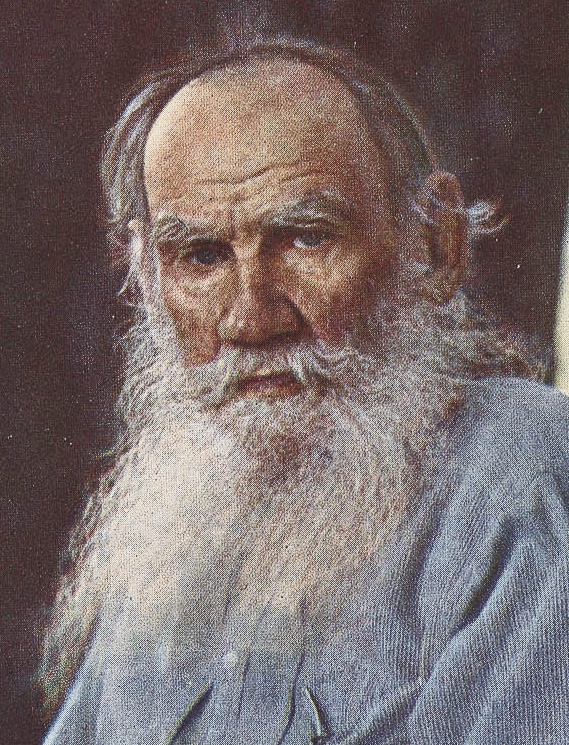
“Nothing can make our life, or the lives of other people, more beautiful than perpetual kindness.”—Leo Tolstoy, Calendar of Wisdom: Daily Thoughts to Nourish the Soul, Written and Selected from the World’s Sacred Texts
Radical servanthood does not make sense unless we introduce a new level of understanding and see it as the way to encounter God. To be humble and persecuted cannot be desired unless we can find God in humility and persecution. When we begin to see God, the source of all our comfort and consolation, in the center of servanthood, compassion becomes much more than doing good for unfortunate people. Radical servanthood, as the encounter with the compassionate God, takes us beyond the distinctions between wealth and poverty, success and failure, fortune and bad luck. Radical servanthood is not an enterprise in which we try to surround ourselves with as much misery as possible, but a joyful way of life in which our eyes are opened to the vision of the true God who chose to be revealed in servanthood. The poor are called blessed not because poverty is good, but because theirs is the kingdom of heaven; the mourners are called blessed not because mourning is good, but because they shall be comforted.
Here we are touching the profound spiritual truth that service is an expression of the search for God and not just of the desire to bring about individual or social change.
Verse of the day
Rejoice with those who rejoice; weep with those who weep.
– Romans 12:15
Voice of the day
Compassion requires us to be weak with the weak, vulnerable with the vulnerable, and powerless with the powerless. Compassion means full immersion in the condition of being human.
– Henri Nouwen, “Compassion, a Reflection on the Christian Life” (1982)
Prayer of the day
God, help us to be present with the people around us, in both good moments and difficult ones. Move us to be there for them like you always are for us.
Verse of the day
Before the mountains were brought forth or ever you had formed the earth and the world, from everlasting to everlasting you are God.
– Psalm 90:2
Voice of the day
Climate change is a test of whether our big brain was a good adaptation. Or, perhaps more accurately, it is a test of whether our big brain is attached to a big enough heart to prompt us to act.
– Bill McKibben, “The Rules of God’s Creation Are Not To Be Trifled With”
Prayer of the day
Creator who is older than the earth itself, move us to use our big hearts to act on injustice.
Verse of the day
My child, do not let these escape from your sight: keep sound wisdom and prudence, and they will be life for your soul and adornment for your neck. Then you will walk on your way securely, and your foot will not stumble.
– Proverbs 3:21-23
Voice of the day
Stay the course. When thwarted try again: harder, smarter. Persevere relentlessly.
– John Wooden
Prayer of the day
Great God, help us to stay the course as we pursue wisdom and prudence. Amid the noise of the world, may we stay focused on the path of justice.
Verse of the day
Did not he who made me in the womb make them? And did not one fashion us in the womb?
– Job 31:15
Voice of the day
We are not just autonomous identities to God, who invites us to hold all human beings in that nexus of tenderness, love, and mystery that a beloved child engenders in us.
– Julie Polter, “The Calculus of Responsibility and Complicity”
Prayer of the day
God, help us see each other as you see us. Remind us to hold each other, just as you hold us.

We continue to plunge into the mysteries of nature. Yet we have not learned how to understand and love one another even to the minimal degree demanded by our survival. And so our crisis is not that caused by the atom or cybernetics, or Cold War—it is rather one of faith and love. And so we must learn to resolve this crisis, or science fiction may become true in our regard, as we leave to inhabit another planet, while we leave this one in flames. — Philip Berrigan (Fighting the Lamb’s War: Skirmishes with the American Empire, p. 74)

It doesn’t take much to have despair and hopelessness break into my heart like the proverbial thief in the night. All I have to do is open Social Media, look at the news (especially the clickbait headlines), or see the sick tragedy that is politics in this nation. Looking for hope and a way forward, I have been doing some reading, research, and reflection.
I am currently reading Philip Berrigan’s autobiography, Fighting the Lamb’s War: Skirmishes with the American Empire. Berrigan reminds me that sadly, there is nothing new under the sun. The issues he protested against (racism, war, and poverty to name a few) are still very much alive today and just as malevolent as they were when he was writing and protesting. In the essay/chapter God and Ordinary People, Berrigan reflects on his seminary training and what changes he would insist on in that training today (1996).
Looking back, I marvel at how little we learned in the seminary. Would I study for the priesthood again? Yes, but only under certain conditions… We would learn in our classrooms and through interaction with people, about the Gospel as it applies to the world. Most importantly, we would be encouraged to enter into an active, experiential dialogue concerning justice. I would insist on experience with the peace movement, with the poor, with African-Americans, Latinos, and Native Americans. (p. 37, The Lamb’s War)
I was fortunate enough to go to a seminary where such experiences were encouraged and supported. Was I an activist? Not in an obvious way. However, in my interactions with people who were being oppressed (LGBTQ personnel in the military, women who had been raped by fellow airmen and then raped again by the military “justice” system, etc.) I tried to make a difference. I also tried to make a difference in my ministry after I retired from the military and went back into parish ministry.
Now that I am fully retired from both the military chaplaincy and active parish ministry, I find myself in a period of discernment. How can I use my own experiences and ministry skills to serve those who are being oppressed by the church, government, and society? Can I even make a difference? Spiritual mentors like Philip and Daniel Berrigan along with Thomas Merton are busy encouraging me while also challenging me at the same time to make that difference, one relationship at a time.
I have been reading and reflecting today while Denise (my wife and partner in life, love, and ministry) has been working on the sermon that she will preach tomorrow at her home church in Mobile, Alabama. My reading and reflecting has been both frustrating and incredibly positive and hopeful. While Philip Berrigan has been reminding me that there is nothing new under the sun, he has also been encouraging me to find a way to do the work of the Gospel in a real and tangible way in this new stage of life.
One of the spiritual mentors of both Berrigan brothers and Thomas Merton has also reached out to me with words of hope during these challenging times. Mohandas Gandhi once said: When I despair, I remember that all through history, the ways of truth and love have always won. There have been tyrants and murderers, and for a time they can seem invincible. But in the end, they always fall. Think of it — always.
Dear reader, as we seek to make a difference in this chaotic world, may we be encouraged to continue this work with Gandhi’s words etched upon our hearts. The ways of truth and love have always won — always!
 Pastor Michael Moore's Blog