
Freedom belongs to the core of the spiritual life; not just the freedom that releases us from forces that want to oppress us, but the freedom also to forgive others, to serve them, and to form a new bond of fellowship with them. In short, the freedom to love and to work for a free world.
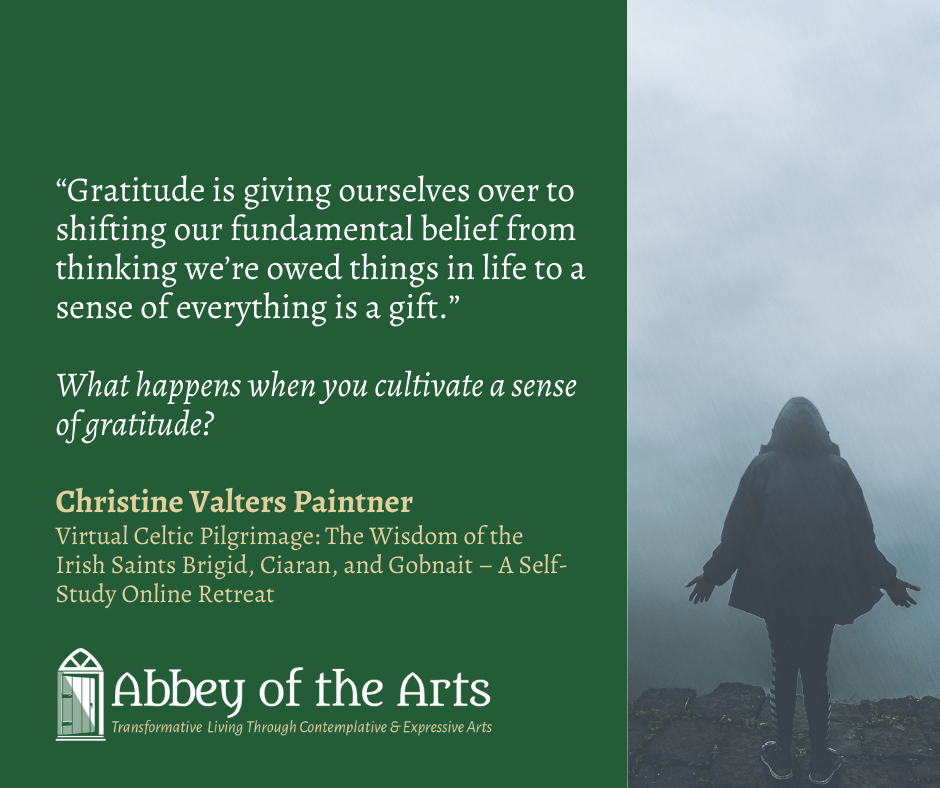
“Gratitude is giving ourselves over to shifting our fundamental belief from thinking we’re owed things in life to a sense of everything is a gift.”
—Christine Valters Paintner, PhD, Virtual Celtic Pilgrimage: The Wisdom of the Irish Saints Brigid, Ciaran, and Gobnait – A Self-Study Online Retreat
What happens when you cultivate a sense of gratitude?
We enter into solitude first of all to meet our Lord and to be with him and him alone. Our primary task in solitude, therefore, is not to pay undue attention to the many faces that assail us, but to keep the eyes of our mind and heart on him who is our divine savior. Only in the context of grace can we face our sin; only in the place of healing do we dare to show our wounds; only with a single-minded attention to Christ can we give up our clinging fears and face our own true nature. As we come to realize that it is not we who live, but Christ who lives in us, that he is our true self, we can slowly let our compulsions melt away and begin to experience the freedom of the children of God. And then we can look back with a smile and realize that we aren’t even angry or greedy anymore.
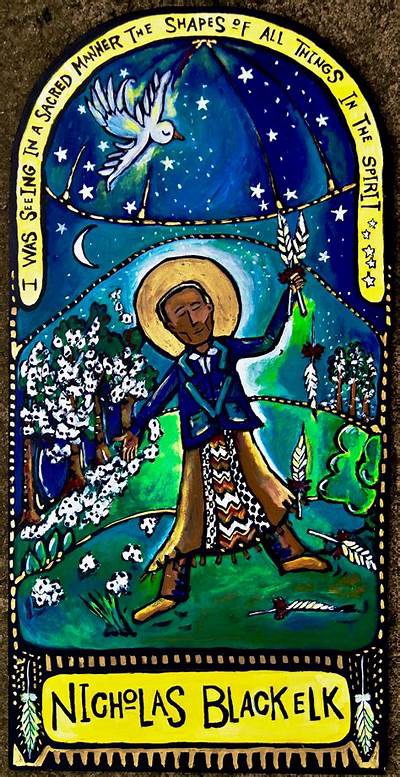
“The first peace, which is the most important, is that which comes within the souls of people when they realize their relationship, their oneness with the universe and all its powers, and when they realize at the center of the universe dwells the Great Spirit, and that its center is really everywhere, it is within each of us.” ― Nicholas Black Elk
The test of a government is not how popular it is with the powerful and privileged few but how honestly and fairly it deals with the many who must depend on it. — Jimmy Carter
A gift only becomes a gift when it is received; and nothing we have to give—wealth, talents, competence, or just beauty— will ever be recognized as true gifts until someone is open to accept them. This all suggests that if we want others to grow— that is, to discover their potential and capacities, to experience that they have something to live and work for—we should first of all be able to recognize their gifts and be willing to receive them. For we only become fully human when we are received and accepted.
More important than our talents are our gifts. We may have only a few talents, but we have many gifts. Our gifts are the many ways in which we express our humanity. They are part of who we are: friendship, kindness, patience, joy, peace, forgiveness, gentleness, love, hope, trust, and many others. These are the true gifts we have to offer to each other.
Somehow I have known this for a long time, especially through my personal experience of the enormous healing power of these gifts. But since my coming to live in a community with mentally handicapped people, I have rediscovered this simple truth. Few, if any, of those people have talents they can boast of. Few are able to make contributions to our society that allow them to earn money, compete on the open market, or win awards. But how splendid are their gifts!
The world is only evil when you become its slave. The world has a lot to offer—just as Egypt did for the children of Jacob—as long as you don’t feel bound to obey it. The great struggle facing you is not to leave the world, to reject your ambitions and aspirations, or to despise money, prestige, or success, but to claim your spiritual truth and to live in the world as someone who doesn’t belong to it. . . . All the good things our world has to offer are yours to enjoy. But you can enjoy them truly only when you can acknowledge them as affirmations of the truth that you are the Beloved of God. The truth will set you free to receive the beauty of nature and culture in gratitude, as a sign of your Belovedness. That truth will allow you to receive the gifts you receive from your society and celebrate life. But that truth will also allow you to let go of what distracts you, confuses you, and puts in jeopardy the life of the Spirit within you.

“The spiritual journey is not about growing more certain about the world but embracing more and more the mystery at the heart of everything.”
—Christine Valters Paintner, PhD A Midwinter God: Encountering the Divine in Seasons of Darkness (Coming September 13th from Ave Maria Press. Available for pre-order now.)
How is your spiritual journey unfolding? Have you noticed an increase in feelings of uncertainties and not knowing?
Detachment is often understood as letting loose of what is attractive. But it sometimes also requires letting go of what is repulsive. You can indeed become attached to dark forces such as resentment and hatred. As long as you seek retaliation, you cling to your own past. Sometimes it seems as though you might lose yourself along with your revenge and hate—so you stand there with balled-up fists, closed to the other who wants to heal you. . . .
Praying means, above all, to be accepting of God who is always new, always different. For God is a deeply moved God, whose heart is greater than our own. The open acceptance of prayer in the face of an ever-new God makes us free. In prayer, we are constantly on our way, on a pilgrimage. On our way, we meet more and more people who show us something about the God whom we seek. We will never know for sure if we have reached God. But we do know that God will always be new and that there is no reason to fear.
 Pastor Michael Moore's Blog