
Verse of the day
How long, O Lord? Will you forget me forever? How long will you hide your face from me? How long must I bear pain in my soul and have sorrow in my heart all day long? How long shall my enemy be exalted over me?
– Psalm 13:1-2
Voice of the day
Our children die before the silence of the world, and before the silence of God. How difficult is God’s silence!
– Munther Isaac, “God Is Under the Rubble in Gaza”
Prayer of the day
O God, in the face of unbearable sorrow and the silence of both the world and heaven, we cry out with the psalmist: How long will you hide Your face? — come near to the suffering and break the silence with Your justice and mercy.
Verse of the day
For though they fall seven times, they will rise again, but the wicked are overthrown by calamity.
– Proverbs 24:16
Voice of the day
While solving problems, you will continue to encounter failures. Accept them, but persist with the problem. Do not give up, and always remember the bigger goal of making a difference.
– Gitanjali Rao
Prayer of the day
Lord, grant us the strength to rise each time we fall, embracing failures as lessons and persisting with courage toward the greater purpose you have set before us.

For language to have meaning, there must be intervals of silence somewhere, to divide word from word and utterance from utterance. He who retires into silence does not necessarily hate language. Perhaps it is love and respect for language which impose silence upon him. For the mercy of God is not heard in words unless it is heard, both before and after the words are spoken, in silence. — Disputed Questions, p. 178 (Ebook version)
Verse of the day
A generous person will be enriched, and one who gives water will get water.
– Proverbs 11:25
Voice of the day
Hope is one of the most precious gifts we can give each other and the people we work with to make change.
– Marshall Ganz, “Why Stories Matter”
Prayer of the day
Generous God, inspire us to give hope freely, knowing that as we refresh others, we too will be enriched and renewed.
The solitary… despises the criminal, bloodthirsty arrogance of his own nation or class, as much as that of “the enemy.” He despises his own self-seeking aggressivity as much as that of the politicians who hypocritically pretend they are fighting for peace. — Disputed Questions, p. 171 (ebook)
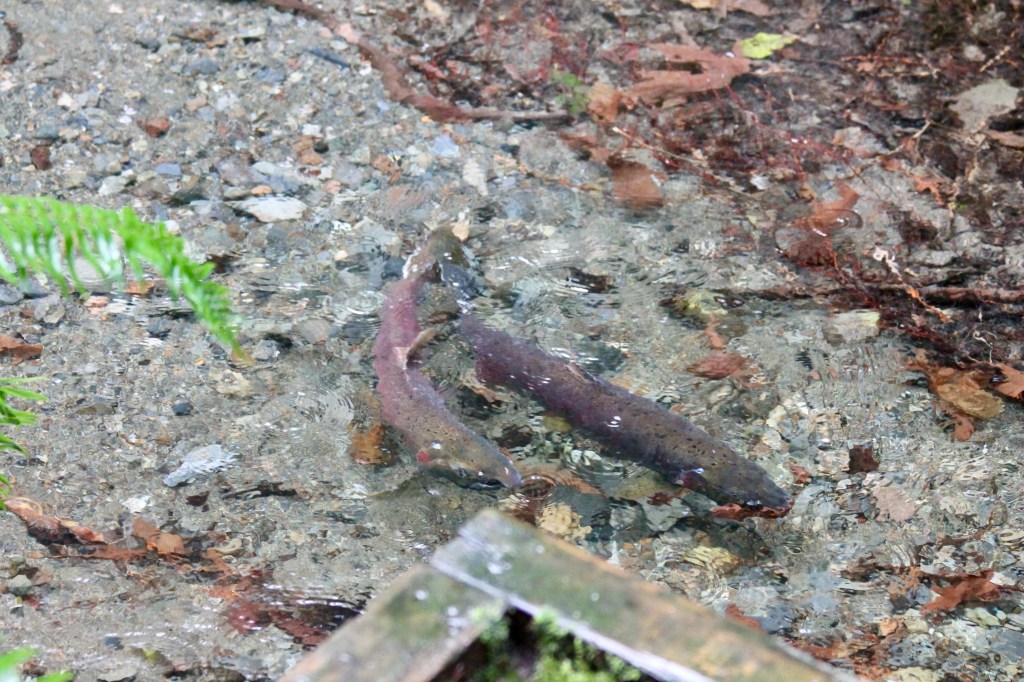
What if we could listen
like the great salmon
who goes about its ordinary life
when suddenly something shifts.
It does not come as a thunderous
revelation, but a quiet knowing
you have been preparing all
your life to trust.
The path lived until now no longer
satisfies but the path ahead
seems thousands of miles
long, and your womb is heavy.
There is no refusing this ancient call,
and to know ourselves as not alone,
but part of generations before us who,
like the salmon, share in this inheritance.
You now hear only the rush of energy
that comes with starting the long
return home and the pull in the
blood which cannot be ignored.
I like to imagine the salmon
swimming across the ocean
(as if that weren’t daunting enough)
and after that endless voyage
it must face the mouth of the mighty river.
Does she hesitate, even for a moment?
Does he want to turn back to less turbulent waters?
But there is something ripening in their bellies.
Perhaps your list of pressing tasks is still long.
Leave it there fluttering in the breeze,
uncrossed, undone, unfinished,
to do the only thing you can do
which is to swim,
to be carried by the waves and tide
and to know when to let the current carry you
and when to fight it with all your strength,
and to know even this yes will
demand more than you were willing
to give: your life for the new birth,
what you think you know for
the ancient call home.
—Christine Valters Paintner (blog)
A portion of this poem is the inspirational quote on our Calendar this month and is especially significant to us since we will be visiting Maitland, Nova Scotia, Canada where my Mother’s maternal ancestors came from.
We will also be visiting Prince Edward Island, which is the setting for her favorite book, Anne of Green Gables.
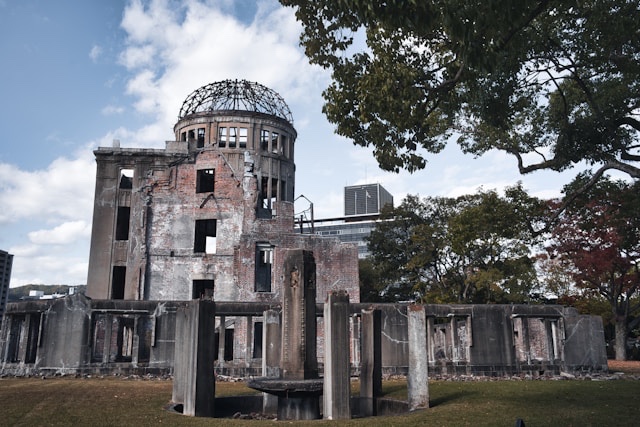
“Unfortunately the blindness and madness of a society that is shaken to its very roots by the storms of passion and greed for power make the fully effective use of political negotiation impossible. Menwant to negotiate for peace, and strive to do so, but their fear is greater than their good will. They do not dare to take serious and bold initiatives for peace. Fear of losing face, fear of the propaganda consequences of apparent ‘weakness,’ make it impossible for them to do what is really courageous: to take firm steps toward world peace. When they take one step forward they immediately tell the world about it and then take four steps backward. We are all walking backward toward a precipice. We know the precipice is there, but we assert that we are all the while going forward. This is because the world in its madness is guided by military men, who are the blindest of the blind.”—Thomas Merton’s August, 1962 letter to Shinzo Hamai, mayor of Hiroshima, Japan.
The only thing I would add to this quote from Merton is that the madness is also guided by corrupt, greedy, and incompetent politicians who are more concerned about placating a tyrant than they are about working for ALL of the people they are supposed to represent.

“Our task: to bend history toward justice. Justice for all people: safety, peace, hope. The world waits beneath the shadows to see if we can succeed. Pray for Spirit’s presence, pray for the Ancestors to help us, and then bend your shoulder toward the truth and push with all your strength to balance the great wheels of creation.”—Steven Charleston
Verse of the day
Is not this the fast that I choose: to loose the bonds of injustice, to undo the straps of yoke, to let the oppressed go free, and to break every yoke?
– Isaiah 58:6
Voice of the day
If you want to be a friend of God — and God needs all the friends that God can get in these times — then you’ll have to work for a better world.
– Michael Woolf, “In Difficult Times, We Find Out What Kind of Christians We Are”
Prayer of the day
God, make us true friends of yours by guiding us to free the oppressed, break every yoke of injustice, and work with love and courage for a better world.
The man who is dominated by what I have called the “social image” is one who allows himself to see and to approve in himself only that which his society prescribes as beneficial and praiseworthy in its members. As a corollary he sees and disapproves (usually in others) mostly what his society disapproves. And yet he congratulates himself on “thinking for himself.” In reality, this is only a game that he plays in his own mind—the game of substituting the words, slogans and concepts he has received from society, for genuine experiences of his own. Or rather—the slogans of society are felt to rise up within him as if they were his own, “spontaneous experience.” — Disputed Questions, p. 170

