

I think that we can say that democracy is a form of government that demands more virtue of its citizens than any other form of government, but I do not think that we can say that democracy guarantees that the virtue will be exercised. So let us term freedom of choice less a virtue than a necessity, a precondition to real freedom, which is the ability to make choices that are generous, loving, and wise. Our wills are not free when they will what is bigoted, narrow, ungenerous. Our wills are only free when they can will the will of a loving God. “Thy will be done on earth.” — Credo, pp. 80-81

“Poverty is the worst form of violence.”—Mohandas Gandhi

“This is an extraordinary time full of vital, transformative movements that could not be foreseen. It’s also a nightmarish time. Full engagement requires the ability to perceive both.”—Rebecca Solnit
Verse of the day
And the king will answer them, “Truly I tell you, just as you did it to one of the least of these brothers and sisters of mine, you did it to me.”
– Matthew 25:40
Voice of the day
God’s presence can be felt and heard in the call to stand up for justice and mercy among the marginalized in this and every society.
– J. Jioni Palmer, “Put Your Shoes On. We Are Marching”
Prayer of the day
May we serve the marginalized because in doing so, we are serving you, reflecting your justice and mercy.
Hardly anyone in the world believes territorial discrimination to be as evil as racial or religious discrimination. But it is. Nationalism, at the expense of another nation, is just as wicked as racism at the expense of another race. In other words, good patriots are not nationalists. A nationalist is a bad patriot. — Credo, p. 79
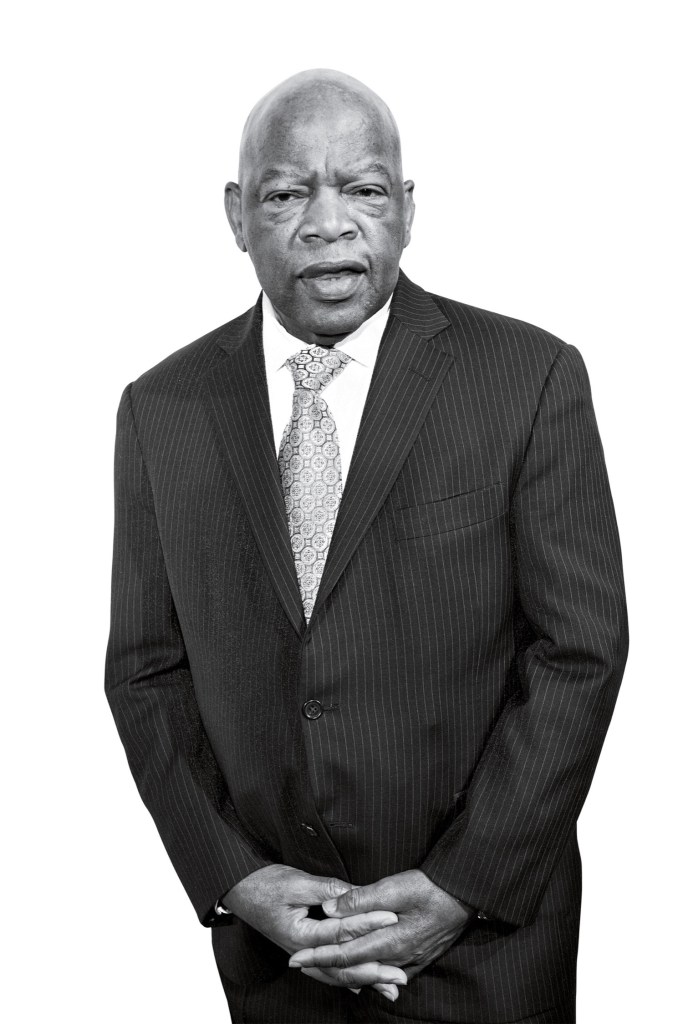
“Speak up, speak out, get in the way. Get in good trouble, necessary trouble, and help redeem the soul of America.” — Congressman John Lewis (1940-2020)

“she who reconciles the ill-matched threads of her life, and weaves them gratefully into a single cloth—it’s she who drives the loudmouths from the hall and clears it for a different celebration”—Rainer Maria Rilke
“We ask that you may be filled with the knowledge of God’s will in all spiritual wisdom and understanding so that you may lead lives worthy of the Lord” (Col. 1:9-10 NRSV). By “spiritual understanding,” Saint Paul means discerning, intuitive, and perceptive knowledge, usually found in solitude, the fruit of which is a profound insight into the interconnectedness of all things, through which we can situate ourselves in time and space to know God’s will and do God’s work in the world.

“Once one sees the false as false, one cannot continue supporting it.”—Veronica Pelicaric, “Movement of Noncooperation”
Christian leadership in the future is not a leadership of power and control, but a leadership of powerlessness and humility in which the suffering servant of God, Jesus Christ, is made manifest. I, obviously, am not speaking about a psychologically weak leadership in which the Christian leader is simply the passive victim of the manipulations of their milieu. No, I am speaking of a leadership in which power is constantly abandoned in favor of love. It is a true spiritual leadership. Powerlessness and humility in the spiritual life do not refer to people who have no spine and who let everyone else make decisions for them. They refer to people who are so deeply in love with Jesus that they are ready to follow him wherever he guides them, always trusting that, with him, they will find life and find it abundantly.
 Pastor Michael Moore's Blog