

“We did not hesitate to call our movement an army. But it was a special army, with no supplies but its sincerity, no uniform but its determination, no arsenal except its faith, no currency but its conscience.”—Martin Luther King
Verse of the day
Whoever does not love does not know God, for God is love.
– 1 John 4:8
Voice of the day
Love is not consolation, it is light.
– Simone Weil, translated by Arthur Wills, Gravity and Grace (1947)
Prayer of the day
Help us to embody your love and your light.

The sun has set and the Vesper Lights flicker and glow
What a wonderful day, Lord
Welcoming back my assistant pastor from a much needed time of rest and refreshment
Next a time of blessing at the VA clinic drawing blood
Spending time with a dear colleague and friend with our spouses
You brought us home safely through horrific rain, lightning, and wind
What a lovely evening with my sweetheart and our sweet kitten
Lord, so many gifts and so many blessings
Thank you
Now as my eyelids grow heavy
I lift this humble prayer to you
Dona Nobis Pacem
Grant Us Peace
A wee prayer from the heart of your Padre…
Verse of the day
You must not move your neighbor’s boundary marker, set up by former generations, on the property that will be allotted to you in the land that the Lord your God is giving you to possess.
– Deuteronomy 19:14
Voice of the day
Empires create their own theologies to justify their occupation.
– Mitri Raheb, Faith in the Face of Empire (2014)
Prayer of the day
Let us never use our faith as a weapon to harm others.
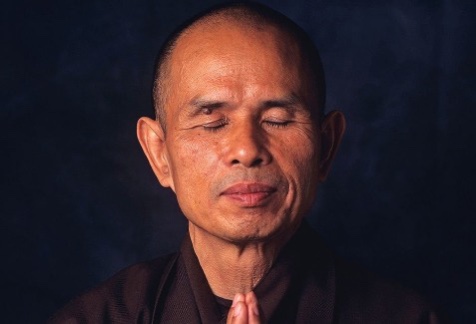
“We see that the earth is not only the environment. The earth is us. And taking care of the earth, we take care of ourselves. And many people get sick today because they get alienated from Mother Earth. . . . The practice of mindfulness helps us to go back to our body and touch Mother Earth inside of our body and touch the earth outside of our body. That practice can help heal people. So the healing of the people should go together with the healing of the earth.”—Thich Nhat Hanh
Verse of the day
Love is patient; love is kind; love is not envious or boastful or arrogant or rude. It does not insist on its own way; it is not irritable; it does not rejoice in wrongdoing, but rejoices in the truth. It bears all things, believes all things, hopes all things, endures all things.
– 1 Corinthians 13:4-7
Voice of the day
Love won’t be tampered with, love won’t go away. Push it to one side and it creeps to the other. Throw it in the garbage and it springs up clean. Try to root it out and it only flourishes.
– Louise Erdrich, The Bingo Palace(1994)
Prayer of the day
Creator, thank you for the persistence of love. May we embody love’s unending spirit.

The sun has set and the Vesper Lights flicker and glow
It has been a good Lord’s day
Wonderful worship and fellowship this morning
Naps and reading this afternoon
Time spent with my sweetheart
Being entertained by our sweet Stella
Plus another beautiful sunset
So many reminders of God’s grace and love
Now as my eyelids grow heavy
I lift this humble prayer to you
Dona Nobis Pacem
Grant Us Peace
A wee prayer from the heart of your Padre…

In last Saturday’s blog (and last Sunday’s sermon) I focused on the difference between independence and interdependence. In an intriguing way, that theme continues with a slightly different twist this week. The Gospel reading for the Fifth Sunday after Pentecost is the very familiar parable of “The Good Samaritan” as found in Luke 10:29-37. It begins with a question from a lawyer: “Teacher,” he said, “what must I do to inherit eternal life?” (Luke 10:25)
Lawyers in the time of Jesus weren’t experts in civil law like we have today. They were experts in religious law, the law of Moses. This expert in the law asked Jesus a question that any rabbi would have immediately known the answer to from their study of the Hebrew Scriptures. However, Rabbi Jesus turned the question around and asked the “expert” what was written in the law and how he interpreted it. Well, that was easy enough to answer: love the Lord your God with all your heart, soul, strength, and mind and love your neighbor as yourself. “…do this and you shall live” was Jesus’ reply. Seeking to justify himself, the lawyer then asked Jesus who was his neighbor, thus opening the door for Jesus to tell the story about a man who was stripped, beaten, and left half dead by robbers.
This parable is so familiar to us that it is easy to breeze through the parable and identify the Samaritan as the one who showed love to his neighbor by caring for the man. I want to explore this story from a slightly different angle. Looking at it from the perspective of relationships, we might find a different perspective and lesson to be learned.
A priest was the first to come upon the man who had been robbed. In Jesus’ day a priest was the highest religious authority amongst the Jews. The road between Jerusalem and Jericho was a dangerous road where bandits often attacked travelers going between the two cities. In a hurry to get off of the dangerous road, the priest evidently decided that he didn’t need to stop for the seriously wounded man, so he crossed over to the other side of the road and avoided him. The man certainly could have used the priest’s help though. When the Levite (another religious authority but not as powerful as the priest) came upon the man, he too crossed to the other side of the road to avoid him. The man certainly could have used the Levite’s help but was once again ignored by another religious authority.
Two religious leaders avoided the man for an unknown reason. Perhaps they were afraid that the man was dead and by touching him the priest and the Levite would be made ritually unclean. For whatever reason, the religious leaders chose to avoid contact with a stranger who had been stripped, beaten, and left for dead on the road. That doesn’t paint the religious authorities in a very good light, and more than likely that was why Jesus used them as the “non-neighborly” examples.
When the Samaritan came upon the man on the side of the road, he could have just as easily ignored him. The Samaritans and Jews had a long history of animosity, and it would have not been surprising to hear that the Samaritan ignored the man. One might even ask if the beaten, nearly dead man would have wanted help from a Samaritan. Was the animosity so deep that even in an extreme circumstance like this the man would have rather died than been helped by a so-called enemy?? I’ve heard such comments from people today. However, in the story that Jesus told, the Samaritan felt the call to help this stranger from the other side of the religious divide. The man who had been ignored by his own religious leaders obviously needed the help of this Samaritan despite any differences of religious opinions they might have had.
So, what is the lesson for us today? When I was an Air Force Chaplain, I never stopped to inquire whether an individual who came to my office for counseling was a person of faith. Faith differences were, frankly, irrelevant when it came to my ministry. I met the people where they were and walked with them through whatever situation they may have been facing. I didn’t “check their dog tags for religious preference” before helping them. They needed my care (whether they saw it as spiritual or not) and I needed to be there for them because of my own calling to walk with ALL of God’s children.
In a time when it is looked upon as a “sin” to work across the aisle in a bi-partisan manner for the greater good of a nation and people (this isn’t a Republican, Independent, or Democrat issue), there is a need for good Samaritans to reach across the aisle. In a time where faith groups are busy erecting barriers to “keep out” those whom they disagree with, there is a need for good Samaritans to build bridges of understanding and compassion. There is a need for love of God, of self, and of neighbor, EVERY neighbor!
In his book, Conjectures of a Guilty Bystander, Thomas Merton said the following about human nature and the need for love: The deepest and most fundamental exigency of the divine law in our hearts is that we should reach our fulfillment by loving. It is not enough for us to possess human nature, we have to act as humans, we have to exercise all the deepest capacities of our nature. More than this, we have to act as persons—freely! As soon as we come into existence we begin to obey the Law of Love. The demands of the Law of Love are progressive…. we must first of all love ourselves. But as we grow we must love others. We must love them as our own fulfillment. Then we must come to love them in order to fulfill them, to develop their capacity to love, and finally we must love others and ourselves in and for God. (p. 117)
We should reach our fulfillment by loving. Isn’t that what the Samaritan did when he stopped to help a stranger who just might be an enemy? That is the message that is both comforting and challenging for me.

A simple, yet profound quote as I continue to reflect on Sunday’s sermon:
It is not enough for us to possess human nature, we have to act as humans, we have to exercise all the deepest capacities of our nature. More than this, we have to act as persons—freely! As soon as we come into existence we begin to obey the Law of Love.—Thomas Merton (Conjectures of a Guilty Bystander, p. 117)

The sun has set and the Vesper Lights flicker and glow
Thank you for this day and all that has happened, Lord
Beginning the day with my sweetheart as we prayed Morning Prayer together
The day continued with the church food pantry by serving and getting to know our neighbors
An evening walk with my sweetheart after a lovely dinner
Now we are watching the live-stream of the Presbyterian Church (U.S.A.) 225th General Assembly online
There are so many things to be thankful for, Lord
I am thankful tonight for our connectional church that isn’t afraid to speak with the voice of a prophet in these challenging times
With a heart filled with gratitude, I lift this humble prayer to you
Dona Nobis Pacem
Grant Us Peace
A wee prayer from the heart of your Padre…

