
Verse of the day
As iron sharpens iron, so one person sharpens another.
– Proverbs 27:17 (NIV)
Voice of the day
My humanity is bound up in yours, for we can only be human together.
– Desmond Tutu
Prayer of the day
May our expressions of love wrap around the whole earth.
As you announce peace with your mouth, make sure that greater peace is in your hearts. Let no one be provoked to anger or scandal through you, but may everyone be drawn to peace, kindness, and harmony through your gentleness. For we have been called to this: to heal the wounded, bind up the broken, and recall the erring. — Saint Francis of Assisi (from Fr Richard Rohr’s Daily Meditation — https://cac.org/daily-meditations/making-peace-in-a-time-of-war-2022-06-17/?utm_source=cm&utm_medium=email&utm_campaign=dm&utm_content=summary
When we think about the people who have given us hope and have increased the strength of our soul, we might discover that they were not advice givers, warners, or moralists, but the few who were able to articulate in words and actions the human condition in which we participate and who encouraged us to face the realities of life. . . . Those who do not run away from our pains but touch them with compassion bring healing and new strength. The paradox indeed is that the beginning of healing is in the solidarity with the pain. In our solution-oriented society it is more important than ever to realize that wanting to alleviate pain without sharing it is like wanting to save a child from a burning house without the risk of being hurt. It is in solitude that this compassionate solidarity takes its shape.
Compassion lies at the heart of our prayer for our fellow human beings. When I pray for the world, I become the world; when I pray for the endless needs of the millions, my soul expands and wants to embrace them all and bring them into the presence of God. But in the midst of that experience I realize that compassion is not mine but God’s gift to me. I cannot embrace the world, but God can. I cannot pray, but God can pray in me. When God became as we are, that is, when God allowed all of us to enter into his intimate life, it became possible for us to share in his infinite compassion.
In praying for others, I lose myself and become the other, only to be found by the divine love that holds the whole of humanity in a compassionate embrace.
Verse of the day
Finally, brothers and sisters, whatever is true, whatever is honorable, whatever is just, whatever is pure, whatever is pleasing, whatever is commendable, if there is any excellence and if there is anything worthy of praise, think about these things.
– Philippians 4:8
Voice of the day
What we plant in the soil of contemplation, we shall reap in the harvest of action.
– Meister Eckhart, translated by Raymond B. Blakney
Prayer of the day
God of justice, transform our thoughts into action.
Our true challenge is to return to the center, to the heart, and to find there the gentle voice that speaks to us and affirms us in a way no human voice ever could. The basis of all ministry is the experience of God’s unlimited and unlimiting acceptance of us as beloved children, an acceptance so full, so total and all-embracing, that it sets us free from our compulsion to be seen, praised, and admired and frees us for Christ, who leads us on the road of service.
This experience of God’s acceptance frees us from our needy self and thus creates new space where we can pay selfless attention to others. This new freedom in Christ allows us to move in the world uninhibited by our compulsions and to act creatively even when we are laughed at and rejected, even when our words and actions lead us to death.
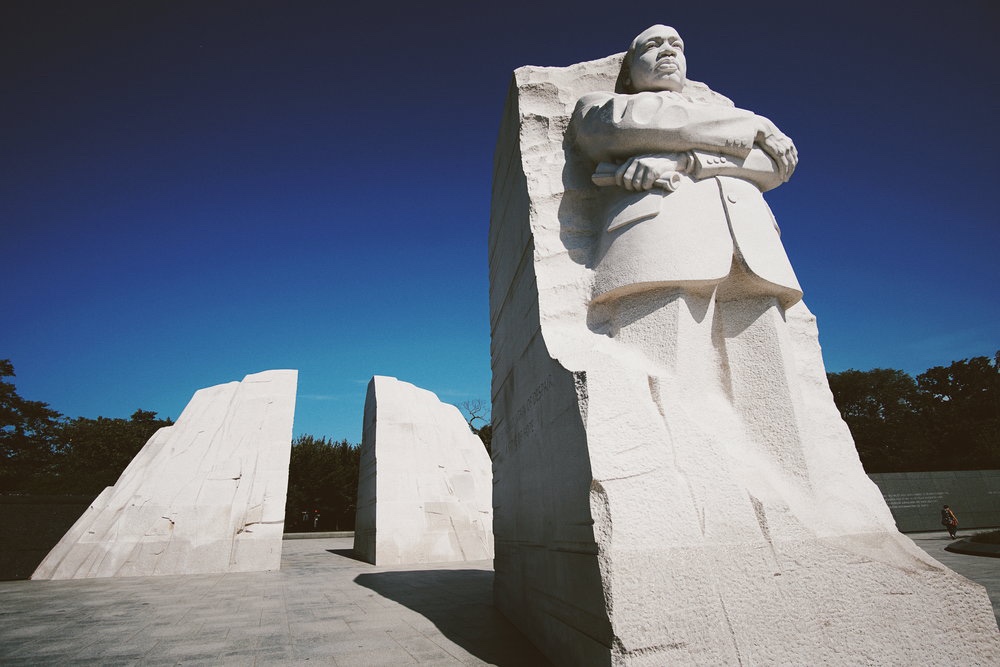
“We still have a choice today: nonviolent coexistence or violent co-annihilation. . . . Let us rededicate ourselves to the long and bitter—but beautiful—struggle for a new world.”—Martin Luther King Jr.
Life is a gift. Each one of us is unique, known by name, and loved by the One who fashioned us. Unfortunately, there is a very loud, consistent, and powerful message coming to us from our world that leads us to believe that we must prove our belovedness by how we look, by what we have, and by what we can accomplish. We become preoccupied with “making it” in this life, and we are very slow to grasp the liberating truth of our origins and our finality. We need to hear the message announced and the message emboldened over and over again. Only then do we find the courage to claim it and live from it.

Trinity Sunday comes around each year and each year it challenges preachers to consider the riddle that is wrapped in an enigma and surrounded by mystery. The Trinity has challenged theologians and the church since the beginning of the church in the third century, common era. It is one of the more confusing doctrines of the church today as it has been throughout the centuries.
Traditionally it celebrates the one and equal glory of God the Father, Son, and Holy Spirit. Saint Patrick tried to teach the Irish about the Trinity using a shamrock which had three individual leaves and one stem. Other language has been used to attempt to describe the three-in-one aspect of the Trinity. God the Father, Son, and Holy Ghost… Father, Son, and Holy Spirit… Creator, Redeemer, and Sustainer… Creator, Christ, and Spirit. No matter what terminology is used, there is still the same mystery. Just what is the Trinity?
This last Sunday we observed/celebrated Pentecost Sunday where the promised Holy Spirit descended on the disciples and initiated the ministry Jesus had called them to do. They went out into the world to share the Gospel, the Good News of Jesus Christ. In the reading for Trinity Sunday from John 16, Jesus tells the disciples that the Spirit of truth will come to guide them as they went out into the world.
Yet how does this doctrine or this Sunday in the lectionary speak to us today? How does it challenge us to be Christ-followers? How does it help us to share the love, justice, mercy, and peace of God with a world desperately in need of such gifts? Over the years as I have studied and pondered the “development” of doctrine of the Trinity throughout the ages, it eventually has boiled down to a simple concept. God is best described in relationship with God’s self and with all of creation.
Thomas Merton in his book New Seeds of Contemplation described the Trinity in a very relational and unique way. The One God Who exists only in Three Persons is a circle of relations in which His infinite reality, Love, is ever identical and ever renewed, always perfect and always total, always beginning and never ending, absolute, everlasting and full. Ultimately, God in His Trinity of subsistent relations infinitely transcends every shadow of selfishness.
Love is God’s infinite reality… it is never ending… absolute… everlasting and full. Doesn’t’ that sound like Jesus’ teachings about the Law and the Prophets? Love God with your entire being (heart, mind, soul, and strength) and love your neighbor (every one of them) as you love yourself.
My friend Thom Shuman who is a Presbyterian Church (USA) pastor, writer, and common-sense theologian introduced me to this way of understanding the Trinity. Tom has written many beautiful liturgies and poems (http://lectionaryliturgies.blogspot.com) and has inspired me in my own worship and prayer life. Instead of the traditional trinitarian prayer language (in the name of the Father, Son, and Holy Spirit) Thom uses this phrase: God in Community, Holy in One.
Dear reader, perhaps in these words and these thoughts we might find a way to truly build relationships of love, grace, mercy, and peace in this world. Lord knows all of creation and the world needs a new way to relate and create.
This excellent OpEd speaks to my heart and to why I am still a Presbyterian Church (USA) minister today
I am certain that I am not alone in occasionally wondering whether the whole notion of Protestant denominations is an anachronism; that maybe the elaborate denominational structures and traditions that evolved over the last 500 years or so have served their purpose and should now fade away. An even more disconcerting thought is that maybe trying to hold on to and preserve our denomination actually hinders what the Holy Spirit calls us to do and be.
— Read on pres-outlook.org/2022/06/why-the-pcusa-pastor-editor-and-former-moderator-john-m-buchanan-shares-his-story/
 Pastor Michael Moore's Blog