

“We must remember compassion is contagious. The more we spread it the more people will cherish it and share it.”—Widad Akrawi

As I read the final chapter of Bishop Charleston’s book, this particular passage spoke to my heart.
…the earth is not inanimate. It is alive. If we are spiritually awake, we recognize this fact and we understand that we are all living in a covenant, an agreement, with this living world. Other covenant-based religions may describe community as a willingness to obey the letter of the law in that agreement, but for Native American prophets, community requires each person to embrace the vision of the earth as a living being. Covenant is not law. It is love. — We Survived the End of the World: Lessons from Native America on Apocalypse and Hope (p. 182)
The current reality in this country is one of fear-mongering, hate-mongering, and the sowing of an “us versus them” mentality. I saw that reality last night as we watched the movie It’s A Wonderful Life. The movie highlights corporate and political greed versus the citizens simply trying to get by and those who help them to achieve the life-goal of owning a home. It wasn’t the powerful Mr. Potter who changed people’s lives for the better; it was George Bailey and the Bailey Brothers’ wonderful old Building and Loan.
In addition to George Bailey’s story, Bishop Charleston has been helpful to me in my own journey as well, especially in this human-made apocalypse that we are living in. An apocalypse that has been fuelled, in part, by the institutional church, specifically the christian nationalist movement (lower case is intentional), a disease which has infected large and small mainline denominational and non-denominational churches.
There are days when I feel the weight of the world descending upon my heart and find my depression kicking in. When those dark clouds (which it seem are present daily) obscure the light that is out there, it is the hope offered in things like the movie and book gently help blow the clouds away.
This weary Padre finds comfort and challenge in these words from Bishop Charleston’s book. As we approach the Advent season and prepare our hearts for Christmas, may these words bring us hope as we remember that Covenant isn’t law, it is love. May that love both encourage you and sustain you as we seek to make a difference in this world.
“My optimism rests on my belief in the infinite possibilities of the individual to develop nonviolence. The more you develop it in your own being, the more infectious it becomes till it overwhelms your surroundings and by and by might oversweep the world.”—Mohandas Gandhi: Essential Writings
An excellent reflection from my International Thomas Merton Society colleague, Richard Pütz
I want to start with something we all feel: life right now is exhausting. We’re pulled in a thousand directions. Our newsfeeds are screaming at us. Everyone seems angry, and it feels like we’re supposed to pick a side on everything—right now, loudly, or we’re part of the problem.
But here’s what I’ve been wondering: What if Christian resistance looks totally different from what our culture tells us it should? What if it’s not about being the loudest voice in the room or winning arguments on social media? — read more on the below link to his Substack
Verse of the day
And let the peace of Christ rule in your hearts, to which indeed you were called in one body. And be thankful.
– Colossians 3:14
Voice of the day
But above all you should understand that there can never be peace between nations until there is known that true peace, which, as I have often said, is within the souls of men.
– Black Elk
Prayer of the day
Prince of Peace, transcend the troubles in our hearts so we can dwell in gratitude with you and amongst each other.
“To praise without acknowledging our pain is a superficial and shallow response to the realities of the world in which we live. To lament without offering gratitude or praise is to unbind ourselves from hope.”
—Christine Valters Paintner, PhD, A Midwinter God: Encountering the Divine in Seasons of Darkness
How are the songs of gratitude and lament playing out in your life at this moment?
To register for the self-study companion retreat to the book with additional resources and guidance, click here.
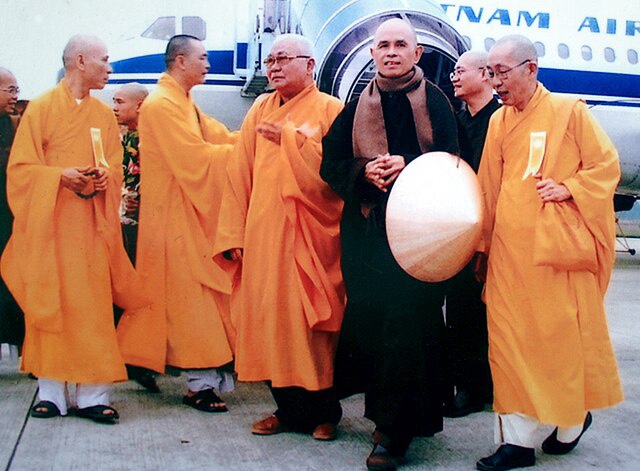
“To practice nonviolence, first of all we have to practice it within ourselves.”—Thich Nhat Hanh
“We must remind ourselves that, though our lives are small and our acts seem insignificant, we are generative elements of this universe, and we create meaning with each act that we perform or fail to perform.”—Kent Nerburn, Make Me an Instrument of Your Peace
For some time now I have been reading Bishop Steven Charleston’s book, We Survived the End of the World: Lessons from Native America On Apocalypse and Hope. Bishop Charleston is a retired Episcopal Bishop and member of the Choctaw Nation. I have been challenged by the book and have found valuable life lessons in its pages. As one reviewer said, this book is a poignant, deeply moving account of the many lessons the world can learn from Native American responses to the apocalypse of settler colonialism. These lessons are even more urgently necessary now that the entire planet faces the predicament of the Indigenous peoples whose worlds were destroyed by maelstroms of avarice and aggression. (Review by Amitav Ghosh, author of The Great Derangement, as found on the back cover of the book)
Saturday night we finished watching Ken Burns’ documentary, The American Revolution on PBS. Both the documentary and Bishop Charleston’s book have been speaking to my heart, especially in these challenging times in the American national experience. To say that the documentary was powerful, gut wrenching, and filled with raw honesty would be an understatement. Ken Burns pulled no punches in telling the story; thus the naked truth was both uncomfortable to hear and to watch. There were no absolute heroes just as there were no absolute villains. What was revealed was a very complicated and messy reality where no one was perfect. At the end of the series there were a lot of unanswered questions as I thought about how this nation’s future would continue to unfold.
At the end of the American Revolutionary War, a lot of the Colonies had been destroyed literally and figuratively. The patriots who had fought for freedom and those who had remained loyal to the English Crown had to figure out how to rebuild their country. The Indigenous peoples and the African American slaves and freedmen who had fought on both sides had to make their way through the broken promises made by the white Europeans on both sides.
History can be very messy as can the process of healing. This quote from Bishop Charleston’s book is a very good summary of that process. Reconciliation is not pretty. It is often covered in blood. It demands a clear memory of what really happened, and that memory can be very ugly. So much of America’s hope to be seen as a great nation remains buried beneath the snow of Wounded Knee. To resurrect it from the grave is like putting life into the hands of death. It is a fearful choice for both the Indigenous people of North America and their oppressors. It means facing one another in the clear light of history. It means acknowledging the truth. It means having the humility to ask for forgiveness in order to create a new future. Very often, when faced with that level of change, people from both clans, the oppressed and the oppressor, draw back and reman fixed in a position of anger and blame… [this only] leaves us with a broken tablet of our own history. (p. 162)
Looking at where we are right now in the US is scary; it isn’t pretty and it’s very painful. I find myself wondering how, or even if, we can recover from the damage that has been done by this administration and its policies at home and abroad. Is the Constitution on life-support or can it be revived? So many challenging questions… it’s difficult not to slide into hopelessness and despair. I wish I had easy answers, but I don’t.
As Bishop Charleston writes: This horrific part of North American history has long remained hidden. Now, as it is being slowly revealed, it provokes enormous sorrow and anger in the Indigenous community, and deep reactions of either guilt or denial from the white community. In graphic language, it is gut wrenching. Most people from both communities would not wish to long dwell on the scarring memories it raises. But… we have to look at those scars. We have to not lose our memory, no matter how painful that memory may be. Life must be reconciled with death. (p. 163)
That slow process must continue… for many, it must begin now. Only in honest truth-telling on both sides can reconciliation be possible. Both now and into the future, may God help us to do the hard work wherever we may be in this world.

“Freedom is hammered out on the anvil of discussion, dissent, and debate.”—Hubert Humphrey
 Pastor Michael Moore's Blog