
Verse of the day
Finally, all of you, have unity of spirit, sympathy, love for one another, a tender heart, and a humble mind.
– 1 Peter 3:8
Voice of the day
True community is based upon equality, mutuality, and reciprocity. It affirms the richness of individual diversity as well as the common human ties that bind us together.
– Pauli Murray
Prayer of the day
God, bring us to a place of mutual understanding and care, so that our sincere efforts lead to the common good.
Verse of the day
Speak out; judge righteously; defend the rights of the poor and needy.
– Proverbs 31:9
Voice of the day
Words have more power than any one can guess; it is by words that the world’s great fight, now in these civilized times, is carried on; I never hesitated to use them, when I fought any battle for the miserable and oppressed.
– Mary Shelley, “Lodore” (1835)
Prayer of the day
Righteous God, may your deep desire for justice be made evident through our words and our actions.
“Pilgrim God, you beckon us to the threshold of our lives. Walk with us step-by-step as we venture ever closer to the wild edges of land and spirit. Open our hearts to the creative wisdom and fertility in and all around us.”
—Melinda Emily Thomas, Virtual Celtic Pilgrimage: The Wisdom of Saints Colman, Sourney, and Patrick — A Self-Study, Online Retreat
What are your wild edges, and what wisdom does that wild offer you?
Verse of the day
People were bringing children to him in order that he might touch them, and the disciples spoke sternly to them. But when Jesus saw this, he was indignant and said to them, “Let the children come to me; do not stop them, for it is to such as these that the kingdom of God belongs.
– Mark 10:13-14
Voice of the day
There can be no keener revelation of a society’s soul than the way in which it treats its children.
– Nelson Mandela
Prayer of the day
Beloved God, children cannot help but mirror your closeness to them. Help us keep that at the front of our minds as we fight to uphold their rights.
When we “remember” God, we are touching the divine nature within our very souls. For God knows us from eternity to eternity, has loved us with an unconditional love, and has carved us on the palm of his hands. Through the spiritual practice of learning to be aware and expectant, we remember God as love and ourselves as God’s beloved.
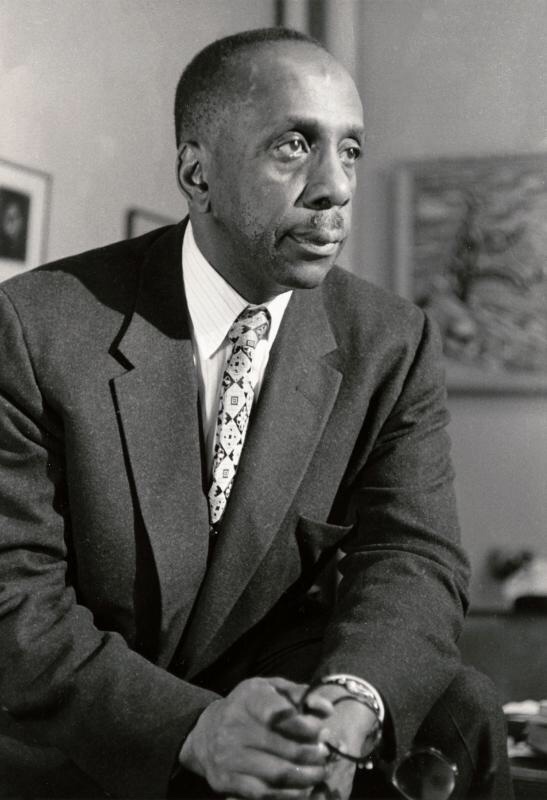
The experience of love is either a necessity or a luxury. If it be a luxury, it is expendable; if it be a necessity, then to deny it is to perish. Ultimately there is only one place of refuge on this planet for any person — that is in another person’s heart. To love is to make of one’s heart a swinging door. (A Strange Freedom: The Best of Howard Thurman on Religious Experience and Public Life, p. 184)
Thurman has been a longtime spiritual mentor of mine. I first met him through his writings and cassette tape recordings (yes, that long ago!) of his talks during my time at United Theological Seminary of the Twin Cities in the early eighties. Like my other spiritual mentor, Thomas Merton, Howard Thurman’s writings are just as prophetic and relevant today as they were when they were alive and writing decades ago.
In today’s world and especially in the US, division, both real and manufactured, is a tool used for fear mongering and oppression. A society which is united is a society that is a threat to a small group of individuals who consolidate their power through the lies of scarcity and manufactured hatred. I see that most clearly today in the immoral and illegal actions of ICE and the unconstitutional use of the National Guard and Active Duty military personnel in US cities by an administration bent on the ruthless consolidation of power into the hands of the corrupt politicians.
Today they continue to work at dividing people through the use of fear, bullying, and intimidation along with the unethical use of force. Their goal is to build walls of isolation that weaken the will of the governed and sow seeds of disunity and fear.
Thurman challenges me to step back and evaluate my own heart and my own actions. Am I closed off walled in community of one? Or am I seeking to do the work of taking down the fear-based and isolating walls that I have built up? Is my heart a closed or a swinging door? Am I willing to love boldly and stand up to the bullies? Am I willing to do as Jesus commands and offer a better way to live? A way where love isn’t a luxury but is rather a necessity?
In his Asian Journal, written during his 1968 trip to Asia, Thomas Merton wrote about unity, community, and communion.
The deepest level of communication is not communication, but communion. It is wordless. It is beyond words. It is beyond speech. It is beyond concept. Not that we discover a new unity, but we discover an old unity. My dear brothers and sisters, we are already one. But we imagine we are not. And what we have to recover is our original unity. What we have to be, is what we are. — The Asian Journal of Thomas Merton, p. 308
Are you willing, dear reader, to be a part of building a beloved community, or as Merton called it, Communion… our original unity? On this day, this is my hope and my prayer as I seek to live differently from much of the world around me.
“Autumn is a time of release, of letting go, of noticing what we don’t want to hold onto anymore, what we don’t want to invest our energy in anymore.”
—Christine Valters Paintner, PhD, Writing in Season: An Online Self-Study Retreat
What are you being called to relinquish, that which no longer serves your soul’s purpose and needs?


“What is that inner force that drives us, that provides regeneration and perseverance to speak the truth that desperately needs to be spoken in this moment of history? . . . If I deserve credit for courage, it is not for anything I do here, but for continuing in my daily struggle under occupation on so many fronts, for remaining samideh (steadfast) and, all the while, remaining open to love, to the beauty of the earth, and contributing to its healing when it is violated.”—Jean Zaru, Occupied with Nonviolence: A Palestinian Woman Speaks
Verse of the day
I am about to do a new thing; now it springs forth; do you not perceive it? I will make a way in the wilderness and rivers in the desert.
– Isaiah 43:19
Voice of the day
Action on behalf of life transforms. Because the relationship between self and the world is reciprocal, it is not a question of first getting enlightened or saved and then acting. As we work to heal the earth, the earth heals us.
– Robin Wall Kimmerer, “Braiding Sweetgrass” (2013)
Prayer of the day
God who breathes life into all things, cultivate in us a renewed sense of tenderness toward the earth and its relationship to our own healing.
 Pastor Michael Moore's Blog