

This Sunday is both the Seventeenth Sunday after Pentecost and World Communion Sunday. In the Presbyterian Church (USA) the denomination receives a special offering called the “Peace and Global Witness” offering on World Communion Sunday. This offering, according to the Presbyterian Mission Agency encourages the church to cast off anxiety and fear, discord and division, and embrace our God’s mission of reconciliation to those around the corner and around the world. (https://specialofferings.pcusa.org )
The Gospel reading for the Seventeenth Sunday after Pentecost is Luke 17:5-10. Perhaps the most well-known portion of that reading is Jesus’ comment—The apostles said to the Lord, ‘Increase our faith!’ The Lord replied, If you had faith the size of a mustard seed, you could say to this mulberry tree, ‘Be uprooted and planted in the sea,’ and it would obey you (verses 5-6) One might wonder why the apostles asked the Lord to increase their faith.
In the passages leading up to today’s lesson, Jesus had been teaching the disciples some hard lessons about discipleship and putting God first. It’s no wonder that they were feeling a bit overwhelmed and wanted to make sure they were prepared for the work they were being called to do. His story about the mustard seed Jesus was teaching that it wasn’t about how much faith you have, but rather living your life out of that faith. It reminds me of a quote attributed to Mother Teresa—Not all of us can do great things. But we can do small things with great love. It’s about how we live our lives each day.
Using the example of a servant or slave, Jesus instructed the disciples that following his commandments to love and forgive wasn’t something special that deserves an award. Living a life of service in his name is an essential part of the calling of a Christ-follower. In the lectionary commentary, Preaching God’s Transforming Justice, Joseph R, Jeter, Jr, says the following about living such a life of service in relationship to World Communion Sunday.
On World Communion Sunday (the first Sunday in October), congregations across the world partake of Communion. Someone has described the sacred table on this day as 25,000 miles long. In our fragmented world, in which groups often relate with suspicion and violence and even try to destroy one another, the churches of the world coming together to break the loaf and drink the cup is a sign of God’s intention for all people to live together in love, peace, and justice… Worldwide Communion Sunday begins on the other side of the International Date Line, so that the observance starts first on Sunday morning in the churches of the Tonga Islands, Fiji Islands, New Zealand, Australia, and so on towards the West during the twenty-four hours of the day… In a time when there is so much disunity, here is an opportunity to witness in a broken world to an unbroken Christian fellowship. (Preaching God’s Transforming Justice: A Lectionary Commentary, Year C, p. 417) (https://www.amazon.com/Preaching-Gods-Transforming-Justice-Lectionary/dp/0664234550 )
These words especially hit very close to home for me: In our fragmented world, in which groups often relate with suspicion and violence and even try to destroy one another, the churches of the world coming together to break the loaf and drink the cup is a sign of God’s intention for all people to live together in love, peace, and justice. I believe that these words speak to the current national and world environment. Far too often we are so busy erecting barriers and dividing people into “us” versus “them” that we forget what we were created to be and, in whose image, we were created. We cannot love our God unless we love our neighbor, and we cannot fully love our neighbor unless we love ourselves.
Part of the faith community’s responsibility is to build bridges of love, justice, mercy, and peace in a broken world. Until we celebrate the unity that is found in the midst of our diversity, we will not be living out the calling to be disciples and followers of Jesus.
In his Alaskan Journal (p. 308), Thomas Merton wrote about communion, and unity. The deepest level of communication is not communication, but communion. It is wordless. It is beyond words. It is beyond speech. It is beyond concept. Not that we discover a new unity, but we discover an old unity. (https://www.amazon.com/Alaskan-Journal-Thomas-Merton/dp/0918824575 )
My prayer for this World Communion Sunday is that we can discover that old unity which is found in the love of God and love of neighbor just as Jesus taught so long ago. Then we will realize that it isn’t about the greatness of our faith or tossing mulberry trees into the ocean but rather it is about living our faith by humbly serving God and one another.
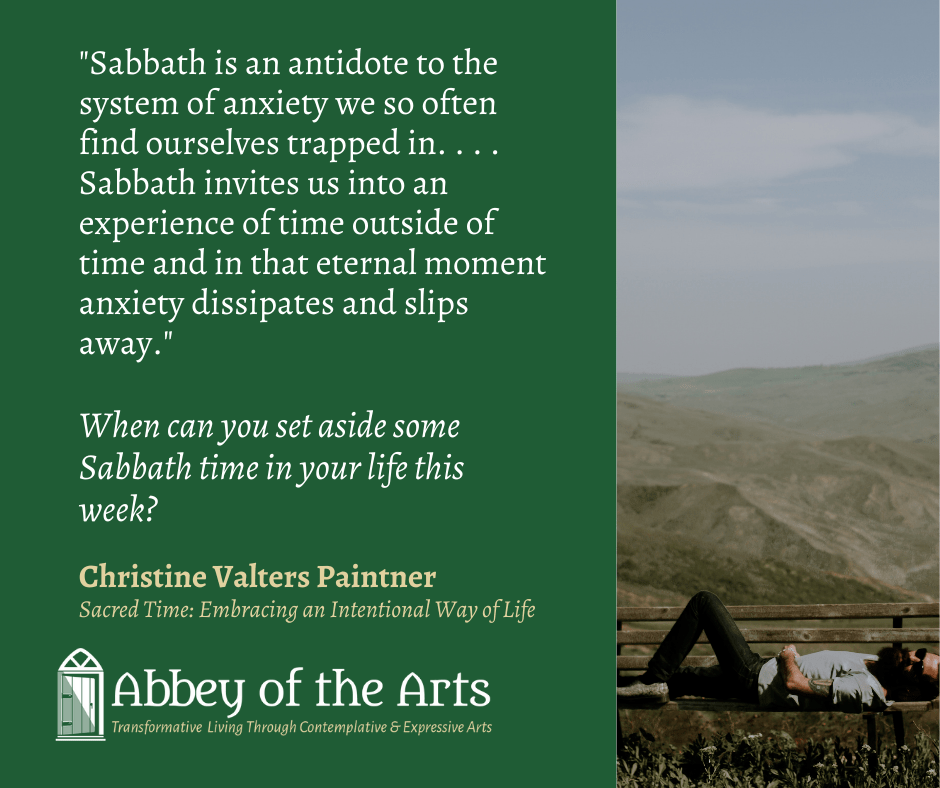
“Sabbath is an antidote to the system of anxiety we so often find ourselves trapped in. . . . Sabbath invites us into an experience of time outside of time and in that eternal moment anxiety dissipates and slips away.”
— Christine Valters Paintner, PhD, Sacred Time: Embracing an Intentional Way of Life
When can you set aside some Sabbath time in your life this week?

“You can no more win a war than you can win an earthquake.”—Jeannette Rankin
Verse of the day
But Jesus called them to him and said, “You know that the rulers of the gentiles lord it over them, and their great ones are tyrants over them. It will not be so among you, but whoever wishes to be great among you must be your servant.
– Matthew 20:25-26
Voice of the day
Yet the mark of power rightly stewarded is that those with power enable everyone around them to flourish.
– Katelyn Beaty, Celebrities for Jesus: How Personas, Platforms, and Profits Are Hurting the Church (2022)
Prayer of the day
Jesus, you did not consider equality with God something to be grasped; may we steward our platforms in ways that empower those around us.
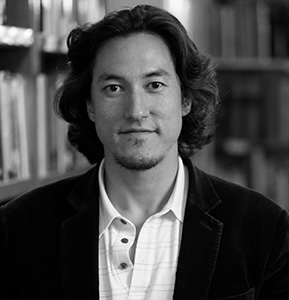
“To replace the old paradigm of war with a new paradigm of waging peace, we must be pioneers who can push the boundaries of human understanding. We must be doctors who can cure the virus of violence. We must be soldiers of peace who can do more than preach to the choir. And we must be artists who will make the world our masterpiece.”—Paul K. Chappell

“Discernment is essentially a way of listening to our lives and the world around us and responding to the invitations that call us into deeper alignment with our soul’s deep desires and the desires God has for us.”
— Christine Valters Paintner, PhD, The Soul’s Slow Ripening: 12 Celtic Practices for Seeking the Sacred
What invitations do you hear in the world around you?
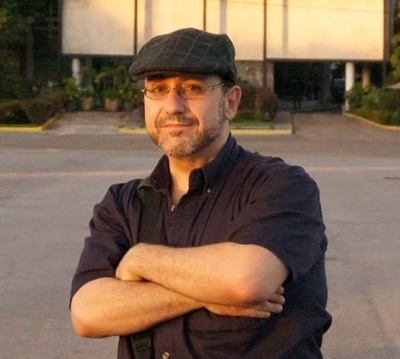
“Why is it so easy for us to be willing to pick up arms and risk our lives, and so difficult to put down those same weapons and still risk our lives – in the cause of life?”—Ramzi Kysia, a young Muslim-American peace activist

“When we believe in the impossible, it becomes possible, and we can do all kinds of extraordinary things.”—Madeleine L’Engle
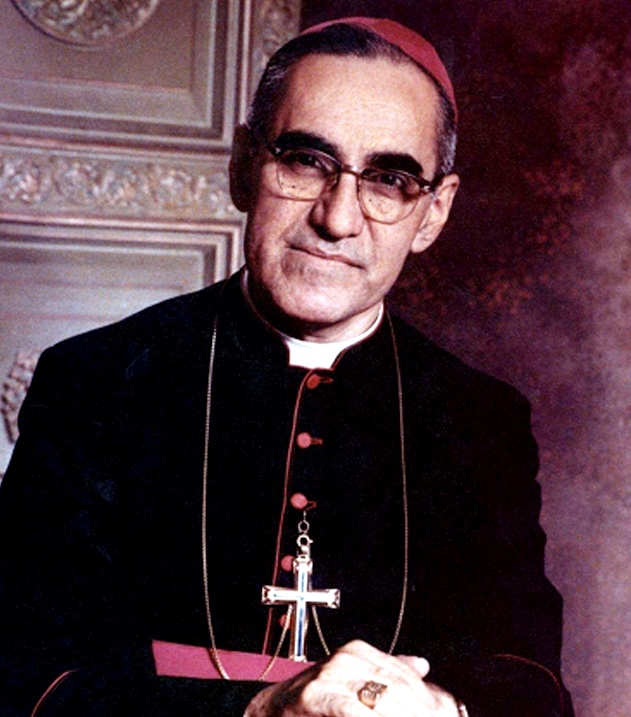
“I will not tire of declaring that if we really want an effective end to violence we must remove the violence that lies at the root of all violence: structural violence, social injustice, exclusion of citizens from the management of the country, repression. All this is what constitutes the primal cause, from which the rest flows naturally.”—Oscar Romero

In Luke 16:19-31, we read the story of another challenge Jesus offers the Pharisees and others who were listening to him speak. He tells them about the rich man and Lazarus. A rich man who was dressed in purple (a very expensive cloth dyed from the liquid obtained from a species of shellfish) is living a life that is large and self-absorbed. He feasted sumptuously every day while there was starvation literally at his front door. Using my imagination, I can see a home that is spacious and richly decorated with a staff who waited on him night and day. I am sure that he was a powerful and respected member of the community who never lacked for anything.
This is in direct contrast to Lazarus (whose name ironically means “God has helped) who has absolutely nothing. Day after day, Lazarus along with other invisible and discarded members of the society would wait in the hope that someone would take pity on him. He didn’t want much. In fact, he would have been satisfied with the crumbs that fell from the rich man’s table. Yet at the end of the day, all he had was the dogs licking his sores and an empty stomach. Alone and invisible, Lazarus was completely isolated from society and ignored.
It is easy to jump on one’s high horse and roundly condemn the rich man for being so heartless by ignoring the needs of the community right outside the door. To make matters worse, Lazarus was so invisible that the rich man didn’t even bother to get to know his story. Ah, there is so much to be righteously judgmental about in this story.
In the parable Lazarus and the rich man die but go in opposite directions so to speak! Condemned to eternity in Hades the rich man is suffering greatly. Without a staff to cater to his every whim or a banquet table full of food every day, he was suddenly introduced to the world of Lazarus. As he was being tormented the man still didn’t see the larger picture. From Hades he asks Abraham to send Lazarus down to dip his finger in water and cool his tongue. The rich man was essentially asking Abraham to send Lazarus as a servant down to do what he never did for Lazarus when they were both alive.
This parable was intended to show the Pharisees the hypocrisy of their ways and to challenge the way they lived out their faith. Jesus was challenging them to look beyond themselves and their scheming for power and control to walk with and care for the people they had been called to support as spiritual advisors.
So how does this parable speak to us today? For me it highlights the dualistic gaps that I see in the world today. Just as a chasm separated the rich man from Lazarus, there are chasms that are often self-created that separate us from each other. The rich versus the poor, the hungry versus those who have more than enough food, those who have mansions versus those who have no place to live; these are some of the chasms that come to my mind. Too often these dualistic differences boil down to an “us versus them” mentality where barriers are erected to separate people.
What would the world look like if we built bridges over the chasms that separate and transform the “us versus them” mentality into a “we are together” mentality? What would the world look like if we saw siblings instead of “those people” who are “different” from us? What would the world look like if we actually stepped out from behind the walls we have built and actually get to know our neighbor?
The church where I am serving as the Transitional minister operated a weekly food pantry. What struck me the first time that I worked the pantry was the fact that it wasn’t “those people” the church was helping; rather, it was “our neighbors” we are helping. Getting to know the names and stories of their neighbors and knowing what the family needs is building bridges instead of separating “us” from “them.”
John Donne, a seventeenth century clergyperson who was the Dean of St Paul’s Cathedral in London, is known for the phrase “no man is an island.” The phrase is from a sermon he delivered at the Cathedral. It is part of a larger quote from that sermon. Here is the full quote: No man is an island entire of itself; every man is a piece of the continent, a part of the main; if a clod be washed away by the sea, Europe is the less, as well as if a promontory were, as well as any manner of thy friends or of thine own were; any man’s death diminishes me, because I am involved in mankind. And therefore, never send to know for whom the bell tolls; it tolls for thee.
We are all connected to each other and the divisions that we create are completely artificial. Thomas Merton used the phrase as the title for one of his books of spiritual reflections; No Man Is an Island. The following quote comes from Merton’s book, and I believe it ties into the thoughts of John Donne and the parable that Jesus told about the rich man and Lazarus.
It is therefore of supreme importance that we consent to live not for ourselves but for others. When we do this we will be able first of all to face and accept our own limitations. As long as we secretly adore ourselves, our own deficiencies will remain to torture us with an apparent defilement. But if we live for others, we will gradually discover that no one expects us to be ‘as gods’. We will see that we are human, like everyone else, that we all have weaknesses and deficiencies, and that these limitations of ours play a most important part in all our lives. It is because of them that we need others and others need us. We are not all weak in the same spots, and so we supplement and complete one another, each one making up in himself for the lack in another. (Thomas Merton in No Man Is an Island)
I believe the church could lead by example today by recognizing and celebrating the fact that we are not individuals, and that faith isn’t about individual salvation as much as it is about building the kin-dom of God here on earth as it is in heaven. A kin-dom of love, justice, mercy, and peace. In the words of Merton, we must consent to live not for ourselves but for others.
 Pastor Michael Moore's Blog