
When we honestly ask ourselves which persons in our lives mean the most to us, we often find that it is those who, instead of giving much advice, solutions, or cures, have chosen rather to share our pain and touch our wounds with a gentle and tender hand. The friend who can be silent with us in a moment of despair or confusion, who can stay with us in an hour of grief and bereavement, who can tolerate not-knowing, not-curing, not-healing, and face with us the reality of our powerlessness, that is the friend who cares.
Verse of the day
Thus says the Lord God, who gathers the outcasts of Israel: I will gather others to them besides those already gathered.
– Isaiah 56:8
Voice of the day
It is, perhaps, the outcasts who are most able to find God in the unlikely places.
– Cassidy Klein, “The Queer Orthodox Artist Seeking to ‘Make the World an Altar’”
Prayer of the day
Lord of the outcasts, thank you for the witness and might of those on the margins. May we listen to those whom the world would quickly overlook.
Compassion means to become close to the one who suffers. But we can come close to another person only when we are willing to become vulnerable ourselves. A compassionate person says: “I am your brother; I am your sister; I am human, fragile, and mortal, just like you. I am not scandalized by your tears, nor afraid of your pain. I, too, have wept. I, too, have felt pain.” We can be with the other only when the other ceases to be “other” and becomes like us.
This, perhaps, is the main reason that we sometimes find it easier to show pity than compassion. The suffering person calls us to become aware of our own suffering. How can I respond to someone’s loneliness unless I am in touch with my own experience of loneliness? How can I be close to handicapped people when I refuse to acknowledge my own handicaps? How can I be with the poor when I am unwilling to confess my own poverty?
Verse of the day
I will restore the fortunes of my people Israel, and they shall rebuild the ruined cities and inhabit them; they shall plant vineyards and drink their wine, and they shall make gardens and eat their fruit.
– Amos 9:14
Voice of the day
If you look the right way, you can see that the whole world is a garden.
– Frances Hodgson Burnett, The Secret Garden (1911)
Prayer of the day
God of renewal, where we might see desolation, open our eyes to where there’s beauty to still be cultivated.
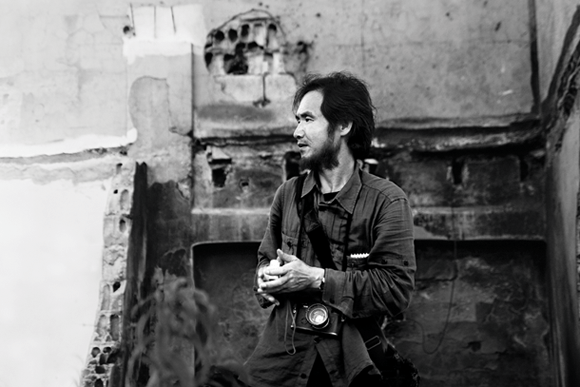
“There is a door
that cannot be forced open.
The door of a human heart.
Though force may bend and break it,
a heart can never be gained by force.”—Park NoHae, Reading and Walking Along
If you would ask the Desert Fathers why solitude gives birth to compassion, they would say, “Because it makes us die to our neighbor.” At first this answer seems quite disturbing to a modern mind. But when we give it a closer look we can see that in order to be of service to others we have to die to them; that is, we have to give up measuring our meaning and value with the yardstick of others. To die to our neighbors means to stop judging them, to stop evaluating them, and thus to become free to be compassionate. Compassion can never coexist with judgment because judgment creates the distance, the distinction, that prevents us from really being with the other.
Verse of the day
Until now you have not asked for anything in my name. Ask and you will receive, so that your joy may be complete.
– John 16:24
Voice of the day
Through it all, through the Middle Passage and American slavocracy and Jim Crow and Black criminalization and the new form of Jim Crow in this 21st century scourge of lynching, I find it remarkable that Black people have still created a culture of joy.
– Rev. Eboni Marshall Turman, “The Black Church Has Always Resisted Anti-Blackness”
Prayer of the day
God of liberation, we celebrate the emancipation of Juneteenth. We hold this in tension with the reality that not all are free; may we labor for the liberation for all.
When we think about the people who have given us hope and have increased the strength of our soul, we might discover that they were not advice givers, warners, or moralists, but the few who were able to articulate in words and actions the human condition in which we participate and who encouraged us to face the realities of life. . . . Those who do not run away from our pains but touch them with compassion bring healing and new strength. The paradox indeed is that the beginning of healing is in the solidarity with the pain. In our solution-oriented society it is more important than ever to realize that wanting to alleviate pain without sharing it is like wanting to save a child from a burning house without the risk of being hurt. It is in solitude that this compassionate solidarity takes its shape.
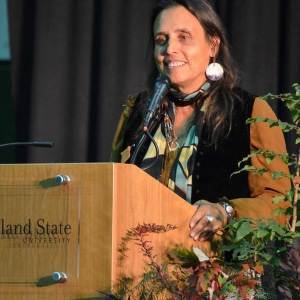
“Across the continent, on the shores of small tributaries, in the shadows of sacred mountains, on the vast expanse of the prairies, or in the safety of the woods, prayers are being repeated, as they have for thousands of years, and common people with uncommon courage and the whispers of their ancestors in their ears continue their struggles to protect the land and water and trees on which their very existence is based. And like small tributaries joining together to form a mighty river, their force and power grows.”—Winona LaDuke
One of the greatest human spiritual tasks is to embrace all of humanity, to allow your heart to be a marketplace of humanity, to allow your interior life to reflect the pains and the joys of people not only from Africa and Ireland and Yugoslavia and Russia but also from people who lived in the fourteenth century and will live many centuries forward. Somehow, if you discover that your little life is part of the journey of humanity and that you have the privilege to be part of that, your interior life shifts. You lose a lot of fear and something really happens to you. Enormous joy can come into your life. It can give you a strong sense of solidarity with the human race, with the human condition.
It is good to be human.

