
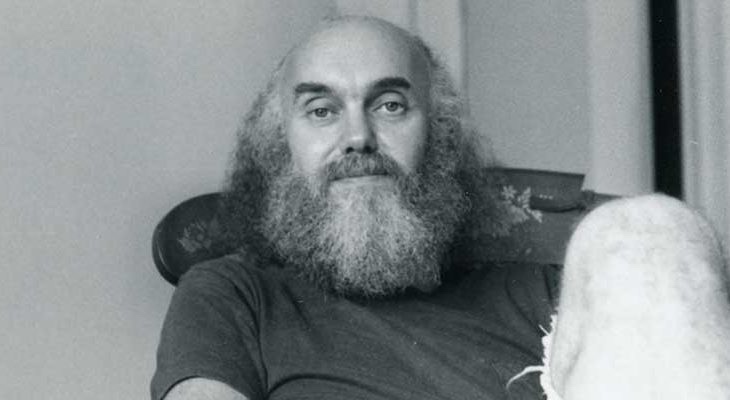
“When you go out into the woods, you see all these different trees. And some of them are bent, and some of them are straight, and some of them are evergreens, and some of them are whatever. And you don’t get all emotional about it. You just allow it. You understand that it didn’t get enough light, and so it turned that way. The minute you get near humans, though, you lose all that. You are constantly saying ‘You are too this, or I’m too this.’ That judgment mind comes in. And so I practice turning people into trees. Which means appreciating them just the way they are.”—Ram Dass

“Not everything that is faced can be changed, but nothing can be changed until it is faced.”—James Baldwin, As Much Truth As One Can Bear
Verse of the day
Enlarge the site of your tent, and let the curtains of your habitations be stretched out; do not hold back; lengthen your cords and strengthen your stakes.
– Isaiah 54:2
Voice of the day
Do we as people who believe in justice and fairness want to leave anyone behind?
– Karma Chavez, Queer Migration Politics
Prayer of the day
A gospel that does not strive for the well-being and inclusion of all is not good news; may we reject the invasive narratives that prioritize inclusion of some at the expense of others.
All the events of life, even such dark events as war, famine and flood, violence and murder, are not irreversible fatalities. Each moment is like a seed that carries within itself the possibility of becoming the moment of change. . . . We no longer need to run from present time in search of the place where we think life is really happening. We begin to have a truer vision of the world and of our lives in relationship to time and eternity. We begin to glimpse something of eternity in time. At this point boredom falls away and the joyful and painful moments of our lives take on new and profound meaning. It is then that we know that for us time is becoming transparent.
The contemplative life, therefore, is not a life that offers a few good moments between the many bad ones, but a life that transforms all our time into a window through which the invisible world becomes visible.
To start seeing that the many events of our day, week, or year are not in the way of our search for a full life but are rather the way to it is a real experience of conversion. We discover that cleaning and cooking, writing letters and doing professional work, visiting people and caring for others, are not a series of random events that prevent us from realizing our deepest self. These natural, daily activities contain within them some transforming power that changes how we live. We make hidden passage from time lived as chronos to time lived as kairos. Kairos is a Greek word meaning “the opportunity.” It is the right time, the real moment, the chance of our lives. When our time becomes kairos, it frees us and opens us to endless new possibilities. Living kairos offers us an opportunity for a profound change of heart.
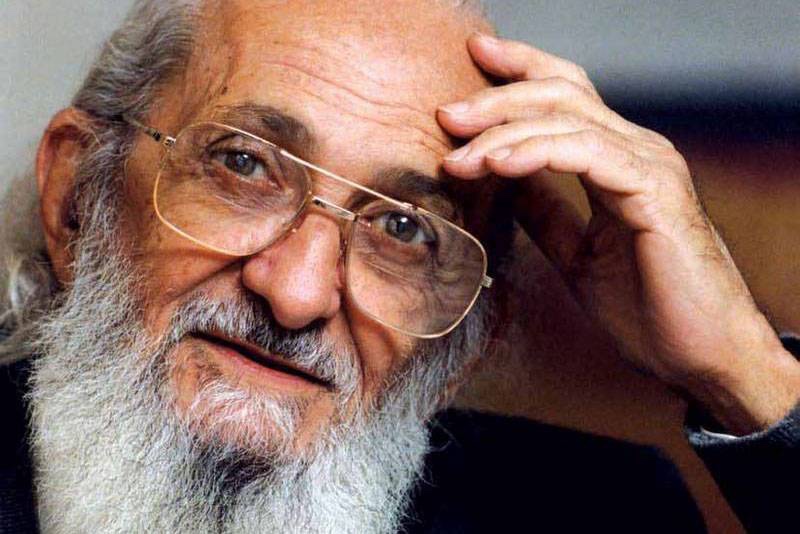
“Washing one’s hands of the conflict between the powerful and the powerless means to side with the powerful, not to be neutral.”—Paulo Freire
Verse of the day
Those who live at earth’s farthest bounds are awed by your signs; you make the gateways of the morning and the evening shout for joy.
– Psalm 65:8
Voice of the day
Rather than a distraction, awe is a call toward right relationship, showing spectacle to be a tool of empire. Awe is never self-serving. Its purpose is to recalibrate who we are before God and galvanize our work of justice.
– Zachary Lee, “Fatal Distraction: 3 Films Warn Us of the Seduction of Spectacle”
Prayer of the day
Lord, teach us to reject the lull of distraction and spectacle. In our lives, may we cultivate space to experience the recalibrating nature of awe.
“Let us love, since our heart is made for nothing else.”—St. Therese of Lisieux
All nature conceals its great secrets and cannot reveal its hidden wisdom and profound beauty if we do not listen carefully and patiently. John Henry Newman sees nature as a veil through which an invisible world is intimated. He writes:
“The visible world is . . . the veil of the world invisible . . . so that all that exists or happens visibly, conceals and yet suggests, and above all subserves, a system of persons, facts, and events beyond itself.”
How differently we would live if we were constantly aware of this veil and sensed in our whole being how nature is ever ready for us to hear and see the great story of the Creator’s love, to which it points. The plants and animals with whom we live teach us about birth, growth, maturation, and death, about the need for gentle care, and especially about the importance of patience and hope. . . .
It is sad that in our days we are less connected with nature and we no longer allow nature to minister to us. We so easily limit ministry to work for people by people. But we could do an immense service to our world if we would let nature heal, counsel, and teach again. I often wonder if the sheer artificiality and ugliness with which many people are surrounded are not as bad as or worse than their interpersonal problems.

“Police departments across the nation must develop nonviolent ‘rules of engagement,’ so that they don’t reflexively respond to suspected crimes with violence. This will require more in-depth training in the behavioral psychology of conflict resolution so police have tried-and-true techniques of preventing and de-escalating violence.”—Bernice King
 Pastor Michael Moore's Blog