
Verse of the day
O give thanks to the Lord, for he is good, for his steadfast love endures forever.
– Psalm 107:1
Voice of the day
To be grateful is to recognize the love of God in everything.
– Thomas Merton, Thoughts in Solitude (1956)
Prayer of the day
Move through our half measure of thanks and let us be, all through this day, more risky in acknowledging that we have nothing except what you give.
– Adapted from “At Thanksgiving” by Walter Brueggemann, in Prayers for a Privileged People

“I know I am not weaving my life’s patterns alone. Only one end of the threads do I hold in my hands. The other ends go many ways linking my life with others.”—Septima Clark

“The greatest challenge of the day is: how to bring about a revolution of the heart, a revolution that has to start with each one of us. When you begin to take the lowest place, to wash the feet of others, to love…with that burning love, that passion, which led to the Cross, then we can truly say, ‘Now I have begun.’” — Dorothy Day (Loaves and Fishes also found in the book Dorothy Day, Thomas Merton and the Greatest Commandment: Radical Love in Times of Crisis, p. 68)
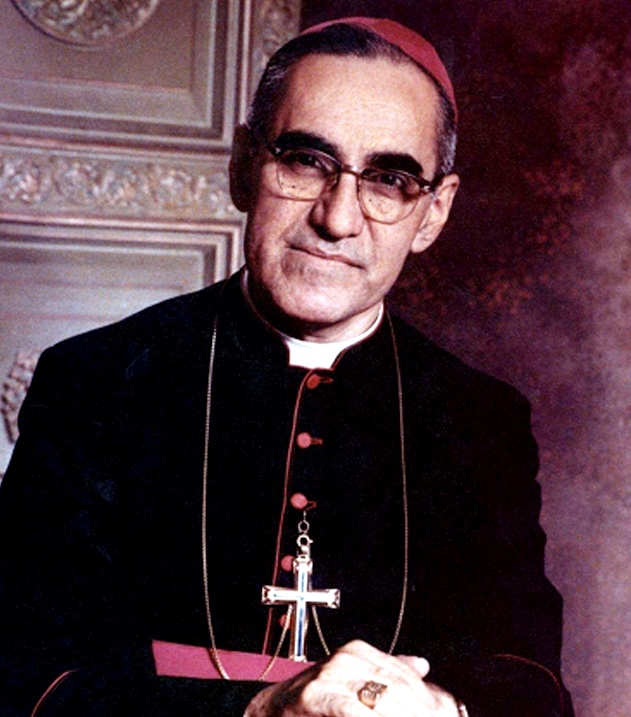
“Let us not tire of preaching love; it is the force that will overcome the world. Let us not tire of preaching love. Though we see that waves of violence succeed in drowning the fire of Christian love, love must win out; it is the only thing that can.”—Oscar Romero

In his book, Sit in the Sun: And Other Lessons in the Spiritual Wisdom of Cats, Jon Sweeney says the following about cats and their grooming and self-care practices.
When you watch cats cleaning themselves, you witness the meditative: They clean thoughtfully, deliberately, mindfully, at stressful moments and also as a regular practice. Their humans can learn from this example. If we could all pause and care for ourselves with regularity and thoughtfulness, the whole world might reverberate with purrs and love. Loving oneself can be the most difficult practice of all. The great Vietnamese Buddhist monk Thich Nhat Hahn taught that love is an energy that transforms the world. (p. 26)
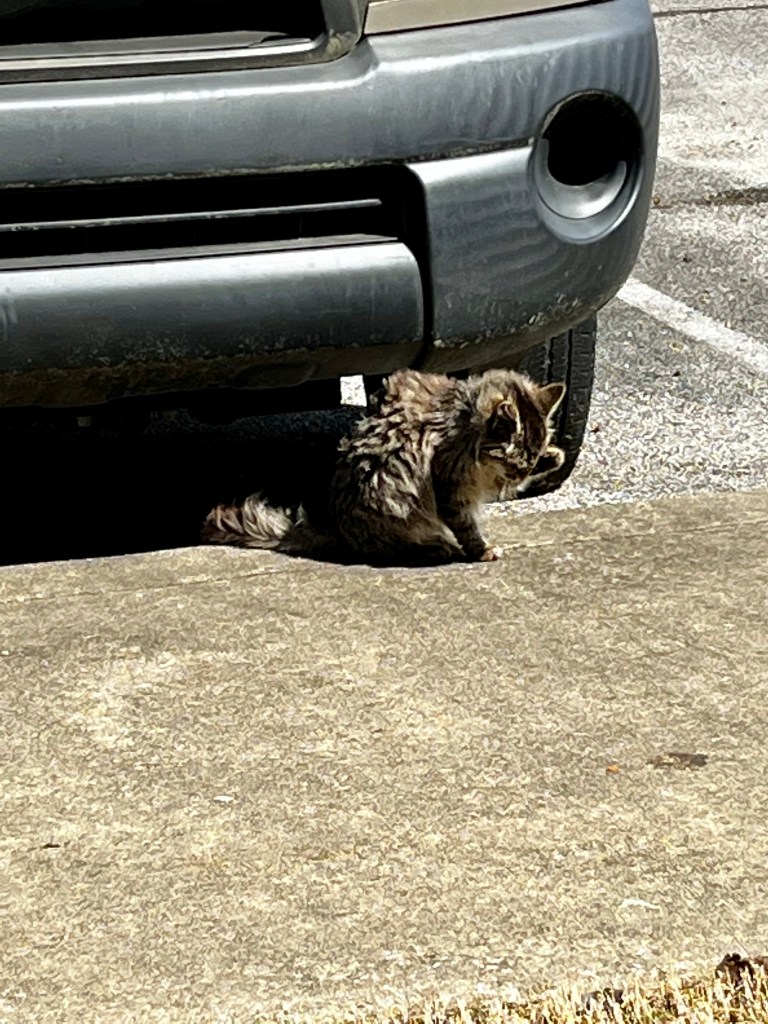
When Stella came into our lives twenty months ago, she was a wee little homeless kitten who weighted about 2.5 pounds. We aren’t sure how long she had been on her own but the vet who examined her told us that if she hadn’t found us, she would have died within a week or two. She quickly made her way into our hearts and our lives. Technically she is a rescue but we aren’t so sure who rescued whom… it could well be a matter of the three of us rescuing each other.
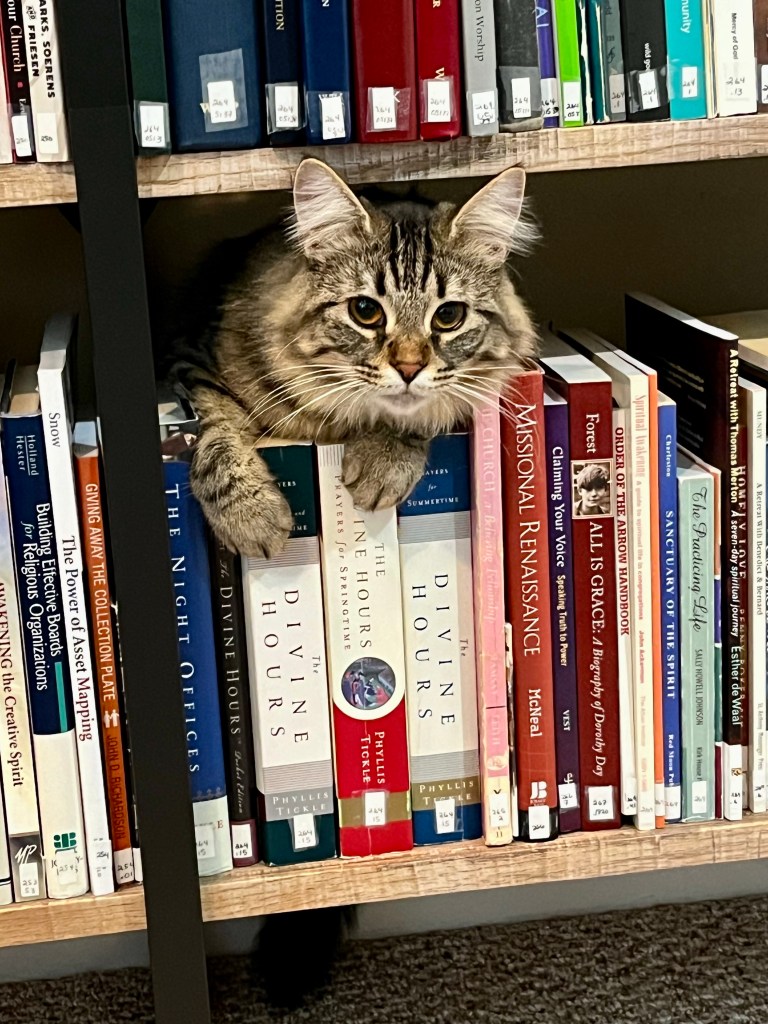
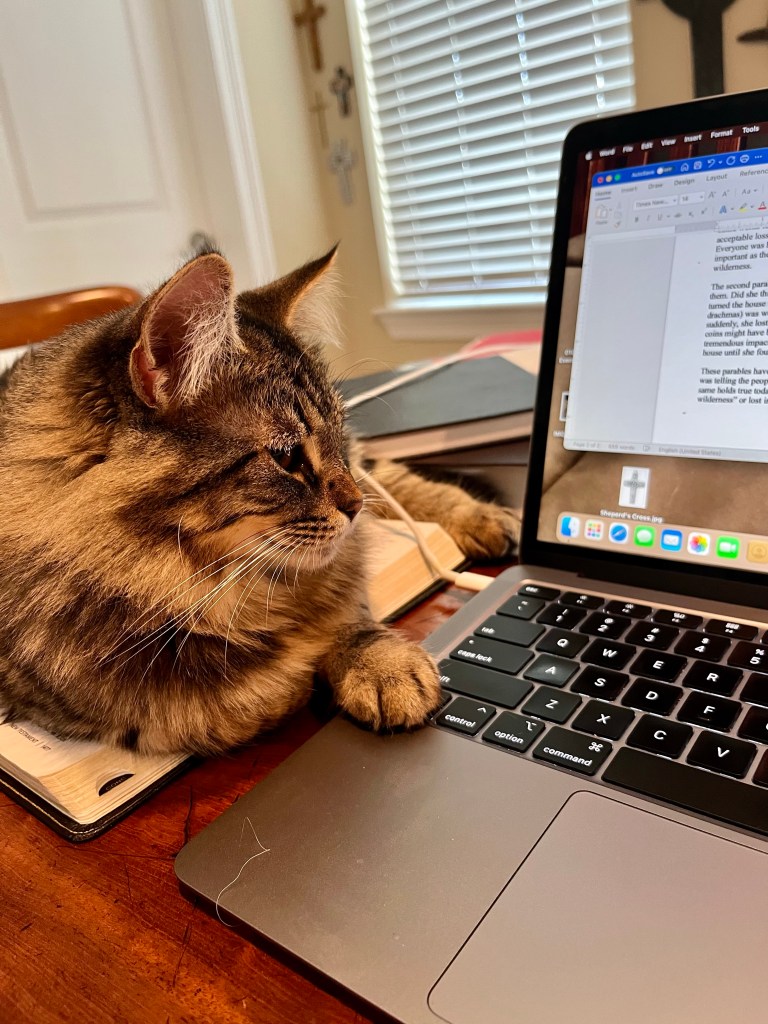
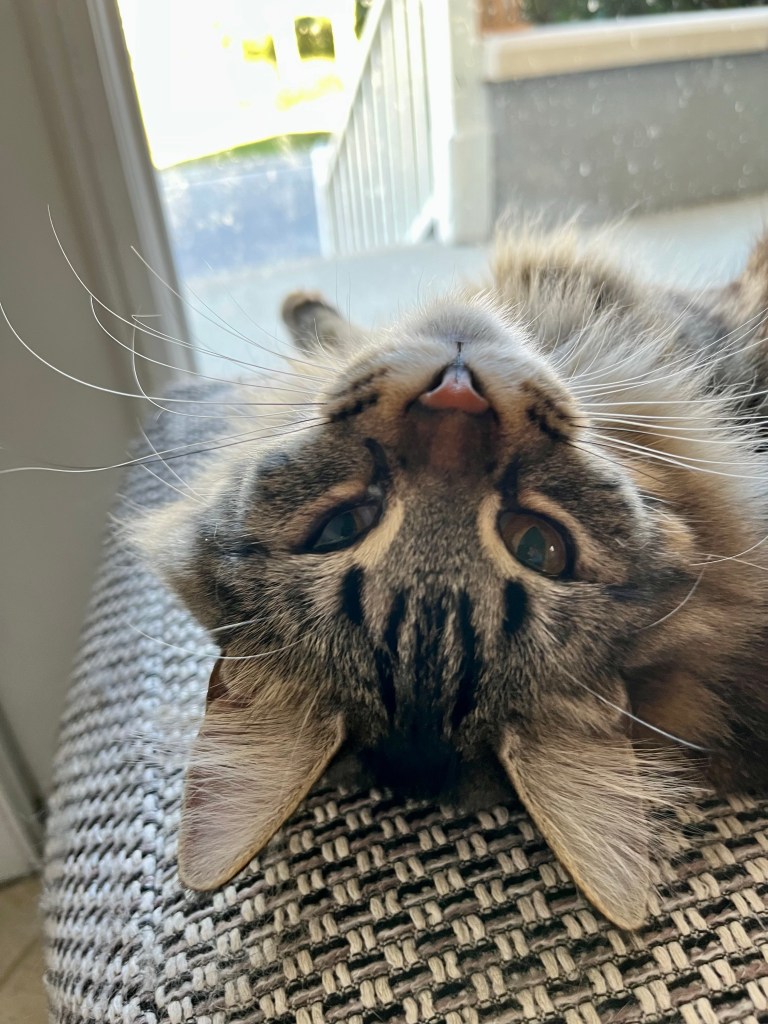
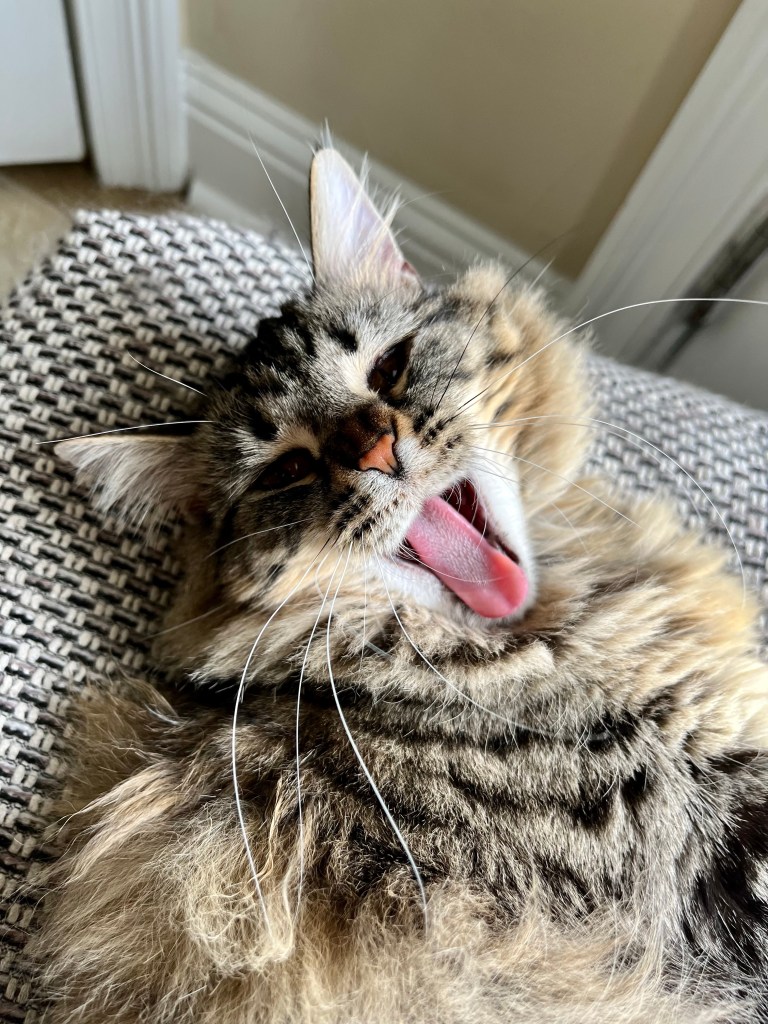
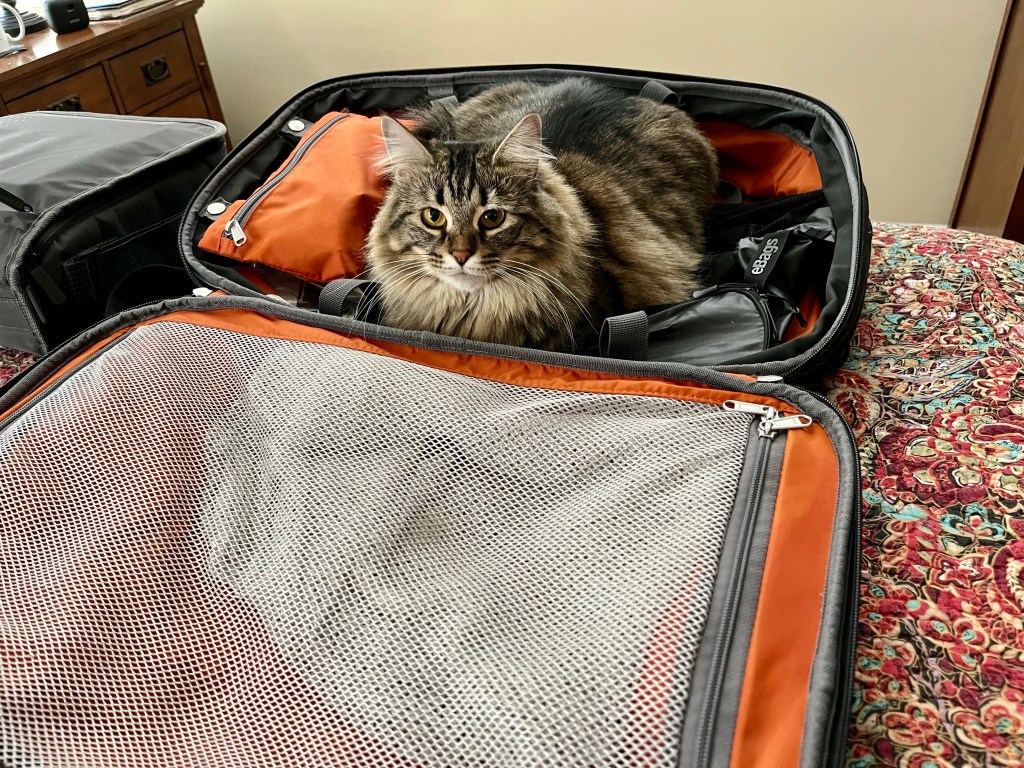
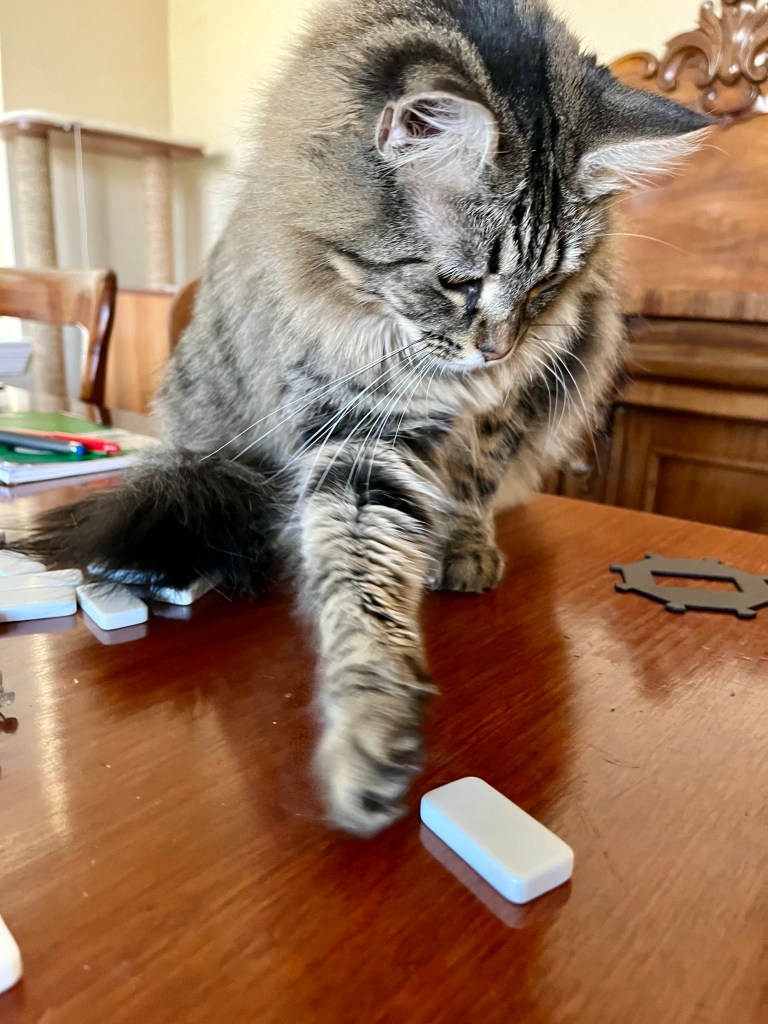

Yes, I believe that she rescued us as much as we rescued her. She fills our days with laughter and sometimes frustration (the Christmas tree never got decorated last Christmas) but most of all she fills our days with love, even when she wakes her Mommy up in the wee hours of the morning to either play pounce on Mommy or to snuggle with her Mommy.
Jon Sweeney, I believe that you are on to something here and that we have a lot to learn from our sweet Stella.
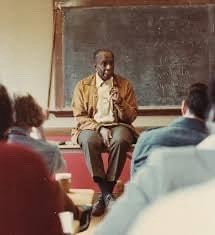
If a man is convinced that he is safe only as long as he uses his power to give others a sense of insecurity, then the measure of their security is in his hands. If security or insecurity is at the mercy of a single individual or group, then control of behavior becomes routine. All imperialism functions in this way. — Howard Thurman from Jesus and the Disinherited

Every now and then I return to the below prayer from Thomas Merton. It had guided me through times of uncertainty and transition. It speaks once more to me this day.
My Lord God,
I have no idea where I am going.
I do not see the road ahead of me.
I cannot know for certain where it will end.
Nor do I really know myself,
and the fact that I think that I am following Your will
does not mean that I am actually doing so.
But I believe that the desire to please You
does in fact please You.
And I hope that I have that desire in all that I am doing.
And I know that if I do this,
You will lead me by the right road
although I may know nothing about it.
Therefore will I trust You always,
though I may seem to be lost
and in the shadow of death,
I will not fear, for You are ever with me,
and will never leave me
to face my perils alone.
From Thoughts in Solitide

“The whole idea of compassion is based on a keen awareness of the interdependence of all these living beings, which are all part of one another, and all involved in one another.”—Thomas Merton

We visited the campus a week ago and I truly felt at home. As I consider the Jesuit founders of the university, I can’t help but think of Fr. Daniel Berrigan and his work (along with my other spiritual mentors, Dorothy Day and Thomas Merton) as I look at all of the fear, hatred, and violence in this country and in the world.
The following quote by Fr Berrigan was shared by Fr John Dear in the blog Daniel Berrigan and his fearless nonviolence, at 100. It makes sense to me and gives me hope as I seek to live my life in this upside down world.
“One is called to live nonviolently, even if the change one works for seems impossible. It may or may not be possible to turn the United States around through nonviolent revolution. But one thing favors such an attempt: the total inability of violence to change anything for the better.”
My mentors give me hope and strength, even in the midst of the chaos.
People in the second half of life are not preoccupied with collecting more goods and services; quite simply, their desire and effort—every day—is to give back to the world a bit of what they have received. They now realize that they have been gratuitously given to—from the universe, from society, and from God. They try now to ‘‘live simply so that others can simply live.’ — Falling Upward
 Pastor Michael Moore's Blog