

Today I picked up a new Merton book at the bookstore at The Abbey of Our Lady of Gethsemani in Trappist, Kentucky. The book is My Argument With The Gestapo. Of the full-length prose books that he wrote before entering the monastery, only this book survives. Merton wrote the book in the summer of 1941 before he entered the monastery on December 10, 1941.
Even though it is a novel, it speaks a profound truth today just as it did when it was published after his death in 1968. In the introduction, Merton wrote about his own experience while hiking in the Rhine Valley in 1932. What struck me in particular was his comment The road was once again perfectly silent and peaceful. But it was not the same road as before. It was now a road on which seven men had expressed their willingness to destroy me.
Expressed their willingness to destroy me… those words send chills down my spine. A friend and colleague of mine in the USAF Chaplain Corps (Fr Chad) was deployed to the Baghdad (Iraq) International Airport in 2004. He sent me an email close to Christmas and said; Mike, this shit is real, they’re trying to kill us! That was the first of four deployments to Iraq and Afghanistan that he had before retiring.
Both of us were beginning to understand the complicated nature of warfare. For me, this was the beginning of my own journey towards questioning the national security policies of our government and how the US government and the military industrial complex were busy making enemies in the Middle East and other areas of the world through those policies.
While I haven’t nearly been run down by a carload of Nazis or been under attack at a hospital that was trying to save Coalition and Iraqi lives, I have seen and experienced the hatred born of fear overseas and here in the US.
In Merton’s day, he watched as the world careened towards mutually assured destruction via nuclear weapons in the midst of the Cold War. Today I am watching as political divisions in this country and around the world hurl us towards absolute chaos and destruction. Can this be stopped? I believe that only when love is in action through nonviolence we will find a way out of this madness.
Merton wrote about a way forward in his book Faith and Violence. Nonviolence seeks to “win” not by destroying or even by humiliating the adversary, but by convincing him that there is a higher and more certain common good than can be attained by bombs and blood. (p. 12)
My prayer is that I can do my small part in giving peace a chance. Dear reader, will you join me?

“Invisible and indivisible, air is a place without borders or owners, shared by all of life on Earth. It is the rightful inheritance of all future generations, the matrix that has shaped the course of evolution. Air binds us all together as a single living entity extending through time and space.”—David Suzuki, The Sacred Balance: Rediscovering Our Place in Nature

In April, 1962, a Connecticut Congressman named Frank Kowalski wrote Thomas Merton and requested that he write a prayer of peace to be read before the United States Congress. Mer- ton acceded to the Congressman’s request and on April 18, 1962, the prayer was read before the House of Representatives and entered officially into the Congressional Record. (Source)
Almighty and merciful God, Father [and Mother of us all], Creator and ruler of the universe, Lord of all history, whose designs are without blemish, whose compassion for the errors of [humankind] is inexhaustible, in your will is our peace.
Mercifully hear this prayer which rises to you from the tumult and desperation of a world in which you are forgotten, in which your name is not invoked, your laws are derided and your presence is ignored. Because we do not know you, we have no peace.
From the heart of an eternal silence, you have watched the rise of empires and have seen the smoke of their downfall. You have seen Egypt, Assyria, Babylon, Greece and Rome, once powerful, carried away like sand in the wind. You have witnessed the impious fury of ten thousand fratricidal wars, in which great powers have torn whole continents to shreds in the name of peace and justice.
And now our nation itself stands in imminent danger of a war the like of which has never been seen! This nation dedicated to freedom, not to power, has obtained, through freedom, a power it did not desire. And seeking by that power to defend its freedom, it is enslaved by the processes and policies of power. Must we wage a war we do not desire, a war that can do no good, and which our very hatred of war forces us to prepare?
A day of ominous decision has now dawned on this free nation. Armed with a titanic weapon, and convinced of our own right, we face a powerful adversary, armed with the same weapon, equally convinced he is right. In this moment of destiny, this moment we never foresaw, we cannot afford to fail. Our choice of peace or war may decide our judgment and publish it in the eternal record. In this fatal moment of choice in which we might begin the patient architecture of peace. We may also take the last step across the rim of chaos.
Save us then from our obsessions! Open our eyes, dissipate our confusions, teach us to understand ourselves and our adversary. Let us never forget that sins against the law of love are punishable by loss of faith, and those without faith stop at no crime to achieve their ends!
Help us to be masters of the weapons that threaten to master us. Help us to use our science for peace and plenty, not for war and destruction. Show us how to use atomic power to bless our children’s children, not to blight them. Save us from the compulsion to follow our adversaries in all that we most hate, confirming them in their hatred and suspicion of us. Resolve our inner contradictions, which now grow beyond belief and beyond bearing. They are at once a torment and a blessing: for if you had not left us the light of conscience, we would not have to endure them. Teach us to be long-suffering in anguish and insecurity. Teach us to wait and trust.
Grant light, grant strength and patience to all who work for peace, to this Congress, our President, our military forces, and our adversaries. Grant us prudence in proportion to our power, wisdom in proportion to our science, humaneness in proportion to our wealth and might. And bless our earnest will to help all races and peoples to travel, in friendship with us, along the road to justice, liberty, and lasting peace; But grant us above all to see that our ways are not necessarily your ways, that we cannot fully penetrate the mystery of your designs and that the very storm of power now raging on this earth reveals your hidden will and your inscrutable decision.
Grant us to see your face in the lightning of this cosmic storm, O God of holiness, merciful to [humankind]. Grant us to seek peace where it is truly found. In your will, O God, is our peace.
Amen
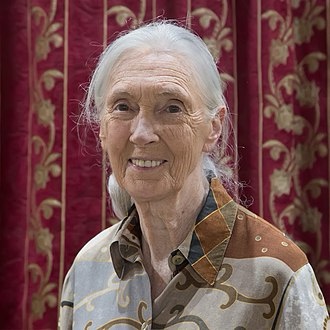
“It’s no good denying that there are problems. It is no shame if you think about the harm we’ve inflicted on the world. But if you concentrate on doing the things you can do and doing them well, it will make all the difference.”—Jane Goodall, The Book of Hope
If you would ask the Desert Fathers why solitude gives birth to compassion, they would say, “Because it makes us die to our neighbor.” At first this answer seems quite disturbing to a modern mind. But when we give it a closer look we can see that in order to be of service to others we have to die to them; that is, we have to give up measuring our meaning and value with the yardstick of others. To die to our neighbors means to stop judging them, to stop evaluating them, and thus to become free to be compassionate. Compassion can never coexist with judgment because judgment creates the distance, the distinction, that prevents us from really being with the other.
Verse of the day
The spirit of the Lord God is upon me because the Lord has anointed me; he has sent me to bring good news to the oppressed, to bind up the brokenhearted, to proclaim liberty to the captives and release to the prisoners.
– Isaiah 61:1
Voice of the day
I’m descended from people who were enslaved in this country, and it would have taken quite a bit of faith in God for them to hold on until they were free. And they obviously did hold on, because I’m here.
– Sharon Batiste Gillins, “Celebrating Juneteenth in Galveston”
Prayer of the day
God of all, thank you for our ancestors who held onto their faith. May we hold on as well, to bring good news to the oppressed, to bind up the brokenhearted, to proclaim liberty to the captives and release to the prisoners.
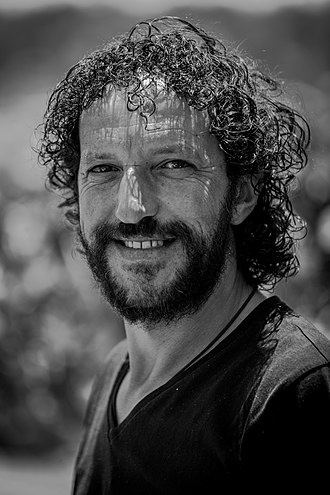
“I gained the best revenge by not victimizing a human being, but rather by rejecting injustices. I’m facing the system, not the people, because I know the system is based on a lot of trauma—and stereotypes that people fall easily into, in that system, with their fear.”—Ali Abu Awwad
When we think about the people who have given us hope and have increased the strength of our soul, we might discover that they were not advice givers, warners, or moralists, but the few who were able to articulate in words and actions the human condition in which we participate and who encouraged us to face the realities of life. . . . Those who do not run away from our pains but touch them with compassion bring healing and new strength. The paradox indeed is that the beginning of healing is in the solidarity with the pain. In our solution-oriented society it is more important than ever to realize that wanting to alleviate pain without sharing it is like wanting to save a child from a burning house without the risk of being hurt. It is in solitude that this compassionate solidarity takes its shape.
“Thresholds are important symbols in the mythic imagination. They are places where the old has been released and the new has not yet come into being.”
—Christine Valters Paintner, PhD from Birthing the Holy: Wisdom from Mary to Nurture Creativity and Renewal
What has tending to the threshold times in your life revealed?
To register for the self-study companion retreat to the book with extra resources and guidance click here>>
Let us not underestimate how hard it is to be compassionate. Compassion is hard because it requires the inner disposition to go with others to the place where they are weak, vulnerable, lonely, and broken. But this is not our spontaneous response to suffering. What we desire most is to do away with suffering by fleeing from it or finding a quick cure for it. As busy, active, relevant [people], we want to earn our bread by making a real contribution. This means first and foremost doing something to show that our presence makes a difference. And so we ignore our greatest gift, which is our ability to enter into solidarity with those who suffer. . . .
Those who can sit with their fellow man, not knowing what to say but knowing that they should be there, can bring new life into a dying heart. Those who are not afraid to hold a hand in gratitude, to shed tears of grief, and to let a sigh of distress arise straight from the heart can break through paralyzing boundaries and witness the birth of a new fellowship, the fellowship of the broken.

