
Remembering Thomas Merton
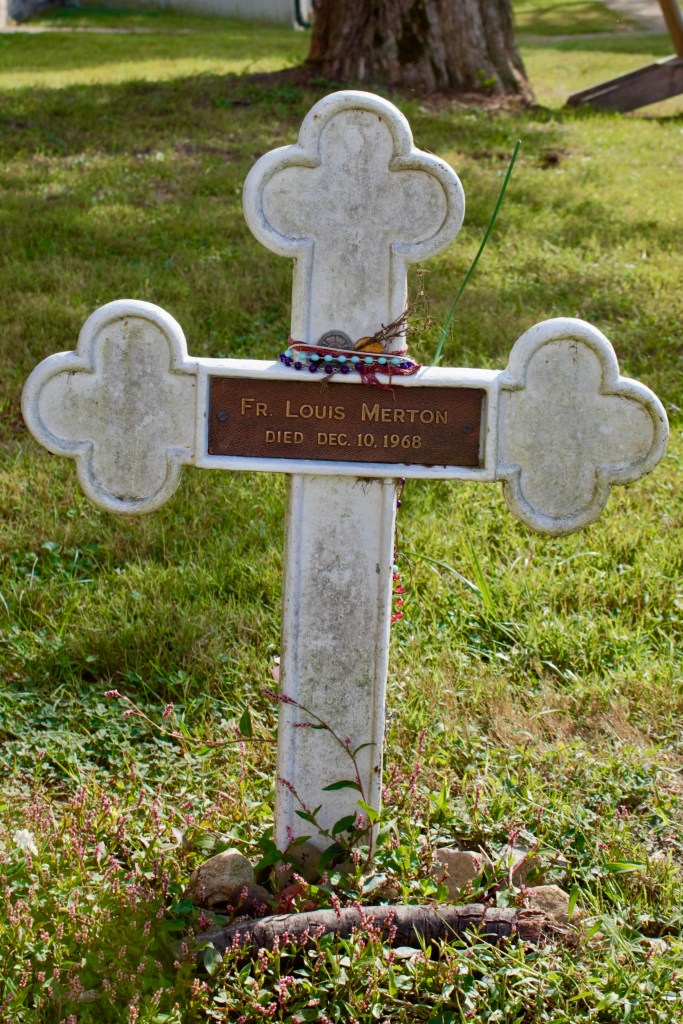
Fifty-five years ago, Thomas Merton died in Bangkok, Thailand. Ironically, his body was transported back to the United States on a military transport that was also carrying the bodies of young soldiers who had been killed in the Vietnam war, a war that he opposed.
Sadly, Merton’s prophetic writings on peace continue to be relevant today. He said the following in his book New Seeds of Contemplation and later in an article published in “The Catholic Worker”: At the root of all war is fear: not so much the fear men have of one another as the fear they have of everything. It is not merely that they do not trust one another; they do not even trust themselves. … It is not only our hatred of others that is dangerous but also and above all our hatred of ourselves: particularly that hatred of ourselves which is too deep and too powerful to be consciously faced. For it is this which makes us see our own evil in others and unable to see it in ourselves.
In a world where weapons are picked up far too quickly and where life seems to be of little value (especially the lives of the so-called “other” or “enemy”) and the euphemism “collateral damage” is used to sanitize what is actually the killing of innocent people in war, we must begin to think and act differently.
These words of Merton from No Man Is an Island speak to what we must do if we are to make a difference in this world: Man is divided against himself and against God by his own selfishness, which divides himself against his brother. This division cannot be healed by a love that places itself only on one side of the rift. Love must reach over to both sides and draw them together. We cannot love ourselves unless we love others, and we cannot love others unless we love ourselves. This truth never becomes clear as long as we assume that each one of us, individually, is the center of the universe. We do not exist for ourselves alone, and it is only when we are fully convinced of this fact that we begin to love ourselves properly and thus also love others.
As I reflect on Thomas Merton’s life which ended far too soon and on the impact that he continues to have 55 years after his death, I invite you, dear reader, to consider how we can be God’s light of peace and love shining out in the darkness of this world. As the Gospel of John says, The light shines in the darkness and the darkness has not overcome it. John 1:5 RSV May we be that light in all that we do and say.
 Pastor Michael Moore's Blog